Why reviews matter more for SaaS than almost any other business
A SaaS purchase is a trust decision made almost entirely on secondhand evidence. There is no showroom, no returns desk, and usually no salesperson for products under a few hundred dollars a month. Prospects triangulate from three sources: your marketing (which they discount, because you wrote it), a free trial (which many never activate), and other users’ experiences. Reviews are the third channel, and they are the only one you cannot fake convincingly, which is precisely why buyers weight them.
The numbers behind this are well-worn but real: the large majority of software buyers read reviews before purchase, star ratings visible in Google search results measurably lift click-through, and AI assistants (an exploding share of software discovery) cite review data when asked “what’s the best tool for X?”. Reviews stopped being a vanity metric years ago. They are distribution.
For SaaS specifically, reviews compound: unlike an ad campaign, a review collected this month keeps persuading prospects for years, keeps feeding your aggregate rating, and keeps your public profile fresh, a signal both Google and LLMs respond to.
Reviews vs testimonials: the distinction that decides everything
The single most common mistake SaaS teams make is treating testimonials and reviews as the same asset. They are not, and buyers know the difference instinctively.
A testimonial is a quote you collected, selected, and published on a page you control. Tools like Senja, Famewall, and Testimonial.to make this easy and pleasant, and the result is marketing collateral. Useful, but discounted by every sophisticated reader, ignored by Google’s review systems, and invisible to AI assistants looking for independent sources.
A review lives on a page you do not control, appears whether you like it or not, and (on a serious platform) is tied to a verified person. That independence is exactly what makes it persuasive, and what makes it eligible for star ratings in search results. The same words carry entirely different weight depending on who controls the page they sit on.
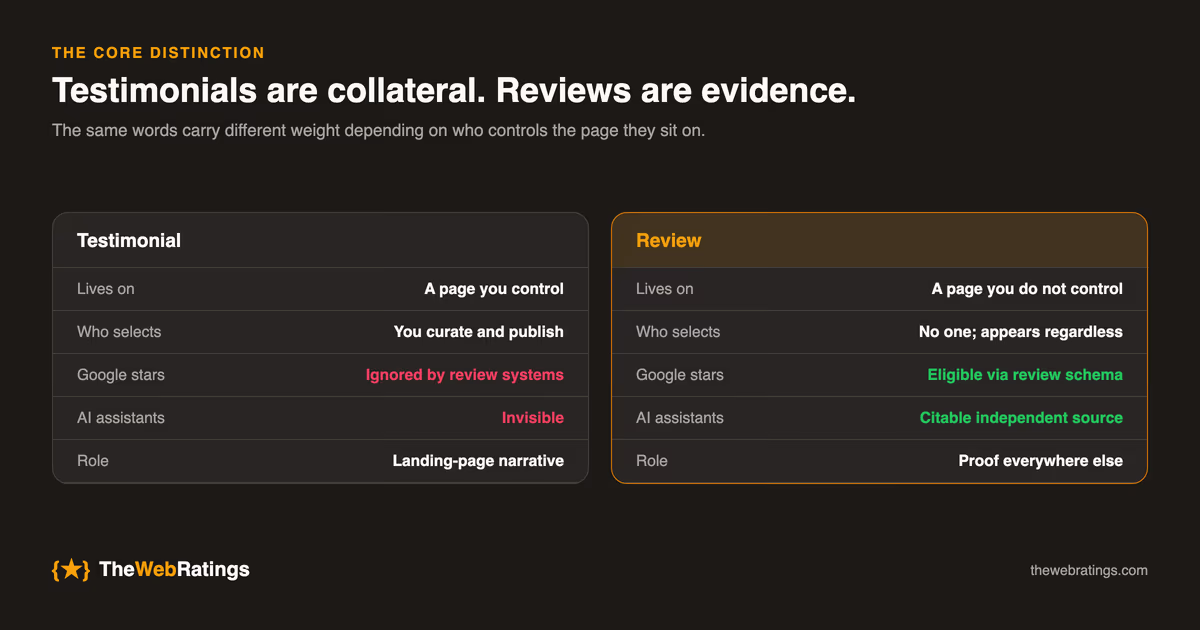
You likely want both: testimonials for narrative on your landing pages, reviews for proof everywhere else. But if you can only invest in one system, invest in the one that produces independent, verified evidence.
Where to collect: the channel decision
Most review platforms collect via email invitations after a transaction. That model was designed for e-commerce, where a delivered package creates a natural moment. SaaS has no such moment in the inbox, but it has something better: your users are inside your product, repeatedly, at moments of demonstrated value.
In-app collection (a small prompt after a success event, star rating first, optional text second) converts several times better than email requests, and produces a more representative rating distribution because it reaches ordinary satisfied users rather than only the emotional extremes. We break down the comparison with numbers in in-app reviews vs email review requests, and the implementation details (trigger events, prompt copy, frequency caps) in how to collect reviews inside your app.
The short version: trigger on completion and milestone events, never on first sessions or right after errors, keep the initial ask to one tap, and cap prompting frequency so the widget never becomes a nag.
Verification: what separates evidence from noise
An unverified review is a claim; a verified review is evidence. As fake reviews have flooded the open platforms, verification has become the dividing line buyers, Google, and regulators all care about.
For SaaS, the cleanest verification model uses what you already have: authenticated users. Collect inside the app (so usage is proven by construction, only real users ever see the prompt) and confirm the reviewer’s email with a one-time passcode at submission (so bots and burner accounts are excluded). This is the model TheWebRatings implements end to end, and the full reasoning is in how to get verified reviews for your SaaS.
Two disciplines keep verification meaningful: publish everything (a verified profile you also curate is just a slow testimonial wall), and never incentivize (gift-card reviews are how B2B directories became spending contests, and undisclosed incentives are now an FTC enforcement matter in the US).
Displaying reviews: widgets, placement, and what not to mark up
Once reviews exist, put them where decisions happen. A compact rating badge next to your signup button de-risks the click at exactly the right moment; a review bar or carousel deeper on a landing page sustains the case. The mechanics (script-tag vs iframe embeds, layout-shift pitfalls, format choice) are covered in how to embed a review widget on your website.
One warning worth repeating: do not add aggregate-rating schema to your own site alongside the widget. Google treats self-published review markup about your own product as self-serving and ignores it. The search value comes from the independent page where your reviews live, which is why the platform page matters as much as the widget.
Turning reviews into growth: search, AI, and the feedback loop
A healthy review system pays out through four channels. Search: your public review page, marked up with review schema, becomes eligible for star ratings under your product’s search results; see the companion guide on review schema and structured data. AI discovery: assistants recommending tools cite independent, structured review sources; a verified profile makes you citable. Conversion: badges and review content on your own pages lift signup rates. Product: review text is unsolicited, prioritized user feedback: three reviews mentioning the same confusion is a roadmap item.
And when negative reviews arrive (they will), treat replies as marketing to the prospects reading over the reviewer’s shoulder. The framework and templates live in the reputation guide.
How many reviews do you actually need?
Fewer than founders assume, and the thresholds are worth knowing because they change what you should optimize for at each stage. The first threshold is one: a page with a single verified review already outperforms a page with none, because “no reviews” is itself a signal prospects read. The second is roughly ten: at that point an average becomes meaningful rather than anecdotal, and your aggregate rating starts being worth displaying prominently. The third is somewhere around forty to fifty: enough volume that a single outlier (a drive-by one-star, an ecstatic founder-friend five) no longer moves the average visibly, which is when the profile becomes genuinely defensible.
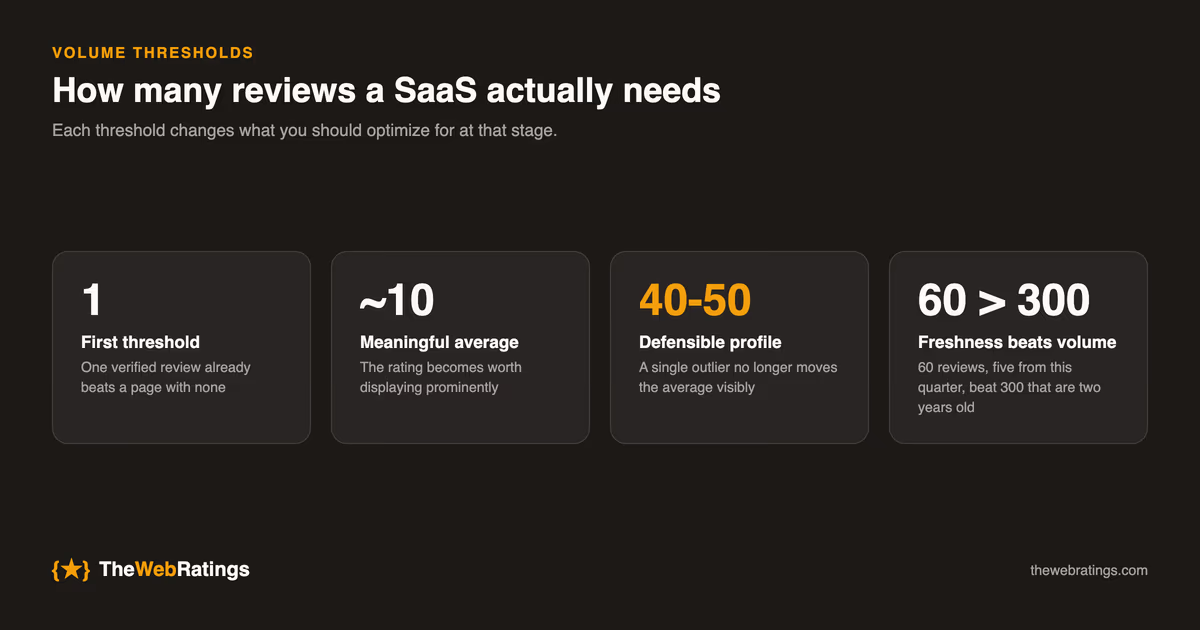
Past that, freshness beats volume. A profile with 60 reviews, five of them from this quarter, persuades better than 300 reviews that all date from two years ago. Buyers check dates, and so do ranking systems. This is the strongest argument for continuous in-app collection over campaign-style blasts: campaigns produce spikes that age; widgets produce a steady drip that never does.
A realistic pace for an early SaaS with a few hundred active users is a handful of verified reviews per month from well-placed prompts. That feels slow until you notice it compounds: a year in, you have a profile of 40–60 dated, verified reviews that no competitor can replicate with a gift-card campaign.
The five mistakes that quietly break review programs
1. Asking too early. Prompting during onboarding, before the user has accomplished anything, harvests shrugs and 3-stars from people who genuinely don’t know yet. Wait for demonstrated value.
2. Gating by sentiment. Routing happy users to the public review flow and unhappy ones to a private feedback form is review gating. Platforms prohibit it, the FTC has treated it as deceptive, and buyers increasingly recognize the too-clean profile it produces.
3. Incentivizing. A $10 credit for a review contaminates every review it touches, requires disclosure everywhere the review appears, and trains your users to expect payment for feedback. The short-term volume is never worth it.
4. Ignoring the profile after launch. Reviews accumulate questions, replies go unanswered, and eighteen months later the “live” profile reads as abandoned. An hour a week of replies and monitoring keeps it alive; the cadence in the reputation guide covers exactly this.
5. Collecting where your buyers aren’t. A perfect Trustpilot profile is wasted spend if your buyers evaluate on Google and inside AI assistants. Match the platform to the audience; the platform-selection guide exists for this decision.
Getting started: the first 90 days
Weeks 1–2: claim your public profile and install the collection widget behind your auth wall. On TheWebRatings this is one script tag, and the free plan covers one website with unlimited verified reviews. Weeks 2–6: wire prompts to two or three success events, cap frequency, and let collection run. Expect your first reviews within days if you have real usage. Weeks 6–12: add a rating badge to your homepage, start replying to every review, and check that your public page is indexed for “your-product reviews” searches.
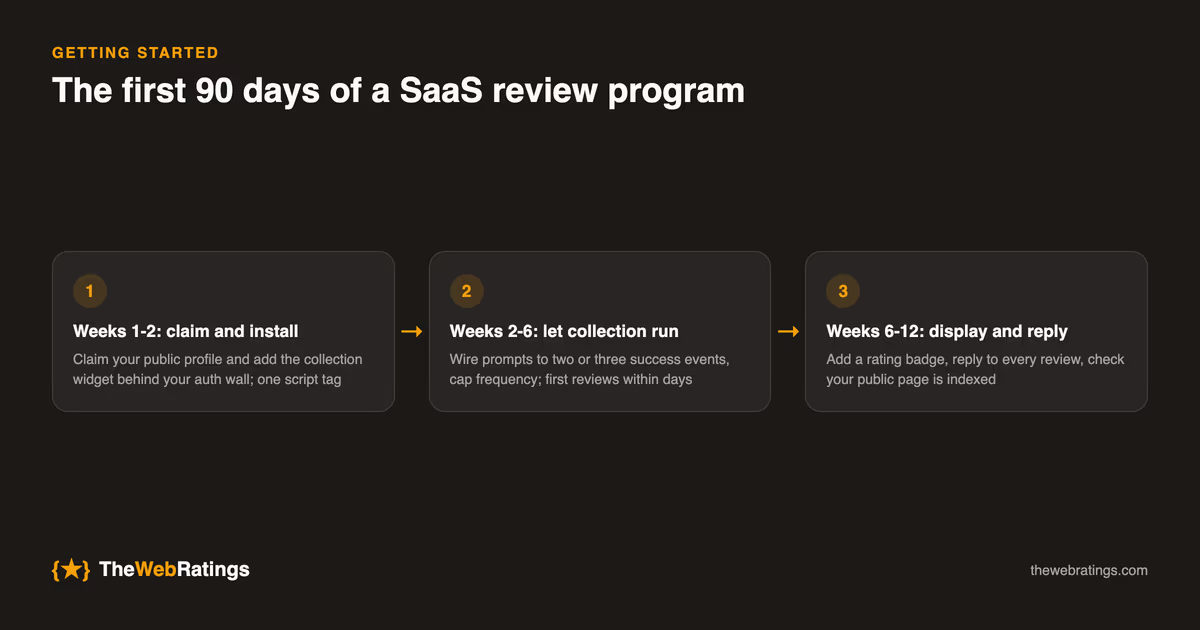
After that, the system mostly runs itself, which is the point. Reviews are the rare growth channel where the honest, boring strategy (real users, verified, published independently, replied to) is also the highest-performing one.