In-App Reviews vs Email Review Requests: Which Converts Better?
Every review you'll ever collect starts with an ask. The two dominant ways SaaS teams ask (email requests and in-app prompts) produce wildly different results, and the difference isn't marginal. It changes review volume, rating distribution, and how credible the resulting profile looks.
The email model
The classic flow: a transactional or campaign email ("How did we do?") with a link to a review platform. It's the default because the big platforms (Trustpilot, Reviews.io, G2 campaigns) are built around it.
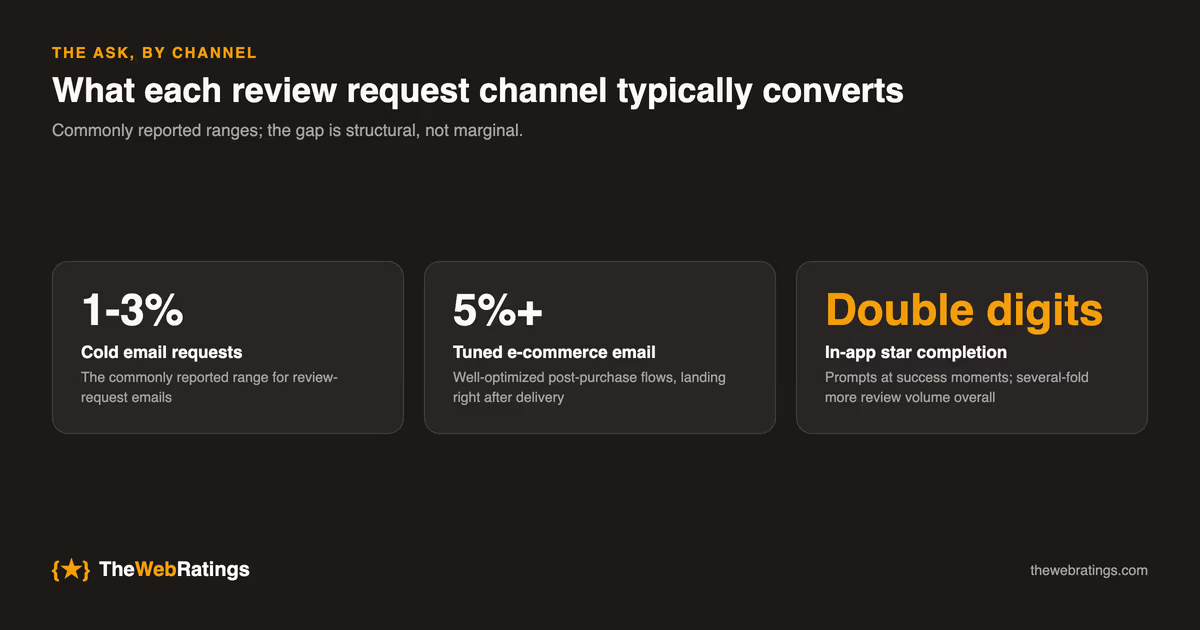
Typical performance: cold review-request emails convert in the low single digits. 1–3% is the commonly reported range, with well-optimized post-purchase flows sometimes reaching 5%+ in e-commerce, where the email arrives right after a delivery.
Why it underperforms for SaaS specifically:
- Timing is wrong. E-commerce has a natural moment (the package arrived). SaaS value is continuous; an email three days after signup lands nowhere near a success moment.
- Channel friction. Inbox → click → review site → sometimes an account creation step. Every hop sheds most of the remaining audience.
- Selection bias. The users who push through that friction are disproportionately the thrilled and the angry. That's why email-collected review pages so often look bimodal: walls of 5s and 1s, few 3s and 4s.
The in-app model
The alternative: a small prompt inside your product, shown to a logged-in user right after they complete something meaningful. Star rating first, optional text after.
Why it converts better:
- Zero channel switch. The user is already there. The entire ask is one click away from complete.
- Right moment. Triggered off success events (report exported, project shipped), the request lands when sentiment is highest and the experience is freshest.
- Identity comes free. The user is authenticated. Add a quick email OTP at submission and you have a verified review, something email-collected platforms struggle to guarantee at all.
Teams that move from email blasts to in-app collection routinely report several-fold increases in review volume. But the more important shift is distributional: because the ask reaches ordinary satisfied users rather than only the emotional extremes, ratings become more representative. That usually means more 4s, fewer performative 1s, and a profile that reads as believable rather than bimodal.
The two channels, side by side
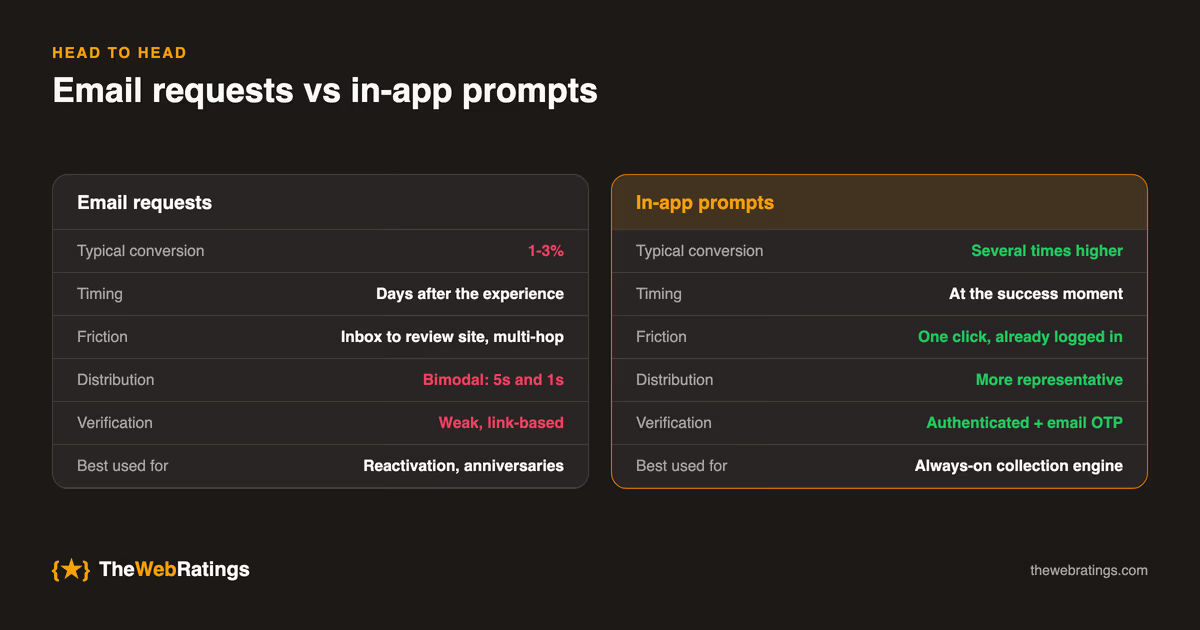
| Email requests | In-app prompts | |
|---|---|---|
| Typical conversion | 1–3% (5%+ in tuned e-commerce flows) | Several times higher; double-digit star-completion rates |
| Timing | Days after the experience, in a crowded inbox | At the success moment, inside the product |
| Friction | Inbox → link → review site → sometimes signup | One click; the user is already logged in |
| Rating distribution | Bimodal: the thrilled and the furious | More representative; more 4s, fewer performative 1s |
| Verification | Weak: link-based, identity unproven | Strong: authenticated user plus email OTP |
| Best used for | Reactivation and anniversary asks | The primary, always-on collection engine |
The trade-offs, honestly
In-app collection isn't free of caveats:
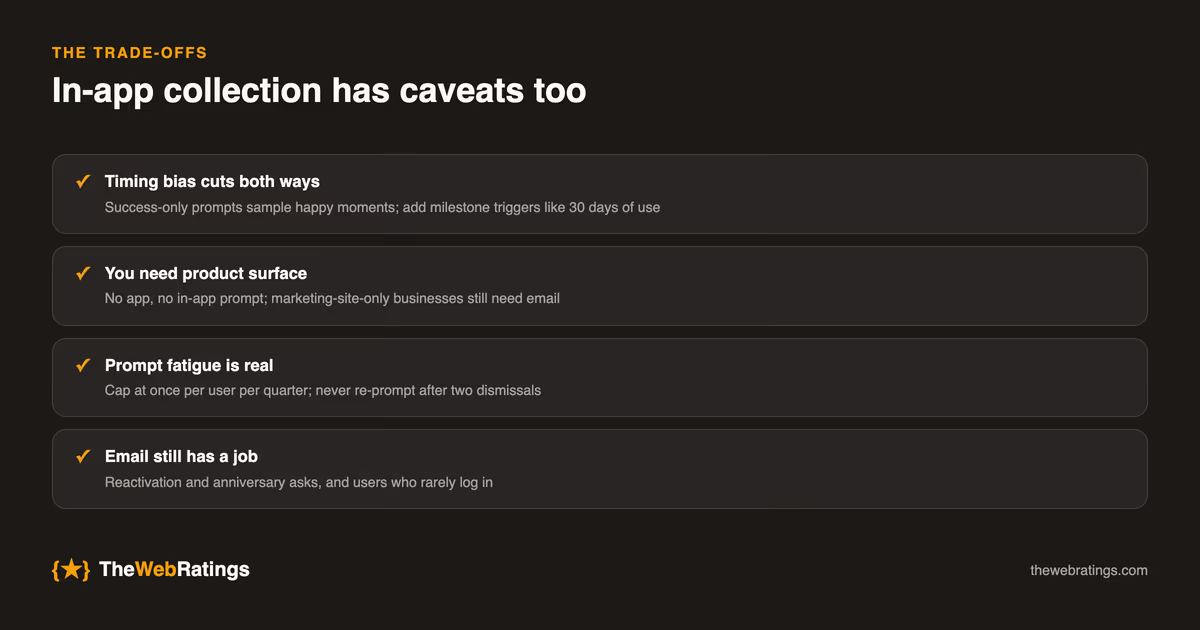
- Timing bias cuts both ways. Prompting only after success moments samples happy moments. Mitigate by using milestone triggers (30 days of use) alongside success triggers, so tenured-but-lukewarm users get asked too.
- You need product surface. No app, no in-app prompt. Marketing-site-only businesses still need email.
- Prompt fatigue is real. Cap frequency (e.g., once per user per quarter), and never re-prompt someone who dismissed the widget twice.
And email isn't useless: it's the right channel for reactivation asks ("you've been with us a year") and for users who rarely log in.
What the winner needs to be credible
Whichever channel fills the funnel, the destination matters as much as the ask. Reviews that land on your own site are curated testimonials in the eyes of both buyers and Google. To get trust and search value, reviews should be:
- Verified: reviewer identity confirmed (OTP or equivalent). See how to get verified reviews.
- Published independently, on a page you don't curate.
- Marked up with review schema, so Google can show star ratings for your product's queries.
A hybrid playbook that uses each channel where it wins
If you have both channels available, don't pick one; sequence them:
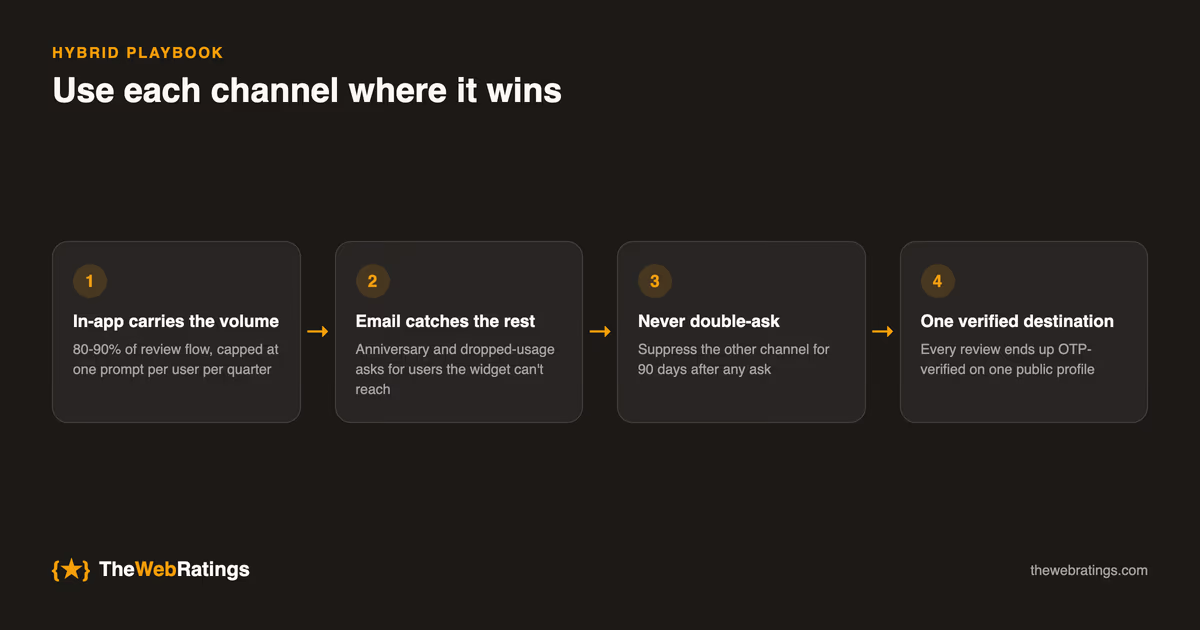
- In-app carries the volume. Success-moment and milestone triggers run continuously, capped at one prompt per user per quarter. This is 80–90% of your review flow and requires no ongoing labor.
- Email catches the users the widget can't reach. Two email asks earn their place: the anniversary note ("you've been with us a year, could you spare two minutes to share your experience?") for tenured users who rarely hit trigger events, and the win-back-adjacent ask to users whose usage dropped; their lukewarm reviews are exactly the representativeness your profile needs.
- Never double-ask. Suppress email requests for anyone who's seen an in-app prompt in the last 90 days, and vice versa. Nothing burns goodwill like being asked twice in a week.
- Route both to the same verified destination. Whichever channel starts the conversation, the review should end up OTP-verified on your one public profile. Split destinations split your rating count, and rating count is the asset.
Teams running this hybrid typically see email contribute a small but distinctive slice: fewer reviews, but disproportionately from long-tenured accounts whose detailed write-ups anchor the profile's credibility.
A note on measurement: tag each review with its source channel from day one. Three months of channel-tagged data answers every question in this post for your product specifically, and your numbers will beat industry averages as a basis for decisions every time. If your platform doesn't expose per-channel attribution, even a rough proxy (prompt impressions vs email sends, each against total new reviews) is enough to see which engine is actually running.
Our take
For SaaS and web apps, in-app collection wins on volume, representativeness, and verification. That's why TheWebRatings is built around an in-app widget with email OTP verification and an independent public trust page, free to start. Use email as a supplement, not the engine.
For implementation details (trigger selection, prompt copy, frequency caps), read how to collect reviews inside your app, and for the strategic context, the full guide to customer reviews for SaaS.
Frequently asked questions
Cold review-request emails typically convert at 1–3%. Well-optimized post-purchase flows in e-commerce sometimes reach 5%+ because the email lands right after delivery, but SaaS has no equivalent natural moment, so SaaS email campaigns usually sit at the low end.
Selection bias. The only users motivated enough to push through the inbox-to-review-site friction are the delighted and the furious, so profiles built on email collection read as walls of 5s and 1s. In-app prompts reach ordinary satisfied users, which pulls the distribution back toward representative.
Not if they're timed and capped properly: trigger off success moments, cap at roughly one prompt per user per quarter, and back off for weeks when someone dismisses it. The prompts that earn in-app collection its bad reputation are the ones that fire on first session or re-appear daily.
No. Email keeps two useful jobs. Anniversary asks reach tenured users who rarely hit in-app trigger events, and asks to users whose usage dropped capture the lukewarm middle your profile needs for credibility. Just suppress email for anyone who saw an in-app prompt in the last 90 days.
The user is already authenticated in your product, which establishes real usage, and an email OTP at submission confirms the reviewer is a real, reachable person. That combination is what lets a platform like TheWebRatings mark every published review as verified.