What online reputation actually is (for a software product)
A SaaS product’s reputation is a small set of concrete, findable artifacts: what appears when someone searches “your-product reviews,” the star rating (or its absence) under your search results, your profile on whatever platforms your buyers check, what AI assistants say when asked about you, and how you visibly behave in public exchanges with unhappy customers. Reputation management is the discipline of making that short list accurate, current, and survivable under attack.
The good news: unlike brand advertising, every artifact on that list responds to systematic, unglamorous work. This guide covers the system: building the evidence base, handling negatives, defending against fakes, and staying on the right side of the rules.
The foundation: a review profile you can stand behind
Most reputation crises are really collection failures. A profile with nine reviews is hostage to the next angry one; a profile with two hundred verified reviews absorbs it without the average moving. Volume, freshness, and verification are your insurance policy, and they must be accumulated before you need them.
The mechanics live in the companion guide on customer reviews for SaaS, but the reputation-relevant summary: collect continuously from inside your product (so the profile reflects your actual user base rather than only the furious and the ecstatic), verify every reviewer (so the profile is defensible when challenged), and publish on an independent page (so the trust is legible to strangers, search engines, and AI assistants).
One counterintuitive point: a visible 3-star review helps. Profiles scrubbed to a perfect 5.0 read as curated, and buyers discount them accordingly. Authenticity artifacts (imperfection, replies, dates) are what make the good reviews believable.
Negative reviews: the audience is the prospects, not the reviewer
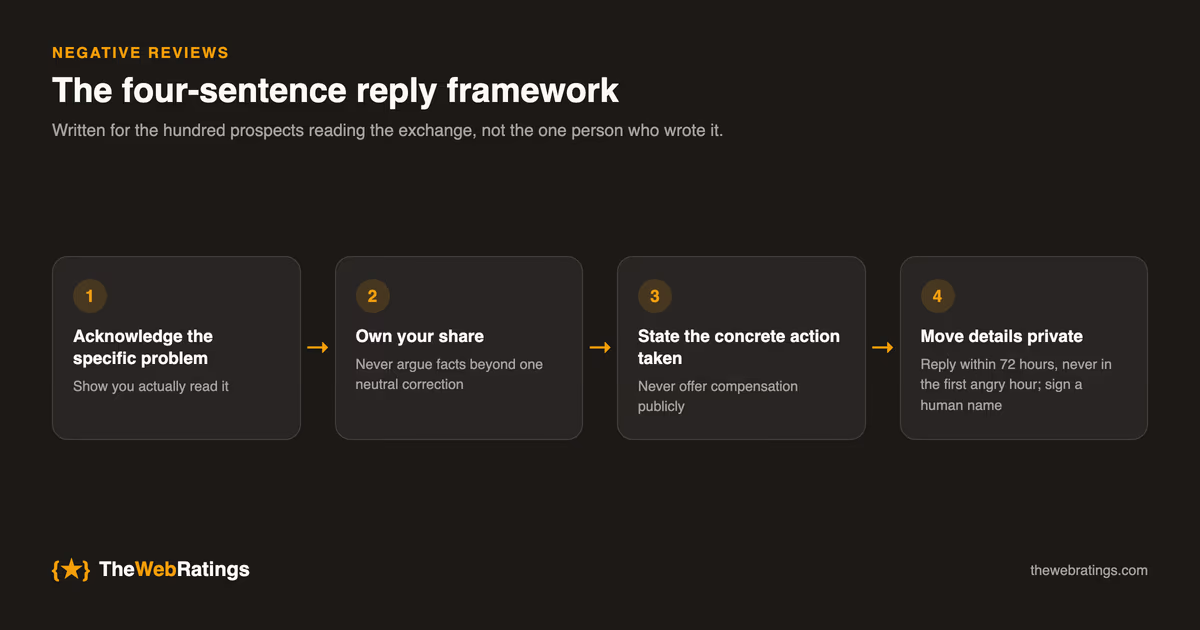
The single most useful reframe in this discipline: your reply to a bad review is written for the hundred prospects who will read the exchange, not for the one person who wrote it. That audience is asking one question: “how will this company treat me when something goes wrong?” A calm, specific, non-defensive reply answers it better than another five-star review ever could.
The working framework is four sentences: acknowledge the specific problem, own your share, state the concrete action taken, and move details to a private channel. Reply within 72 hours but never within the first angry hour; never argue facts beyond one neutral correction; never offer compensation publicly; sign a human name. Copy-paste templates for the five common situations (legitimate complaint, misunderstanding, pricing gripe, rant, suspected fake) are in how to respond to negative reviews.
Then close the loop internally: negative reviews are prioritized product feedback. Three reviews naming the same confusion is a roadmap item wearing a PR costume.
Fake reviews, disputes, and defending the profile
On open platforms, fake reviews are a structural hazard: anyone with an email address can post, brokers sell five-star bundles, and a competitor’s bad weekend can land on your profile as a burst of one-stars. Major platforms remove millions of fakes a year, which tells you both that enforcement exists and that the pipe keeps refilling. The full analysis is in why fake reviews are killing review platforms.
Your defensive playbook: document everything (screenshots with timestamps), use the platform’s dispute process rather than public accusations, reply once with the neutral “we can’t match this to any account, we’ve asked the platform to verify” template, and never retaliate in kind: buying counter-reviews converts you from victim to co-conspirator, with regulators now genuinely watching.
The structural fix is choosing infrastructure where fakes are mechanically hard: collection inside the app means only real users ever see the prompt, and OTP verification excludes bots and burners. On TheWebRatings, disputes are a built-in Pro workflow: flag a review, provide evidence, and the process is documented rather than discretionary. See pricing for what is included.
When it goes wrong anyway: a 48-hour incident playbook
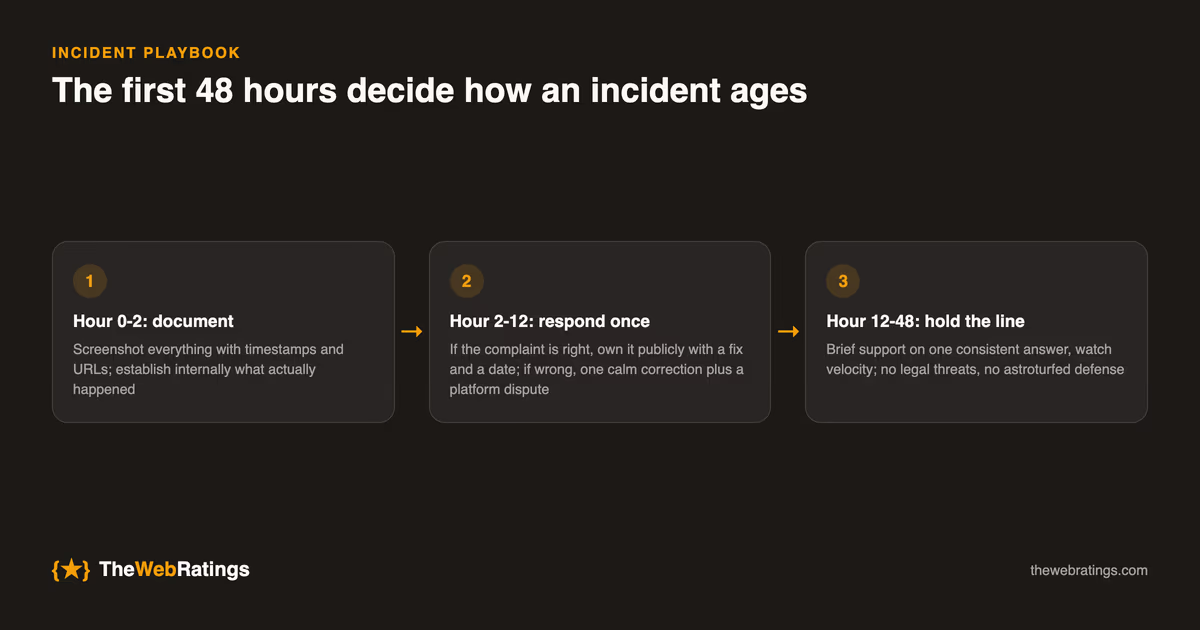
Sooner or later something lands hard: a viral complaint thread, a burst of hostile reviews, a factually false claim that ranks. The first 48 hours decide whether it becomes a footnote or a defining search result. Hour 0–2: screenshot everything with timestamps and URLs before anything changes; establish internally what actually happened before anyone types a public word. Hour 2–12: if the complaint is substantively right, say so once, publicly, with the fix and a date. Speed of ownership is the single biggest determinant of how these age. If it is substantively wrong, post one calm correction with evidence and file the platform dispute; do not engage the thread further.
Hour 12–48: brief your support team on a single consistent answer, watch velocity (is this spreading or burning out?), and resist the two classic own-goals: the legal threat and the astroturfed defense, each of which has turned more small incidents into big ones than the original complaints ever did. Most storms burn out in days when fed nothing; nearly all the durable damage in the cases you remember came from the response, not the event.
Afterward, do the boring retro: what broke, what monitoring missed, which template was absent. Incidents repeat their shape; teams that write the playbook once handle the second one in a tenth of the time.
The rules: what regulators now require
Reputation work has acquired a legal floor. In the US, the FTC’s 2024 rule on fake reviews bans buying, selling, or knowingly publishing fake reviews and undisclosed incentivized reviews, with civil penalties per violation. The UK’s DMCC Act and EU consumer-protection enforcement point the same direction. The practical translations for a SaaS team: never buy or trade reviews, disclose any incentive anywhere one exists (better: never incentivize), do not gate collection to happy users only, and do not review competitors.
These rules are easy to satisfy if your collection is honest by construction, which is one more argument for verified, un-incentivized, publish-everything infrastructure over growth-hacked review campaigns.
Monitoring: knowing what's being said before it matters
You cannot manage what you discover three weeks late. A minimal monitoring stack costs nothing and takes an evening to set up: alerts on your product name and its common misspellings (Google Alerts is crude but free; paid brand monitors add speed and coverage), notification emails from every platform where you have a profile, a periodic incognito search of “your-product reviews” to see what prospects actually see, and (increasingly important) a monthly habit of asking the major AI assistants what they know about your product, since that is where a growing share of buyers now form first impressions.
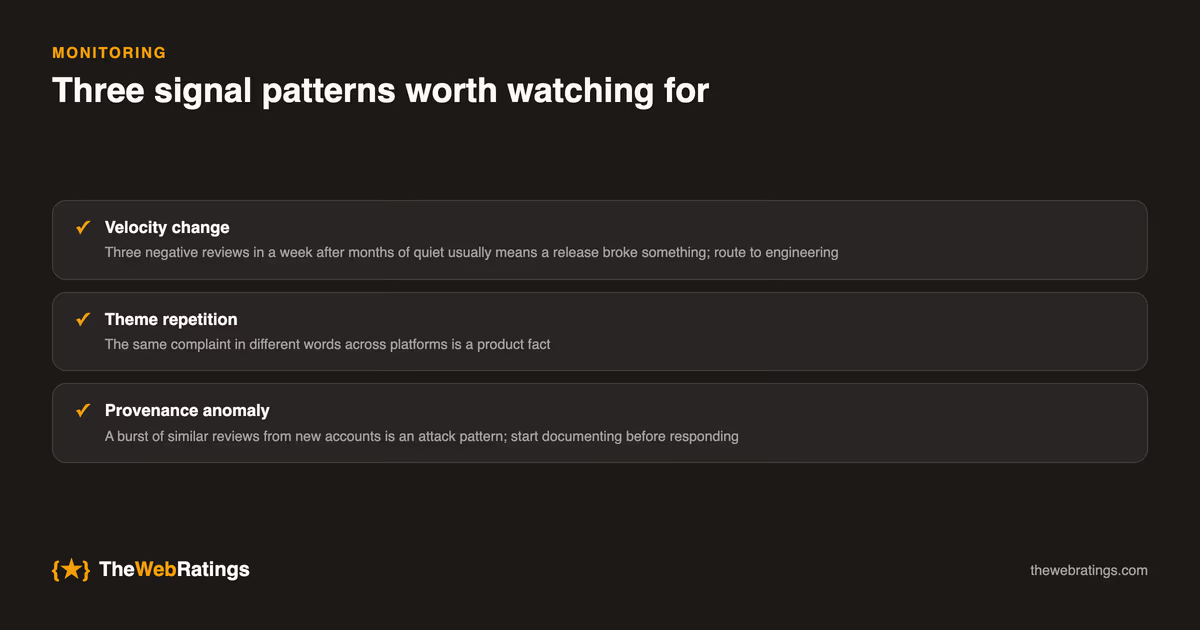
Watch for three signal patterns. Velocity changes: three negative reviews in a week after months of quiet usually means a release broke something; route it to engineering, not marketing. Theme repetition: the same complaint in different words across platforms is a product fact, whatever you think of the reviewers. Provenance anomalies: a burst of similar reviews from new accounts is an attack pattern; start documenting immediately, before responding to any of them.
On platforms with verified collection the third category largely disappears, one reason monitoring a verified profile is a lighter job than monitoring an open one.
Building reputation before you have to defend it
Defense alone leaves your reputation defined by whoever shows up angriest. The proactive levers are unglamorous and effective. Volume as insurance: every verified review you collect in calm times is armor for turbulent ones; the collection system in the reviews guide is reputation work, even though it doesn’t feel like it. Replies as public record: a profile where every review has a thoughtful response reads as a company that shows up; that impression persists even for readers who skim. Search real estate: your public review page, your docs, your comparison pages. The more first-page results you control for “your-product + reviews/alternatives/pricing” queries, the less any single third-party page defines you.
And the least glamorous lever of all: fixing the things people complain about. Reputation management that operates purely at the communications layer eventually runs out of road. The teams with durably good reputations are the ones who treat their review stream as a free, prioritized, continuously updated audit of the product, and close the loop, visibly, review by review.
An operating cadence that takes an hour a week
Reputation management fails as a mood and works as a routine. The minimum viable cadence: weekly, read new reviews, reply to anything unanswered past your SLA, and check your product’s name plus “reviews” in an incognito search. Monthly, skim review themes for product signal, verify your star ratings are still rendering in search (schema drift is silent; see the schema guide), and ask one or two AI assistants what they say about your product. Quarterly, audit which platforms actually drive your signups and cut spend on the ones that do not.
That is the whole system: accumulate verified evidence before you need it, answer criticism like an adult in public, dispute fakes through process rather than combat, follow the disclosure rules, and check the machine weekly. Reputation is a maintenance discipline, and the teams that treat it that way are unrecoverably ahead of the ones that treat it as crisis response.