Review Request Timing: When to Ask Users for a Review (Data-Backed)
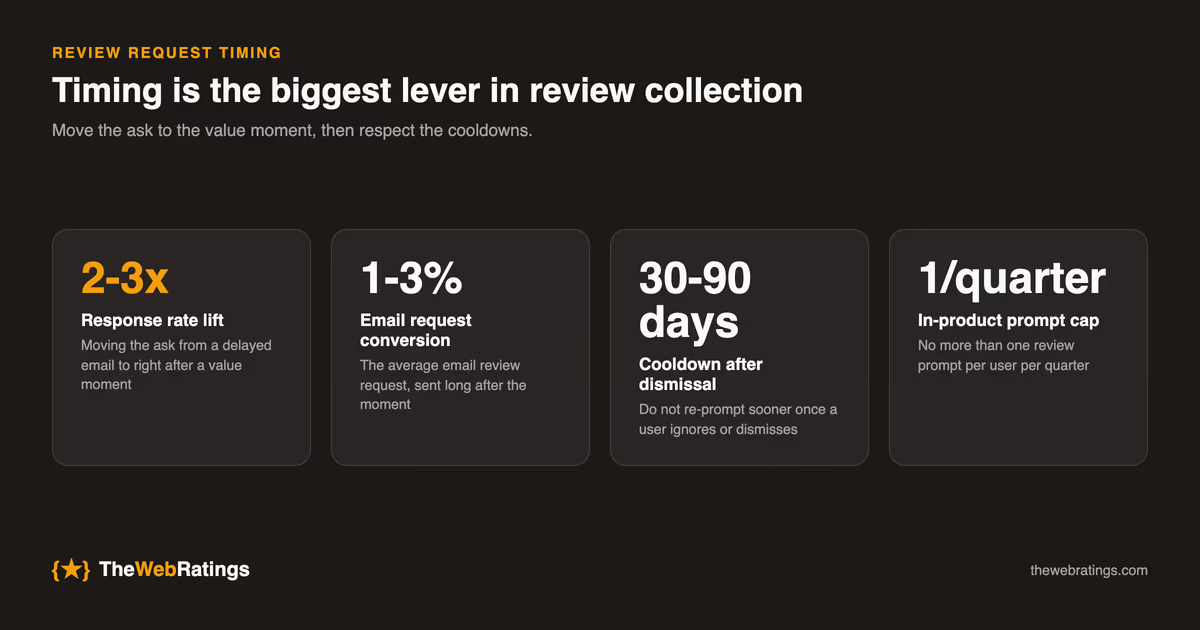
Most teams obsess over the wording of their review ask and ignore the variable that matters more: timing. You can rewrite the prompt copy ten times and pick up a point or two. Move the ask from "three days later, by email" to "right after the user finished something," and response rates can double or triple. Timing is the biggest lever, and it is mostly free.
This is a practitioner's guide to when. If you want the broader strategy (channels, verification, publishing), start with our pillar on customer reviews for SaaS. Here we go deep on the clock.
The one rule: ask right after value is delivered
Every good review request follows the same principle. Ask when the user has just experienced value and knows it. This is the peak of their goodwill, and goodwill decays fast. A user who just watched their report export cleanly feels differently about your product than the same user two days later, when the memory has faded and a support ticket has soured the mood.
Concretely, that means firing the ask on a completion event, not on a calendar. "Day 30 of the trial" is a calendar trigger that ignores what the user actually did. "Published their third project" is a value trigger that fires exactly when the user has proof your product works.
Trigger moments that convert
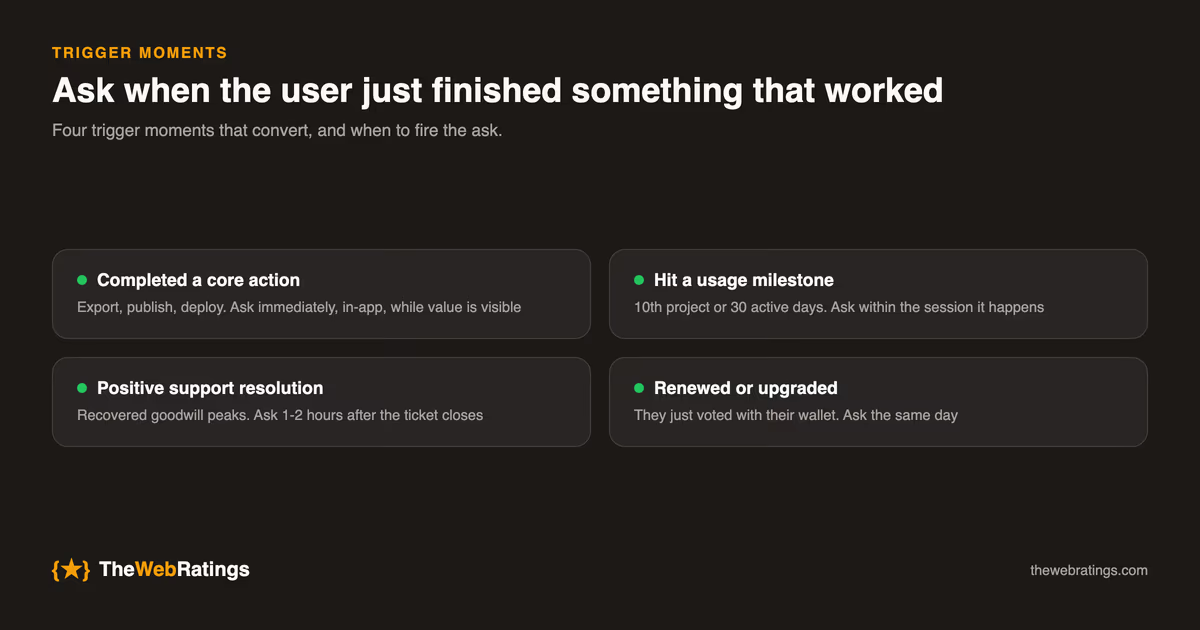
Not all success moments are equal. The best triggers combine three things: the user just finished something, the outcome was clearly good, and they are still inside the product with a hand on the keyboard.
| Trigger moment | Why it works | Suggested timing |
|---|---|---|
| Completed a core action (export, publish, deploy) | Value is fresh and visible | Immediately, in-app |
| Hit a usage milestone (10th project, 30 active days) | Signals a committed, happy user | Within the session it happens |
| Resolved support ticket rated positively | Recovered goodwill peaks here | 1–2 hours after resolution |
| Renewed or upgraded a plan | They just voted with their wallet | Same day, in-app or email |
| Returned after a gap and re-engaged | Re-activation is a quiet endorsement | On the second successful session |
Notice what is missing: "signed up," "logged in," and "opened the app" are not on the list. Those are your moments of hope, not the user's moments of value. Asking then produces low response rates and, worse, reviews from people who have not actually used the thing.
When NOT to ask
Bad timing does more than waste the ask. It burns the relationship and skews your data.
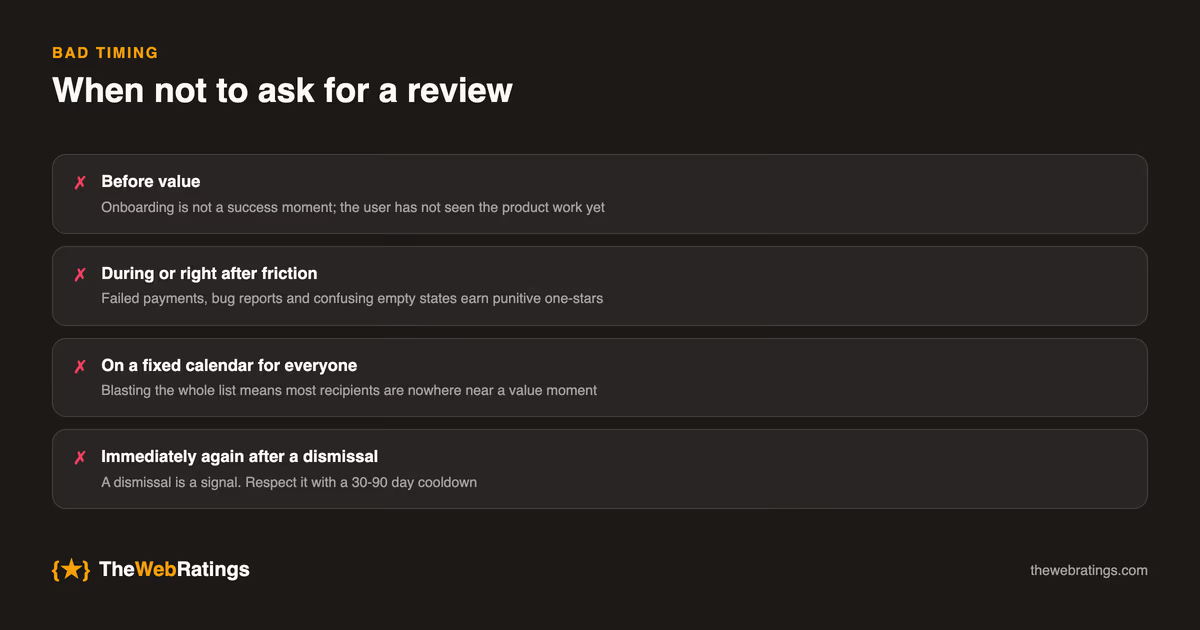
- Before value. Onboarding is not a success moment. You are asking someone to vouch for a product they have not yet seen work.
- During or right after friction. A failed payment, a bug report, a confusing empty state. Interrupt a frustrated user with a rating prompt and you will either get a punitive one-star or, if you gate it, a dishonest average.
- On a fixed calendar for everyone. Blasting the whole list on the first of the month means most recipients are nowhere near a value moment.
- Immediately again after they dismissed you. A dismissal is a signal. Respect it with a cooldown (see below).
The furious and the delighted always self-select into reviews. The point of good timing is to also reach the large, quiet middle: the users who are happy but would never write a review unprompted. That middle is where your rating becomes representative instead of bimodal.
Frequency and cooldowns
Timing covers the first ask and every ask after it. A few durable rules for spacing:
- One ask, then a real cooldown. If a user ignores or dismisses a prompt, do not re-prompt for at least 30–90 days. In-product, cap it tighter: no more than one review prompt per user per quarter.
- Never ask a reviewer again for the same thing. If they left a review, thank them and remove them from the ask pool. Re-asking reads as spam and signals you are not tracking who already helped.
- Segment by recency. A user active this week is a far better ask target than one who last logged in three months ago. Sort your queue by recent successful actions, not by signup date.
The failure mode here is a naive cron job that emails everyone every N days. It trains users to ignore you, and each ignored ask lowers the odds they respond to a well-timed one later.
Timing by channel
Once you know which event triggers the ask, the delivery channel changes the ideal delay.
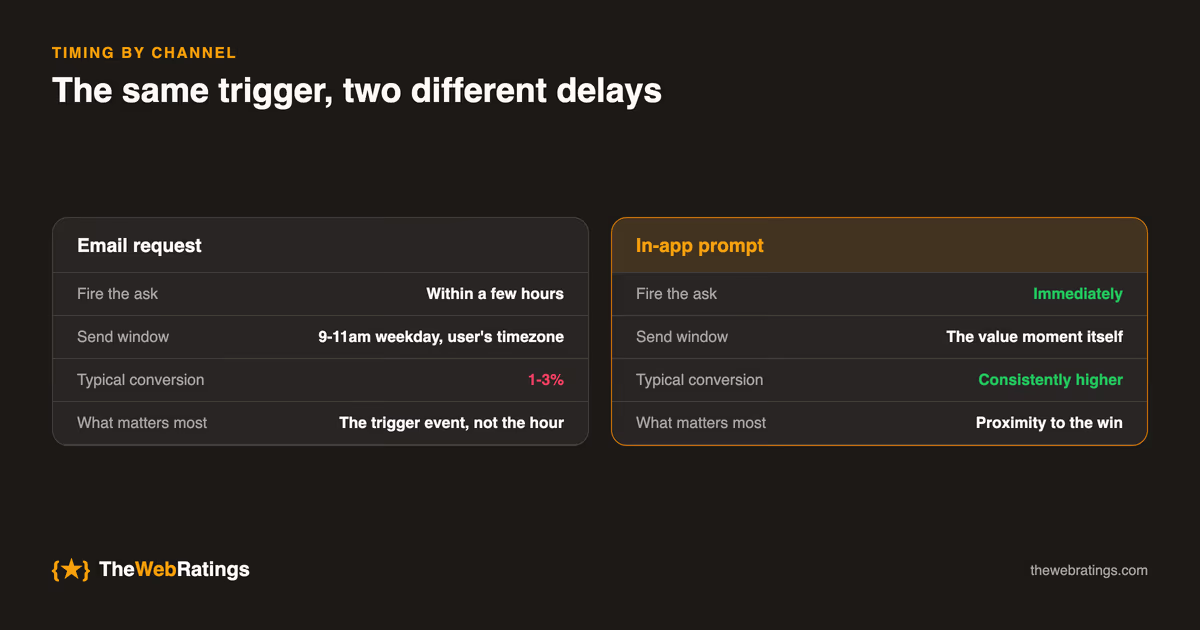
In-app is best fired immediately; the whole advantage is proximity to the value moment. A prompt that appears one second after the export finishes catches the user while the win is still on screen. This is why in-product asks consistently outperform email; the average email review request converts at roughly 1–3%, largely because the request arrives long after the moment has passed. We break the numbers down in in-app reviews vs email review requests.
Email, when you must use it, needs a short but non-zero delay. Fire it within a few hours of the trigger event, not days. For send time, mid-morning on a weekday (roughly 9–11am in the user's own timezone) tends to beat evenings and weekends for B2B tools. But the trigger event matters more than the hour: a value-triggered email sent Tuesday at 3pm beats a "perfectly timed" 10am blast to people who did nothing that week.
For the mechanics of wiring an in-app prompt to your product events, see how to collect reviews inside your app.
Test your timing before your copy
Teams A/B test prompt wording endlessly and never test the trigger. Flip that priority. The highest-leverage experiments are:
- Event vs calendar. Same copy, one cohort triggered by a completion event, one by day-of-trial. The event cohort usually wins by a wide margin.
- Delay length. Immediate vs one-hour vs one-day. Find where response rate falls off a cliff. It is usually sooner than you expect.
- First trigger choice. Export-complete vs milestone-reached. Different products have different "aha" moments; measure which one your happiest users pass through.
Measure response rate and the rating distribution together. A trigger that lifts responses but skews the average up artificially (because it only fires for power users) is telling you something about representativeness, beyond raw conversion.
Good timing is the cheapest quality improvement available to a review program: no new copy, no new tool, just moving the ask to the moment the user is already glad they chose you. If you are setting up a program from scratch, our pricing page lays out what an always-on, event-triggered collection flow looks like (we build one of these, so weigh that accordingly).
Frequently asked questions
Right after they complete a core action and can see it worked: an export finishing, a project publishing, a positive support resolution. Value is freshest at that moment and goodwill is at its peak. Avoid fixed-calendar asks that ignore what the user actually did.
For in-app prompts, ask immediately; the whole point is proximity to the value moment. For email, send within a few hours of the triggering event rather than days later, because response rate drops sharply as the memory of the win fades.
Once, then give a real cooldown of at least 30 to 90 days if they ignore or dismiss the prompt. Cap in-product prompts at roughly one per user per quarter, and never re-ask someone who has already left a review.
No. Onboarding is before the user has seen your product deliver value, so an ask then produces low response rates and reviews from people who have not really used the product. Wait for a genuine success moment.
In-app almost always wins because it can fire at the exact moment of value, while email arrives after a delay. Email review requests typically convert in the low single digits, whereas well-timed in-app prompts do considerably better. Use email as a supplement, triggered by product events, not as your primary channel.
It matters less than the trigger event, but for B2B tools mid-morning on a weekday tends to outperform evenings and weekends. Send in the user's own timezone, and prioritize firing the ask close to a value moment over hitting a specific hour.