How to Get Verified Reviews for Your SaaS
"Verified" is the most abused word in the review industry. Platforms slap verified badges on reviews collected through invitation links, testimonial tools call form submissions verified because an email address was typed into a field, and buyers have learned to discount all of it. So let's be precise about what verification means, why it's worth doing properly, and how to get it for your SaaS.
What verification actually means
A review is verified when the platform can attest to two things:
- The reviewer is a real, reachable person, not a bot, a burner, or a competitor's intern.
- The reviewer actually used the product; they're not reviewing from a headline or a grudge.
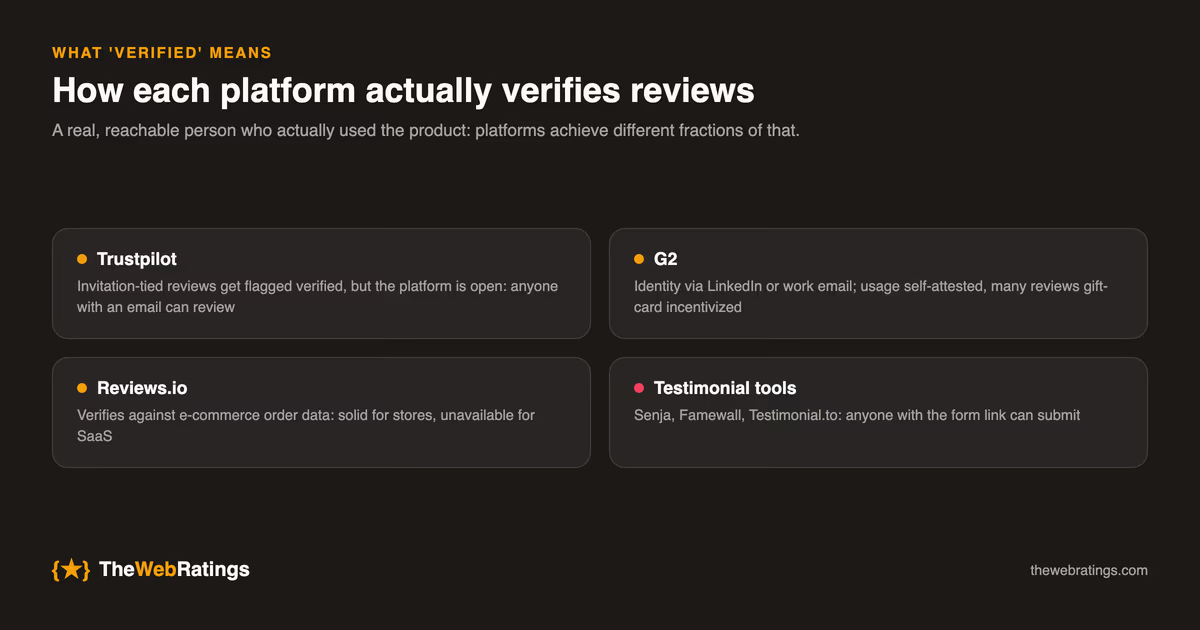
Different platforms achieve different fractions of this:
- Trustpilot: reviews can be flagged "verified" if they came via an invitation tied to a transaction, but the platform is open, so anyone can review any company with just an email address.
- G2: verifies identity via LinkedIn or work email; usage is self-attested, and many reviews are gift-card incentivized.
- Reviews.io: verifies against e-commerce order data: solid for stores, unavailable for SaaS since there's no order.
- Testimonial tools (Senja, Famewall, Testimonial.to): no verification in any meaningful sense; anyone with the form link can submit.
The in-app + OTP model
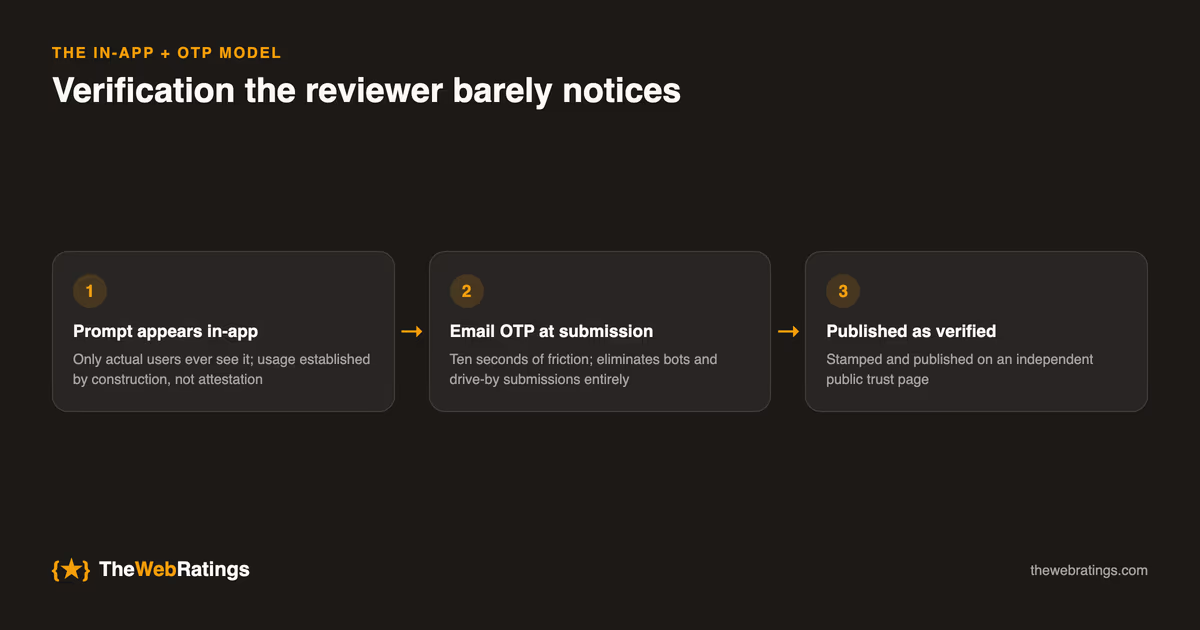
For SaaS, the cleanest verification pipeline uses something you already have: authenticated users inside your product.
- The review prompt appears inside the app, so only actual users ever see it. Usage is established by construction, not attestation.
- At submission, the reviewer confirms their email with a one-time passcode (OTP). Ten seconds of friction, and it eliminates bots and drive-by submissions entirely.
- The platform stamps the review as verified and publishes it.
This is the model TheWebRatings implements: the widget lives in your app, every reviewer completes an email OTP, and reviews publish to an independent public trust page. It's free for one website.
Why bother? Three audiences care
Buyers. In a market flooded with fake reviews, a profile where every review is verified reads differently. Prospects can't articulate schema or OTP flows, but they can smell curation, and its absence.
Google. Review stars in search results come from review schema, and Google's guidelines push toward reviews that are genuine and independently collected. Self-published testimonial markup on your own site is treated as self-serving; an independent platform publishing verified reviews is exactly what the rich-result system is designed to reward. (Full details in our review schema guide.)
AI assistants. When someone asks an LLM "is X any good?", the model reaches for citable, structured, independent sources. A verified-review profile on a public page is precisely that; a wall of curated quotes on your own domain is not.
Building your verified-review pipeline
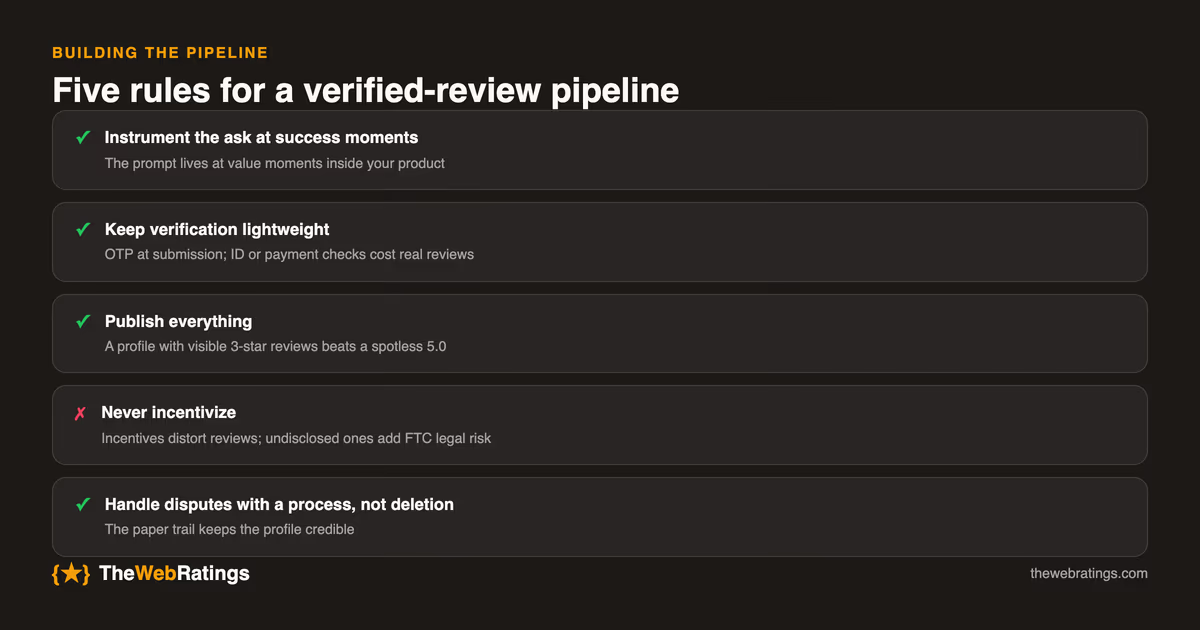
Step 1: instrument the ask. Put the prompt at success moments in your product. We've covered trigger selection in detail in how to collect reviews inside your app.
Step 2: keep verification lightweight. OTP at submission is the sweet spot. Heavier schemes (ID checks, payment verification) belong in fintech, not review collection; every extra step costs you real reviews.
Step 3: publish everything. Verification only means something if you don't also curate. A verified profile where 3-star reviews visibly exist is more persuasive than a spotless 5.0; buyers treat perfection as evidence of filtering.
Step 4: never incentivize. Gift cards for reviews are how G2 category grids became a spending contest. Incentives distort both who reviews and what they say, and disclosure rules (FTC in the US) turn undisclosed incentives into a legal risk on top of the credibility cost.
Step 5: handle disputes properly, not quietly. Even verified users occasionally post something factually wrong. Use a dispute/flag process with the platform rather than deletion; the paper trail is part of what keeps the profile credible. (More in why fake reviews are killing review platforms.)
What verification looks like from the user's side
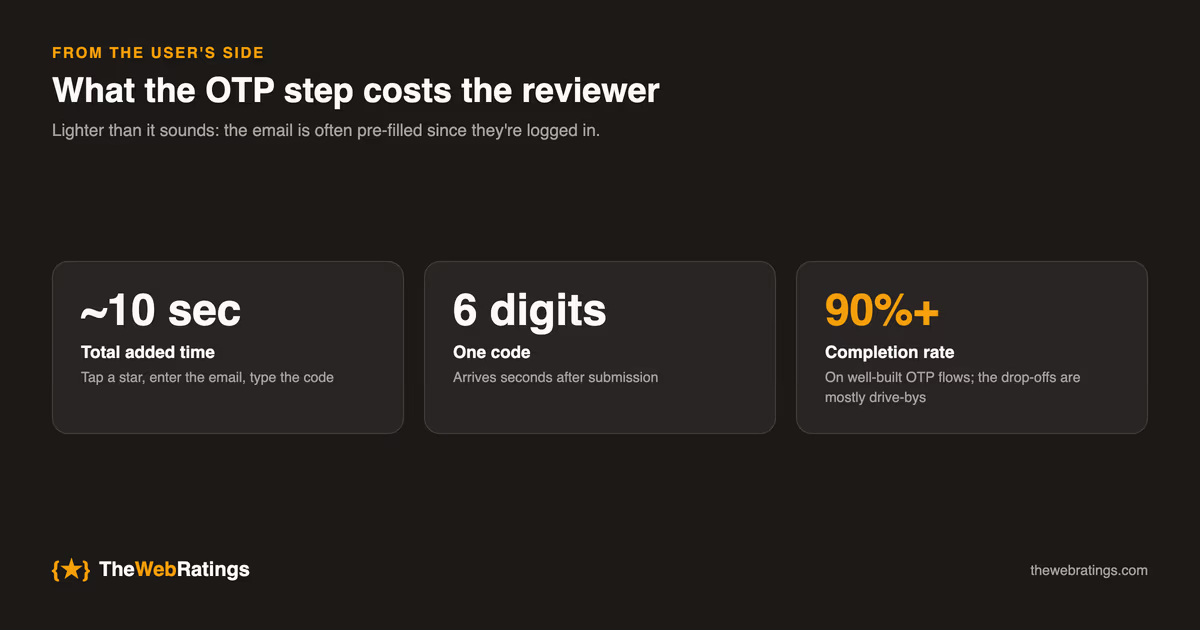
A common worry: "won't the OTP step annoy my users?" In practice, the flow is lighter than it sounds. The user taps a star rating inside your app, optionally writes a sentence or two, enters their email (often pre-filled, since they're logged in), and types the six-digit code that arrives seconds later. Total added time: about ten seconds.
Two things make the friction land well rather than badly. First, explain why: a single line like "we verify every reviewer so fake reviews can't exist here" reframes the step from bureaucracy to a feature. Users who are about to attach their name to an opinion generally like knowing the platform can't be gamed. Second, show the payoff: the verified badge on their published review is visible proof their voice counts differently than an anonymous comment.
The completion numbers bear this out: verification completion on well-built OTP flows runs above 90 percent. The users you lose at that step are disproportionately the ones you want to lose: drive-bys who wouldn't stand behind what they wrote.
The compounding payoff
Verified reviews are slower to fake and impossible to buy, which means they compound: every month of real collection widens the gap between you and competitors who bought their numbers. Your public page accrues rating count and freshness (both of which matter for rich results), and your star rating becomes an asset you own rather than sentiment you rent.
Start with one website, one widget, and success-moment prompts. The rest is patience. For the complete strategy, read the pillar guide: customer reviews for SaaS.
Frequently asked questions
Two facts have to be established: the reviewer is a real, reachable person, and they actually used the product. In-app collection proves usage by construction (only logged-in users see the prompt), and an email OTP at submission proves the person is real. Anything less (invitation links, form submissions, self-attestation) is verification in name only.
The data says no: well-built OTP flows see completion above 90 percent, and the step takes about ten seconds since the user's email is usually pre-filled. The submissions you lose are disproportionately drive-bys who wouldn't stand behind what they wrote.
No. A platform can only mark reviews as verified when it observed the verification itself, so imported reviews would break the guarantee that makes the badge meaningful. Run collection in parallel for a quarter and let the verified profile build its own history.
Disclosure keeps you on the right side of FTC rules, but incentives still distort who reviews and what they say; volume starts tracking your gift-card budget instead of user sentiment. If credibility is the goal, the answer is simply never to pay for reviews.
Fewer than you'd think. A profile with 15–30 verified reviews, a believable distribution, and recent activity reads as more trustworthy than hundreds of unverifiable ones. Recency and steady accumulation matter more than raw count.