The review platform market, mapped
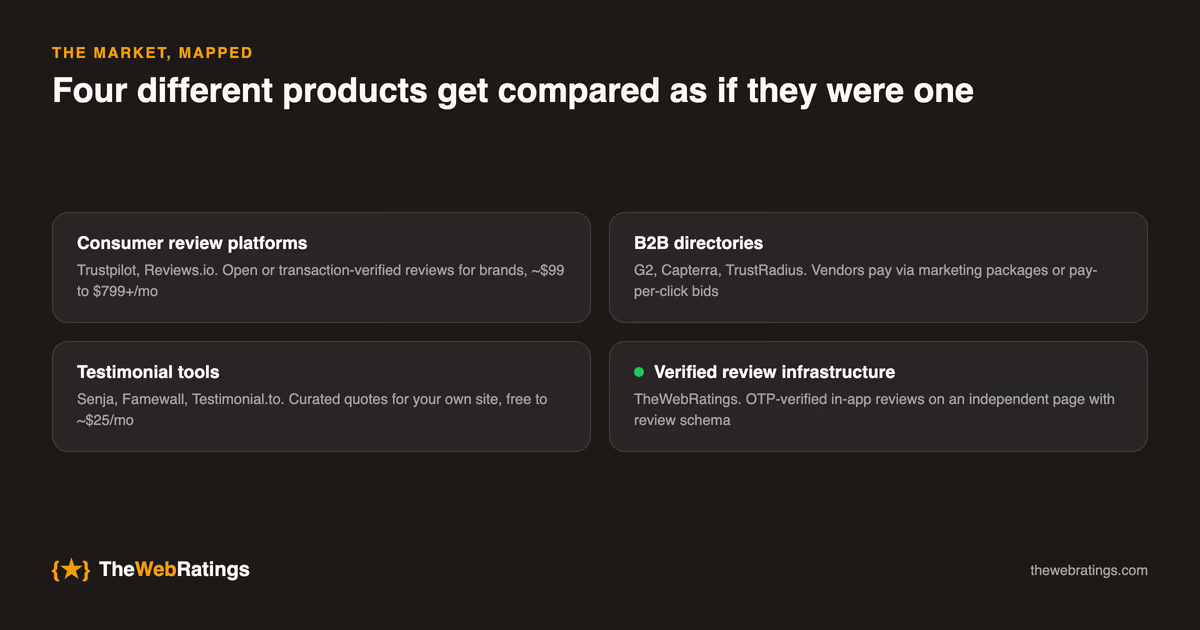
“Review platform” covers at least four different products that get compared as if they were one. Consumer review platforms (Trustpilot, Reviews.io) collect open or transaction-verified reviews for brands, priced from ~$99 to ~$799+ per month. B2B directories (G2, Capterra, TrustRadius) aggregate business-software reviews and monetize vendors through marketing packages or pay-per-click bids. Testimonial tools (Senja, Famewall, Testimonial.to) collect quotes you curate for your own site, from free to ~$25/mo. Verified review infrastructure (TheWebRatings) collects OTP-verified reviews inside your app and publishes them on an independent trust page with review schema.
Which one you need depends on three questions: who your buyers are, where trust needs to appear (search results, directories, your own site), and what you can spend. The rest of this guide works through each.
One framing to hold onto throughout: these categories are not interchangeable, and reviews collected in one rarely transfer to another. The platform decision is therefore closer to choosing a database than choosing a vendor: switching later is possible but costly, so it pays to get the category right before comparing logos within it.
Why people leave Trustpilot (or never start)
Trustpilot is the category’s brand name, and for consumer e-commerce with volume and budget it still earns its keep. The recurring complaints that drive searches for alternatives are structural, though: paid plans start at $99/mo billed annually and climb to $799/mo per domain on 12-month contracts (checked July 2026); anyone on the internet can review your company whether or not they were ever a customer; collection is email-invitation-based with low single-digit response rates; and the platform’s recurring fake-review controversies tax every honest profile on it.
We’ve broken the costs down tier by tier in Trustpilot pricing explained, and the direct feature-by-feature comparison lives at TheWebRatings vs Trustpilot. The one-line summary: for SaaS, you are paying consumer-brand prices for a collection model that does not fit how your users behave.
The contenders, honestly assessed
We maintain detailed, regularly-updated pages on each major alternative, covering what it costs, where it is weak, and who it genuinely suits:
- Trustpilot alternative · TWR vs Trustpilot
- G2 alternative · TWR vs G2
- Capterra alternative · TWR vs Capterra
- Reviews.io alternative · TWR vs Reviews.io
- Senja alternative · TWR vs Senja
- Famewall alternative · TWR vs Famewall
- Testimonial.to alternative · TWR vs Testimonial.to
For a single-page tour of the whole field, including options we do not have dedicated pages for (TrustRadius, Google Business Profile, Product Hunt), read 10 best Trustpilot alternatives for SaaS.
The testimonial-tool trap
A pattern we see constantly: a SaaS team outgrows “no social proof,” discovers Senja or Famewall, ships a beautiful wall of love in an afternoon, and concludes the review problem is solved. It is not, and the reason is structural rather than a knock on those tools.
Curated quotes on your own domain are marketing collateral. They carry no independent verification, produce no public trust profile, earn no review stars in Google (self-published testimonial markup is ignored as self-serving), and give AI assistants nothing citable. Every dollar of trust they generate depends on the visitor already being on your site. They do nothing for the far larger audience still deciding whether to visit.
The practical resolution: testimonial tools and review infrastructure are complements, not substitutes. Keep the wall of love if it earns its place; build the verified, independent review profile underneath it. The detailed comparisons on our Senja, Famewall, and Testimonial.to pages go deeper.
Special cases: agencies, marketplaces, and multi-product teams
A few situations bend the general advice. Agencies and consultancies sell trust in people rather than product, and their buyers often check Google Business Profile and Clutch-style directories before anything else; a web-app review platform helps most when the agency also ships a productized tool. Marketplaces have two reputations (the platform’s and each seller’s) and usually need internal seller ratings plus an external profile for the marketplace itself; conflating the two confuses buyers and schema alike.
Multi-product teams hit platform pricing at its worst: directories and consumer platforms charge per profile, so five small products can cost more to represent than one large one earns. This is worth checking explicitly when you compare plans: TheWebRatings Pro covers up to five websites on one $19/mo subscription, which exists precisely for the portfolio-of-small-products pattern common among indie builders.
Mobile-first products already have App Store and Play Store reviews; those matter enormously inside the stores but do nothing for web search or AI answers about the product. A web-side verified profile complements rather than competes with store ratings. And pre-launch products should mostly wait: collect a waitlist, not reviews. A review profile that predates real users is exactly the signal verification exists to prevent.
A decision framework that survives contact with reality
Enterprise B2B sales motion? You probably need a G2 presence regardless of cost, because your buyers build shortlists there. Do it properly (paid) or barely (free profile); half-measures return little. See G2 vs Capterra vs TheWebRatings for how the directory economics work.
Consumer e-commerce with transaction volume? Trustpilot or Reviews.io still fit: the email-after-purchase model matches how your customers behave, and the brand badge has real recognition in some markets.
SaaS or web app, any size? The parts you actually need (verified collection from real users, an independent public page, review schema for Google stars, display widgets) do not require an enterprise contract. This is the exact gap TheWebRatings targets: free for one website, $19/mo for Pro.
Just need prettier quotes on your homepage? A testimonial tool is honestly fine. Know what you are buying.
What review platforms actually cost: a TCO sketch
Sticker prices understate the differences, so sketch total cost of ownership for a year. Trustpilot: $99/mo entry billed annually = $1,188/yr as the floor (mid tiers run $319 to $799/mo per domain), plus the staff time to run invitation campaigns and moderate an open profile. G2: the free profile costs nothing and returns little; a real program (profile upgrade, review campaign with gift-card incentives, intent data) typically lands in the four-to-five-figure range annually. Capterra: the listing is free; a meaningful PPC presence at a few dollars per click and a few hundred clicks a month runs $500–$3,000+ monthly, open-ended. Reviews.io: ~$99/mo plus add-ons. Testimonial tools: $10–$25/mo, but recall what they buy: curated quotes, not reviews.
TheWebRatings: $0 for one website, or $228/yr for Pro at monthly billing ($190/yr paid annually). The structural difference is that the cost is flat. No per-click bidding, no campaign labor, no per-review fees; the collection runs itself from inside your product.
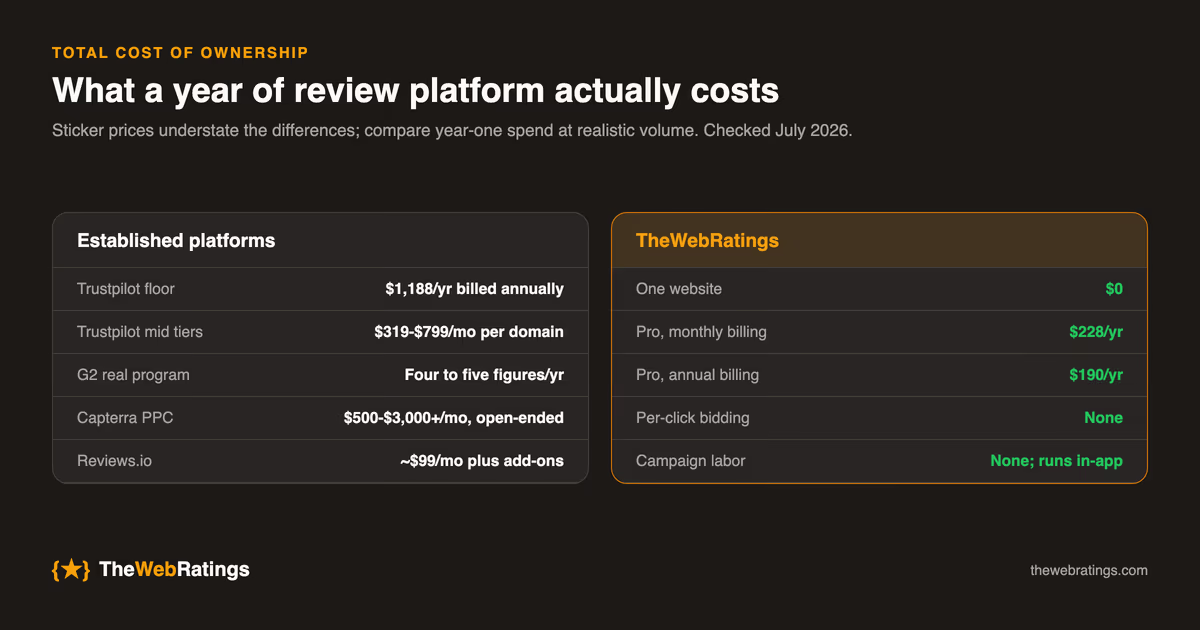
The right comparison is cost per credible, discoverable review over a year. Run that math for your actual volume before signing anything; it reorders the options dramatically for most SaaS teams. Full per-platform breakdowns are on the alternatives pages.
Seven questions to ask before you commit
Whatever platform you’re evaluating (including ours), these questions expose the differences that matter:
- Who can review my product? Anyone on the internet, invited customers, or verified users only?
- How is the reviewer verified? “Is there a badge” is the wrong question; ask what the badge actually attests.
- Where do the reviews live, and whose SEO do they feed? Your product’s page or the platform’s directory?
- What happens to the reviews if I stop paying? Read the answer twice.
- Can competitors appear on my profile? Ads, “alternatives” modules, bidding neighbors?
- What does dispute resolution look like? A documented process, or a support ticket into the void?
- What does year two cost at my realistic volume? Entry pricing and steady-state pricing often differ sharply.
Platforms answer these very differently, and the answers predict your experience far better than feature checklists. Our head-to-head comparison pages answer them for each major option, including where the other platform is the better pick.
Switching without losing your reputation
Reviews accumulated on a platform stay on that platform. There is no portability standard, and no serious platform imports another’s reviews (provenance cannot be verified). That sounds like lock-in, and it is; it is also less costly than it appears, because review value decays. Buyers weight recent reviews heavily, and a profile that stopped growing eighteen months ago persuades no one.
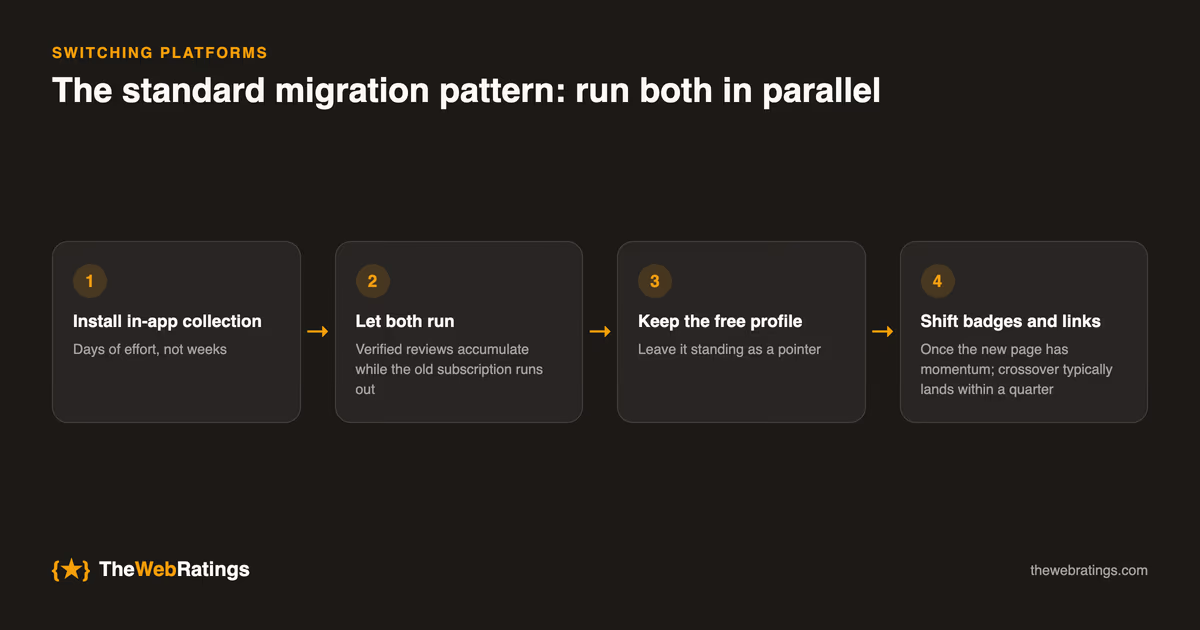
The standard migration pattern: run both in parallel. Install in-app collection (days of effort, not weeks), let verified reviews accumulate on the new profile while the old subscription runs out, keep any free profile as a pointer, and shift your site’s badges and links once the new page has momentum. Most SaaS teams find in-app collection outpaces their historical email-invitation rate quickly enough that the crossover happens within a quarter.
Ready to compare concrete options? Start at the alternatives index or jump straight to a head-to-head comparison.