How Many Reviews Does Your SaaS Actually Need?
"How many reviews do we need?" is the question every founder asks once the review program is live and the counter reads single digits. The honest answer is that there is no universal number, because reviews do three different jobs and each job has a different threshold. Chase a single vanity target and you will over-invest in one payoff while starving the others.
This is a practitioner's breakdown of the numbers that actually matter, organized by what you are trying to accomplish. For the broader strategy of collecting, verifying, and publishing, start with our pillar on customer reviews for SaaS. Here we focus narrowly on the count.
First, name the goal
Reviews buy you three separate things:
- Search visibility: star ratings and aggregate scores that can appear in Google results and get read by AI assistants.
- Buyer trust: social proof that nudges a hesitant visitor toward signing up.
- A representative average: a rating that reflects your actual user base instead of only the loudest few.
Each of these has a different point of diminishing returns. Treat them separately and the "how many" question mostly answers itself.
For star ratings and rich results
Google's structured data can carry an aggregate rating with almost any review count, so there is no hard technical floor. But a rating backed by four reviews looks fragile to both the algorithm and the human reading the result, and a suspiciously perfect 5.0 from a tiny sample invites skepticism rather than clicks.
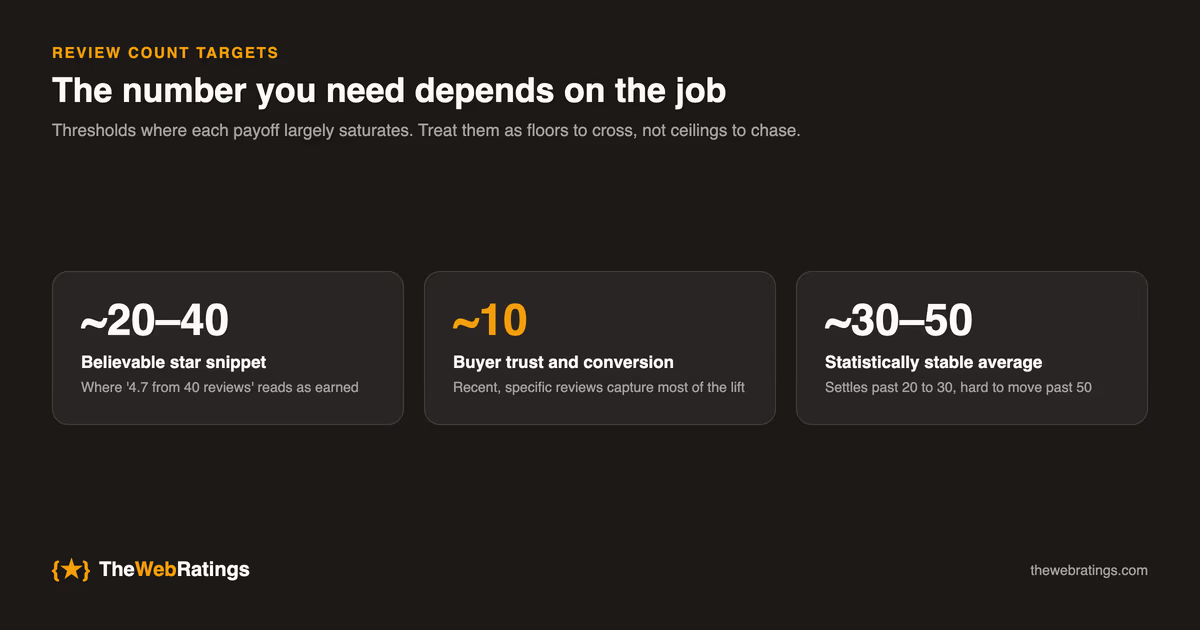
A sensible working target is enough reviews that the number reads as credible at a glance: somewhere in the range of a couple dozen. That is where a "4.7 from 40 reviews" snippet starts to feel earned rather than staged. Getting the markup itself right matters more than the raw count here: a clean, valid aggregate on a page Google trusts beats a big number wired up wrong. If you have not implemented the schema yet, that is the higher-leverage fix first.
For buyer trust and conversion
This is the goal where volume matters least and where founders waste the most effort. The research on this is fairly consistent: most buyers read only a handful of reviews before forming a judgment, and the conversion lift from social proof front-loads hard. Going from zero to roughly ten reviews captures the large majority of the trust benefit. Going from 200 to 400 barely moves a visitor's decision.
What matters more than count, past that early threshold:
- Recency. A buyer trusts ten reviews from the last two months over 500 reviews that trail off a year ago. Reviews decay in the reader's mind; a stale wall of praise reads as a program that stopped.
- Specificity. Three detailed reviews that name the exact use case beat thirty "great product!" one-liners.
- A visible response. A thoughtful public reply, especially to a critical review, does more for trust than the next fifty positive reviews.
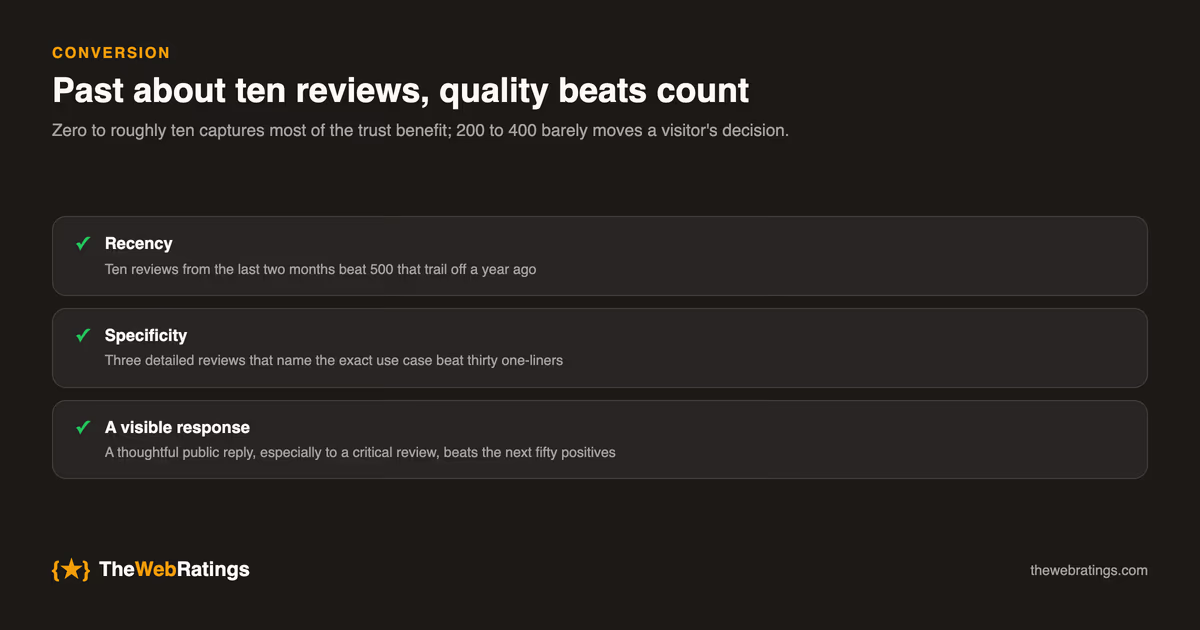
So the conversion answer is: get to about ten solid, recent, specific reviews, then stop optimizing for the number and start optimizing for freshness and quality.
For a statistically honest average
This is the goal most teams ignore, and it is the one that protects you long term. With very few reviews, your average is noise; two grumpy users can drag a 5.0 down to a 3.7 overnight. As the count grows, the average stabilizes and stops swinging on any single review.
As a rough rule, the average starts to settle somewhere past twenty to thirty reviews and becomes genuinely hard to move around fifty-plus. But raw count is only half of it. An average is only representative if the reviews come from a representative slice of users. If you only ever ask your happiest power users, you will have a stable average that is still wrong: stable and biased rather than stable and honest.
The fix is collecting continuously from inside the product at real value moments, so the quiet middle of your user base gets sampled alongside the delighted and the furious. We cover the mechanics in how to collect reviews inside your app, and the timing that reaches that quiet middle in review request timing.
Practical targets by goal
Put together, here is a working set of milestones. Treat them as thresholds where the payoff largely saturates, not as ceilings.
| Goal | Rough target | What matters more than the number |
|---|---|---|
| Believable star-rating snippet | ~20–40 total | Valid schema on a trusted page |
| Conversion / social proof | ~10 recent, specific | Recency, detail, visible replies |
| Statistically stable average | ~30–50 total | A sample wider than your happiest fans |
| Beating your category | Match the category median | Steady inflow so you stay current |
Notice these overlap. Hit a steady flow that lands you around thirty to fifty genuine, verified, recent reviews and you have quietly satisfied all four rows at once. That is the real target: a durable rate rather than a big number.
Why chasing raw volume backfires
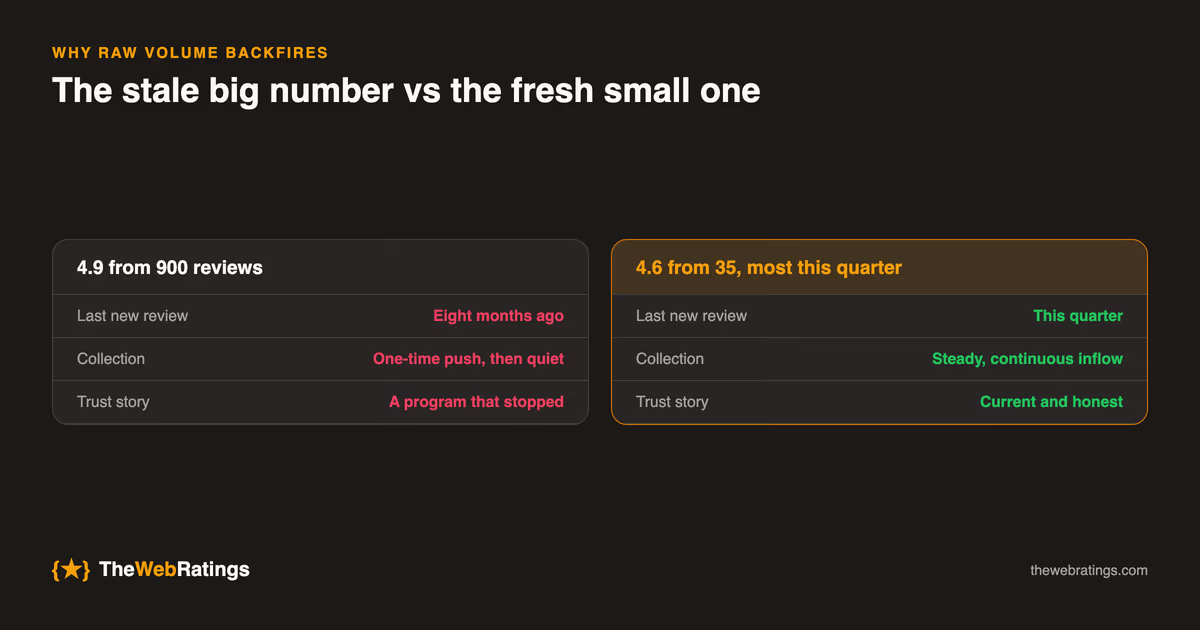
Optimizing for a big count invites the exact behaviors that destroy the value of reviews. Incentivized asks, mass calendar blasts, and gating out negatives all inflate the number while hollowing out the trust it is supposed to represent. A profile that reads "4.9 from 900 reviews" but has not added one in eight months tells a worse story than "4.6 from 35, most this quarter."
Verification is the other half of this. A hundred unverified reviews are worth less than twenty from confirmed real users, because a savvy buyer (and increasingly an AI assistant summarizing your reputation) discounts anything that could be fabricated. If your reviews are not tied to real product usage, the count is doing less work than you think. We dig into that in how to get verified reviews for your SaaS.
The rate beats the number
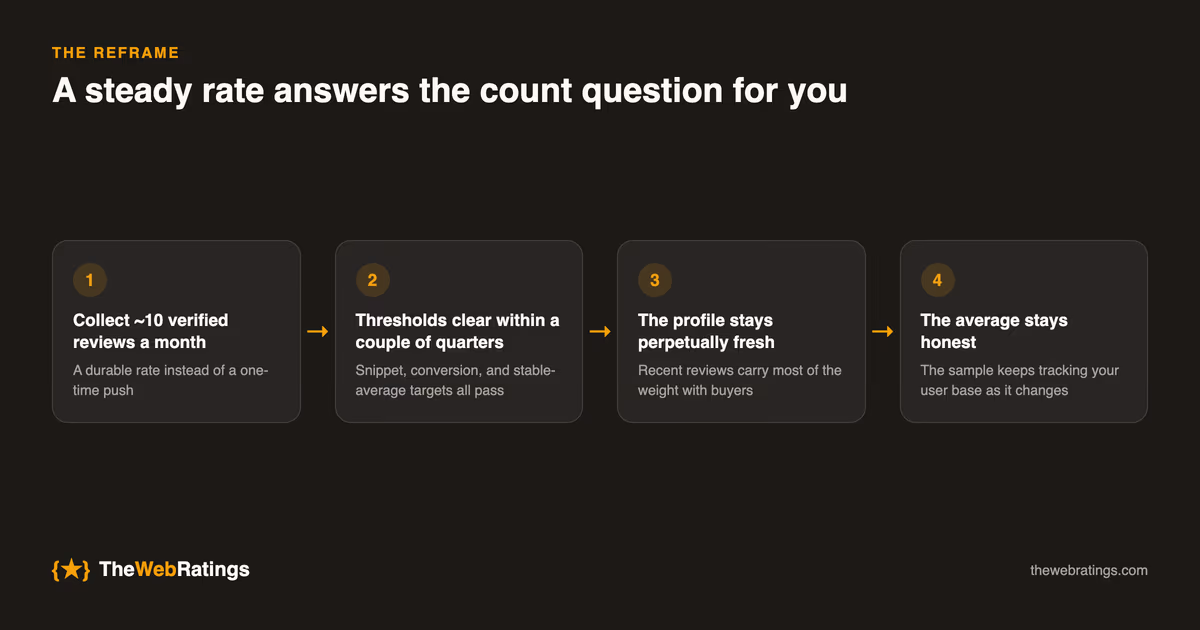
The most useful reframe: stop asking how many reviews you have and start asking how many you collect per month. A product pulling in ten verified reviews a month will pass every threshold above within a couple of quarters, stay perpetually fresh, and keep its average honest as the user base changes. A one-time push to 100 reviews that then goes quiet degrades from the day it stops.
If you are building that always-on flow from scratch, our pricing page lays out what continuous, verified, event-triggered collection looks like (we build one of these, so weigh that accordingly). Set up the rate, and the count stops being a question you have to think about.
Frequently asked questions
There is no strict technical minimum; structured data can carry an aggregate rating with just a few reviews. In practice, aim for a couple dozen so the rating reads as credible rather than staged, and make sure the schema itself is valid on a page Google already trusts. A clean aggregate matters more than a large count.
Most of the trust benefit arrives early, usually by around ten solid, recent reviews. Buyers read only a handful before forming a judgment, so past that point recency, specificity, and visible replies matter more than adding more reviews. Getting from zero to ten is far more valuable than getting from 200 to 400.
An average starts to stabilize somewhere past twenty to thirty reviews and becomes hard to move around fifty or more. But count alone is not enough. The reviews must come from a representative sample of your users rather than only your happiest power users, or you will have a stable but biased average.
Recent reviews usually win. A buyer trusts a handful of reviews from the last couple of months over hundreds that trail off a year ago, and search engines and AI assistants also weight freshness. A steady inflow beats a big one-time batch that then goes silent.
Match or slightly beat your category median rather than chasing the single biggest number in your space. Being roughly in line with competitors removes reviews as a reason for doubt; going far beyond that offers diminishing returns. A steady collection rate keeps you current without obsessing over any rival's total.
They count for less than you might hope. Buyers and AI summarizers discount reviews that could be fabricated, so twenty verified reviews from confirmed users can outweigh a hundred anonymous ones. Prioritize verification over volume when deciding what to collect and display.