G2 vs Capterra vs TheWebRatings: Where Should Your SaaS Collect Reviews?
G2 and Capterra dominate the "where should my SaaS collect reviews?" conversation, and both can be worth it for the right company, at the right stage, with the right budget. This comparison lays out how each actually works, what it costs, and where a verified-review platform like ours fits. (Yes, we build TheWebRatings; the assessments below stay factual.) Pricing figures were checked on July 22, 2026 against G2's plans page and Capterra's vendor page.
| G2 | Capterra | TheWebRatings | |
|---|---|---|---|
| Business model | Vendor marketing packages | Pay-per-click bidding | Flat subscription |
| Realistic entry cost | Free profile; Starter $299/mo year one, $599/mo after | Free listing; PPC budget (click prices unpublished) | Free (1 site); Pro $19/mo |
| Reviewer verification | LinkedIn or work email; usage self-attested | Identity checks; usage self-attested | In-app collection + email OTP |
| Incentivized reviews | Common (gift-card campaigns) | Common | Never |
| Who gets the SEO value | g2.com | capterra.com | Your product's trust page |
| Best fit | Enterprise B2B shortlists | Categories with directory traffic | SaaS building its own trust asset |
How each platform makes money, because it shapes everything
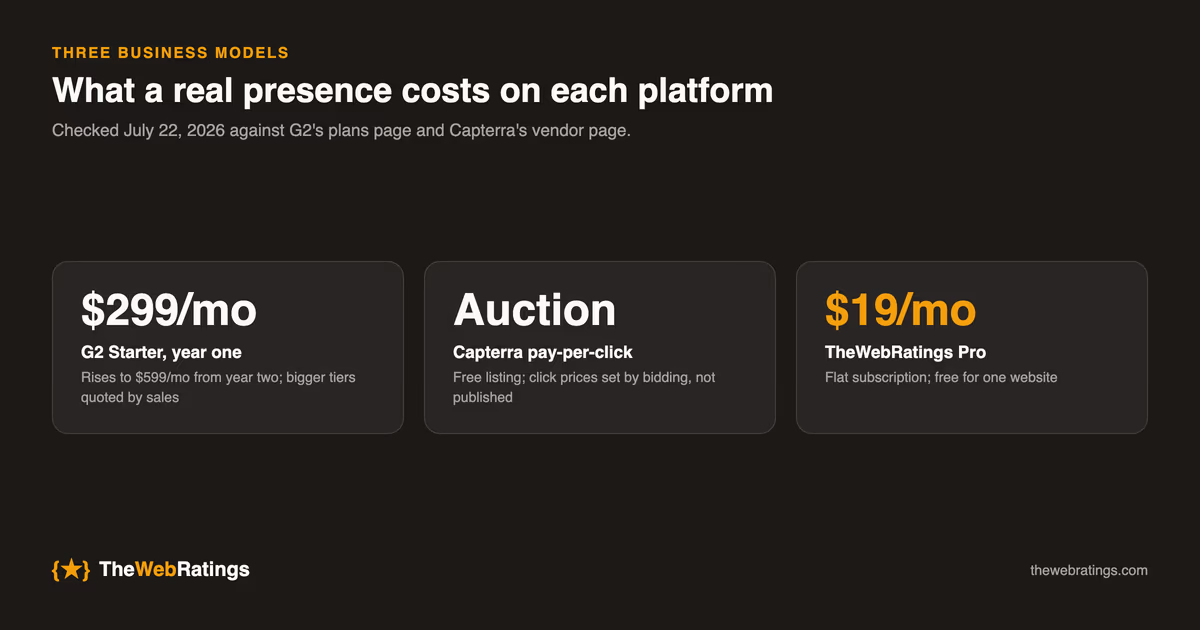
G2 monetizes vendors through marketing solutions: profile upgrades, competitor-ad removal, buyer-intent data, and review campaigns. The published entry point is the Starter plan at $299/mo (or $2,999/yr) in year one, rising to $599/mo (or $6,000/yr) from year two; Professional and Enterprise are quoted by sales. The free profile exists to make the paid tier necessary: on a free listing, your competitors' ads can appear on your own page.
Capterra (with siblings GetApp and Software Advice, all Gartner-owned) monetizes through pay-per-click bidding. The listing is free; the traffic isn't. Category placement correlates with bid, and Capterra doesn't publish click prices, so the cost of a meaningful presence depends entirely on your category's auction.
TheWebRatings charges a flat subscription for infrastructure: free for one website, $19/mo (or $190/yr) for Pro. No bidding, no campaigns, no per-review costs. See pricing.
Review collection and verification
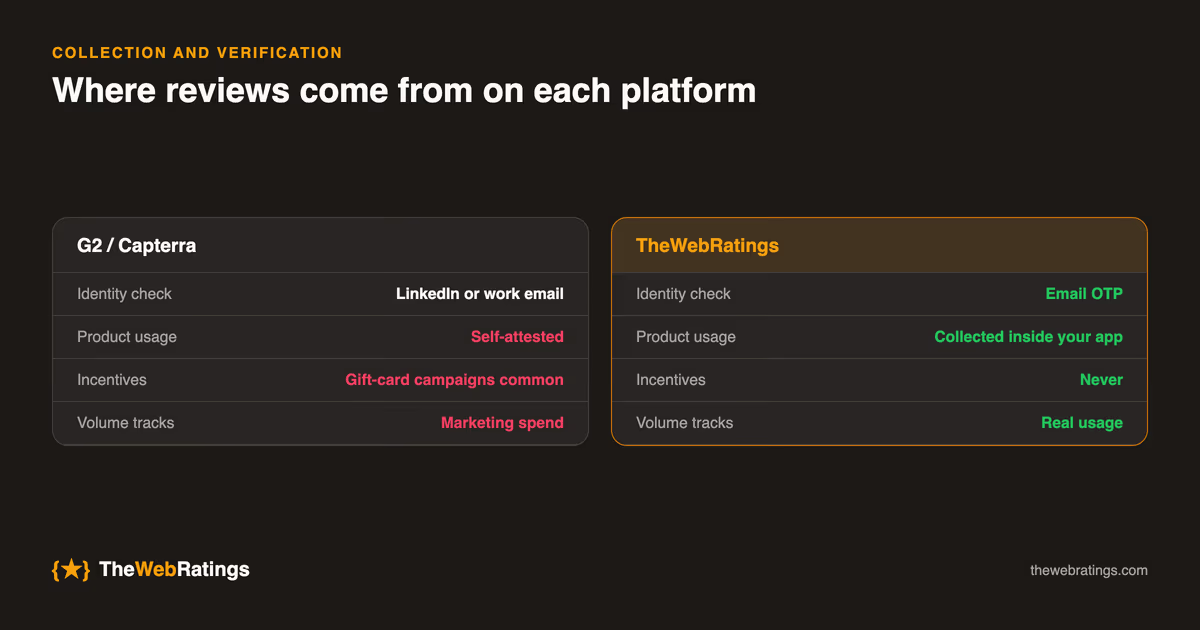
G2: reviews arrive from G2's traffic and from vendor-run campaigns, which are typically gift-card incentivized. Identity is verified via LinkedIn or work email; actual product usage is self-attested. The incentive layer means volume tracks marketing spend more than user enthusiasm.
Capterra: similar campaign mechanics, also commonly incentivized. Moderation exists, but the review base skews toward whoever ran the most recent gift-card push.
TheWebRatings: collection happens inside your app, so only actual users ever see the prompt, and every reviewer confirms their email with an OTP. No incentives, ever. The trade-off is honest: you won't import a hundred reviews from a campaign blast; you accumulate them from real usage. (Why that matters: how to get verified reviews for your SaaS.)
SEO: whose domain wins?
This one is under-appreciated. Reviews on G2 and Capterra generate schema and rankings for g2.com and capterra.com. When someone searches "your-product reviews," the directory page ranks, complete with competitor ads or bidding neighbors on it.
Reviews on TheWebRatings publish to a public trust page with AggregateRating and Review schema tied to your product, making your listing eligible for star ratings in Google results. If search presence is a goal, this difference compounds. Our review schema guide explains the mechanics.
Costs at a glance
- G2: free profile (limited); Starter $299/mo or $2,999/yr in year one, $599/mo or $6,000/yr from year two; Professional and Enterprise quoted by sales (checked July 22, 2026).
- Capterra: free listing; meaningful traffic requires an ongoing PPC budget, and click prices are set by auction rather than published, so treat it as an open-ended ad channel.
- TheWebRatings: free (1 website); Pro $19/mo or $190/yr with replies, display widgets, disputes, branding removal, and up to 5 websites.
A stage-by-stage way to decide
Budget and buyer behavior change with company stage, so the right answer does too:
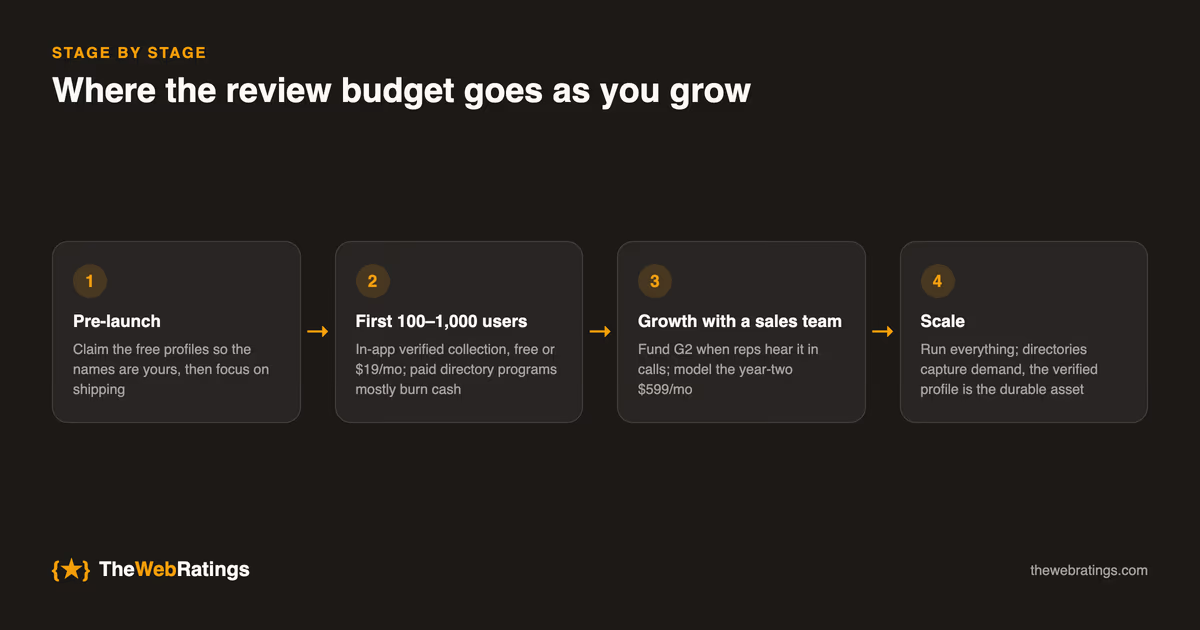
- Pre-launch to first customers: none of the paid options make sense yet. Claim the free profiles so the names are yours, and focus on shipping. Reviews come after users.
- First 100–1,000 users (indie/bootstrapped): in-app verified collection is the highest-leverage move. It's free or $19/mo, runs itself, and starts compounding your public profile and Google star eligibility immediately. Paid directory programs at this stage mostly burn cash.
- Growth stage with a sales team: if reps hear "we saw you on G2" in calls, that's your signal to fund a proper G2 program, and remember the Starter price roughly doubles in year two when you model it. Add Capterra PPC only if the category auction math beats your other paid channels. Measure it like ads, because it is ads.
- Scale: run everything, but keep the roles straight. Directories are paid demand capture; your verified in-app profile is the durable trust asset that doesn't disappear when a campaign budget does.
The mistake to avoid at every stage is treating the three as interchangeable line items. They're different products: G2 sells access to its audience, Capterra sells clicks, and verified review infrastructure builds an asset on your own product's name.
One more stage-agnostic rule: whatever you fund, measure it against signups, not vanity metrics. Directory badge impressions and profile views feel like progress; the number that justifies the spend is attributed conversions. Ask every new customer where they found you for one quarter. The answers reshape most teams' review budgets more than any comparison post can.
The honest recommendations
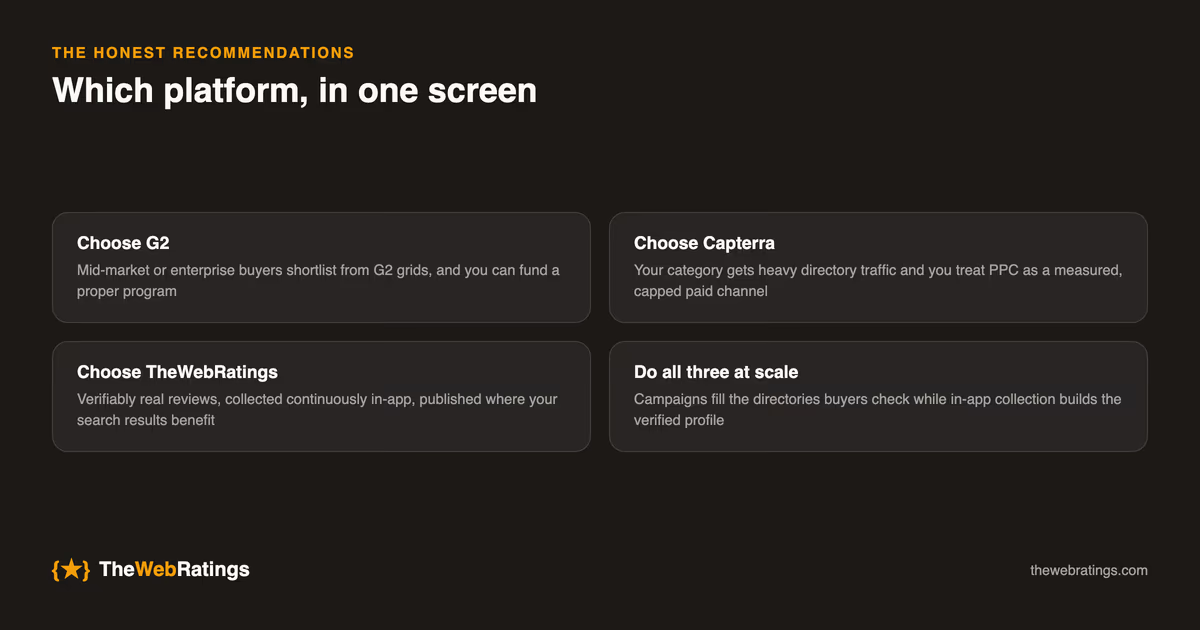
Choose G2 if you sell to mid-market or enterprise buyers who build shortlists from G2 grids, and you have the budget to play properly. A half-committed G2 presence (free profile, no campaign) delivers little.
Choose Capterra if your category gets heavy directory traffic, you want leads now, and you can treat PPC spend like any other paid channel: measured, capped, and ROI-tracked.
Choose TheWebRatings if you want reviews that are verifiably real, collected continuously from inside your product, and published where they benefit your search results. It's the right default for indie SaaS, bootstrappers, and any team that can't justify enterprise marketing spend, and it coexists fine with a free G2 or Capterra listing.
Do all three if you're at scale: campaigns fill the directories buyers check, while in-app collection builds the verified profile and Google stars nobody else can give you. At that point the platforms stop competing for the same budget line and start covering different stages of the same buyer journey: discovery on the directories, validation in search results, and conviction on your own pages.
For the wider field, including Trustpilot and the testimonial tools, see 10 best Trustpilot alternatives for SaaS and the full choosing-a-review-platform guide.
Frequently asked questions
Claim the free profiles on both. It costs nothing and keeps your name yours. Paying both rarely makes sense before you have a sales team hearing "we saw you on G2" in calls; fund one channel properly and measure it against attributed signups before adding the second.
The free profile is limited, and competitor ads can appear on your own listing. The published Starter plan is $299/mo (or $2,999/yr) in year one and rises to $599/mo (or $6,000/yr) from year two, while Professional and Enterprise packages are quoted by sales (checked July 22, 2026). Budget on the year-two number, not the intro price.
Partially. Both verify reviewer identity to a reasonable standard, but product usage is self-attested and a large share of reviews arrive through gift-card incentivized campaigns, so review volume tracks marketing spend more than user enthusiasm. Buyers increasingly discount for this.
Neither directory does much for your domain: reviews on G2 and Capterra build schema and rankings for g2.com and capterra.com. Reviews published on a TheWebRatings trust page carry AggregateRating and Review schema tied to your product, which is what makes your listing eligible for stars in Google results.
When your sales calls tell you to. Reps hearing that prospects found or vetted you on G2 is the reliable signal. Before that, a paid G2 program is mostly an expensive way to decorate a directory page your buyers aren't reading yet.