Free Review Platforms Compared: What Each Free Tier Actually Includes
Almost every review and testimonial platform advertises a free plan, and the word covers at least three unrelated business decisions. Some free tiers are volume-limited trials you exhaust in a fortnight. Some are free listings where the money is charged for visibility instead of for the profile. A few are working tiers you can run indefinitely, with specific features held back.
This post goes platform by platform and says what each free plan gives you, what it withholds, and what the first paid step costs when you outgrow it. Every figure was checked against the vendor's own pricing page on July 22, 2026, and comes from the same dataset behind our alternatives guide. We build TheWebRatings, which appears in the table below, and its numbers come from the same file as everyone else's.
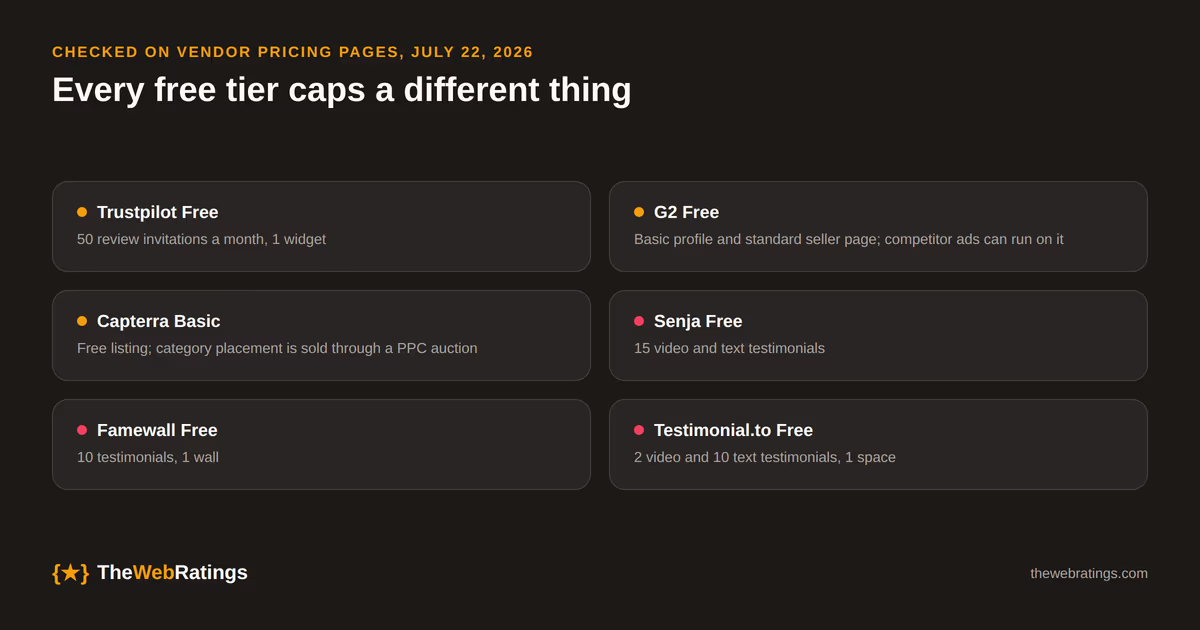
| Platform | Free tier ceiling | Held back until you pay | First paid plan |
|---|---|---|---|
| Trustpilot | 50 review invitations/mo, 1 widget | Invitation volume, extra widgets, extra domains | Starter $99/mo, billed annually |
| G2 | Basic profile, standard seller page | Competitor-ad removal, profile upgrades, intent data | Starter $299/mo (year one) |
| Capterra | Basic listing | Category placement | PPC bidding, click prices unpublished |
| Senja | 15 video and text testimonials | Unlimited testimonials, extra forms and projects | Starter $29/mo |
| Famewall | 10 testimonials, 1 wall | Extra walls and testimonials | Standard $9.99/mo |
| Testimonial.to | 2 video and 10 text testimonials, 1 space | Unlimited video, extra spaces | Starter $25/mo |
| TheWebRatings | 1 website, unlimited verified reviews, public page, collection widget | Replies, display widgets, disputes, branding removal, up to 5 sites | Pro $19/mo or $190/yr |
Reviews.io is missing from that table on purpose, and I explain why further down.
Three business models, one word
The useful question about a free plan is not whether it exists but which of these it is.
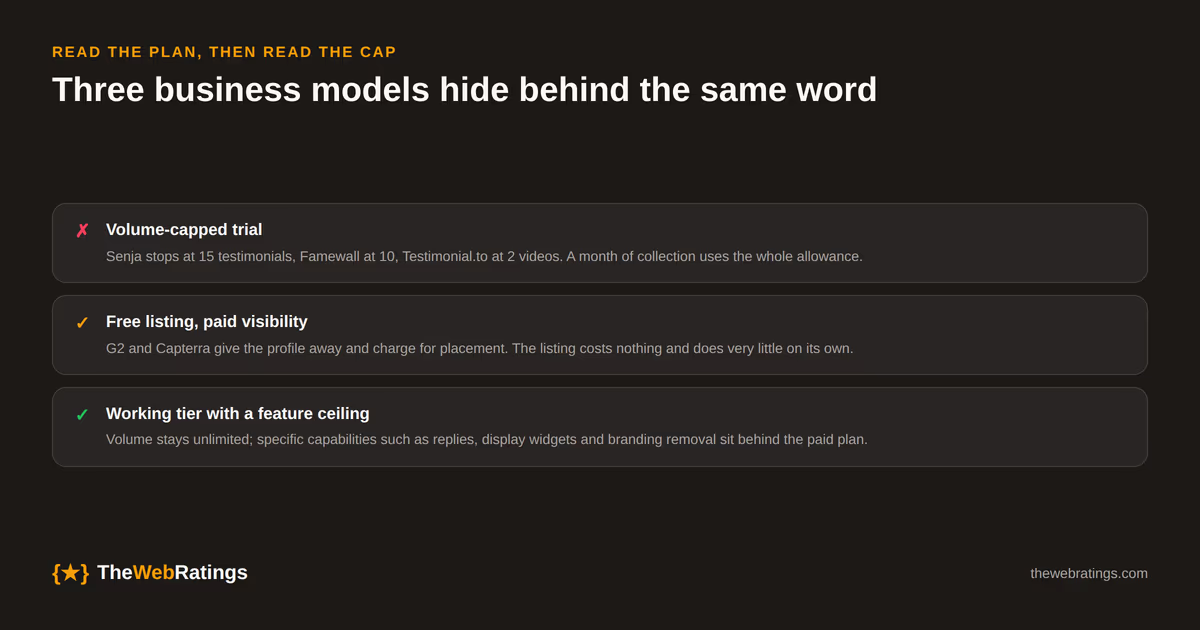
Volume-capped trials. Senja's free tier stops at 15 testimonials. Famewall's stops at 10. Testimonial.to's stops at 2 videos and 10 text entries. If your collection flow works at all, you hit those ceilings inside the first month, which is the design intent. These are demos with a longer expiry date.
Free listings with paid visibility. G2 and Capterra hand out the profile and charge for placement. Nothing about your listing is volume-capped. What you are missing is traffic, and the price of traffic is set by a sales conversation (G2) or an auction you cannot see the reserve on (Capterra).
Working tiers with a feature ceiling. Volume stays unlimited, and specific capabilities sit behind the paid plan instead. You can run one of these for years and only pay when you want a particular thing.
None of the three is dishonest. They fail differently, though, and the failure mode matters more than the price when you are picking something you intend to keep.
Review platforms
Trustpilot: 50 invitations a month, one widget
The free Trustpilot plan gives you a claimed profile, 50 review invitations per month, and a single widget. For a consumer brand collecting a handful of reviews a month, that is a genuinely usable plan.
Two caveats. First, anyone can review your company on Trustpilot whether or not they have used your product, so the profile exists whether you claim it or not. Claiming it is defensive as much as it is promotional. Second, the step up is steep: Starter is $99/mo billed annually on a 12-month contract, raises the invitation cap to 100 a month, and is restricted to new customers. The tiers most teams actually grow into run $319/mo and $799/mo per domain. I broke the whole ladder down in Trustpilot pricing explained.
G2: a free profile your competitors can advertise on
G2's free tier is a basic profile and a standard seller page. There is no cap on how many reviews it can hold. The constraint is what surrounds them: on a free listing, competitor ads can appear on your own product page, and the upgrades that remove them start at Starter, $299/mo in year one and $599/mo from year two.
That makes G2's free plan closer to a placeholder than a channel. It is worth claiming because buyers on enterprise shortlists check G2 and an unclaimed profile looks abandoned. It is not worth building a review strategy on unless you have budget for the paid tier.
Capterra: free listing, auctioned placement
Capterra (with GetApp and Software Advice, all Gartner-owned) lists you for nothing. Visibility in category pages is sold by pay-per-click bidding, and Capterra does not publish click prices, so the real cost of a meaningful presence depends entirely on your category's auction. A free Capterra listing is close to free in both directions: it costs nothing and, absent bids, it usually delivers close to nothing.
If you are weighing the two directories against each other, G2 vs Capterra vs TheWebRatings covers the mechanics in more depth.
Reviews.io: we could not verify it
Reviews.io belongs in this category and I left it out of the table because I could not confirm the figures. Their pricing page blocked our automated check on July 22, 2026, and paid plans have historically started around $99/mo scaling with order volume. I am not going to publish a free-tier claim I cannot source. If you are evaluating them, ask their team directly and hold them to the answer in writing.
Testimonial tools
Senja, Famewall and Testimonial.to are a different product category that shows up in the same searches. What arrives through them is a quote you approve before it appears on your site. That is useful for a landing page. It works differently from a review, because you choose which ones publish. Senja vs Testimonial.to vs TheWebRatings goes deeper on that distinction.
Senja gives 15 video and text testimonials free. Starter is $29/mo for unlimited testimonials, 3 forms and 1 project; Pro is $59/mo for unlimited forms, 5 projects and 5 seats. Both run about 17% cheaper billed annually.
Famewall is the cheapest ladder here: 10 testimonials and 1 wall free, then $9.99/mo Standard (4 walls), $24.99/mo Professional (15 walls), $79.99/mo Business (unlimited). Roughly 20% off yearly. If all you want is a wall of quotes on a marketing page, this is the least expensive credible way to get one.
Testimonial.to gives 2 video plus 10 text testimonials in 1 space. Starter is $25/mo, Ultimate is $50/mo per space, Ultimate+ is $95/mo per space with NPS surveys and an AI video editor. The per-space pricing is the detail to watch: multiple products means multiple spaces means a multiplied bill.
What it costs when you outgrow free
The free tiers cluster. The first paid step does not.
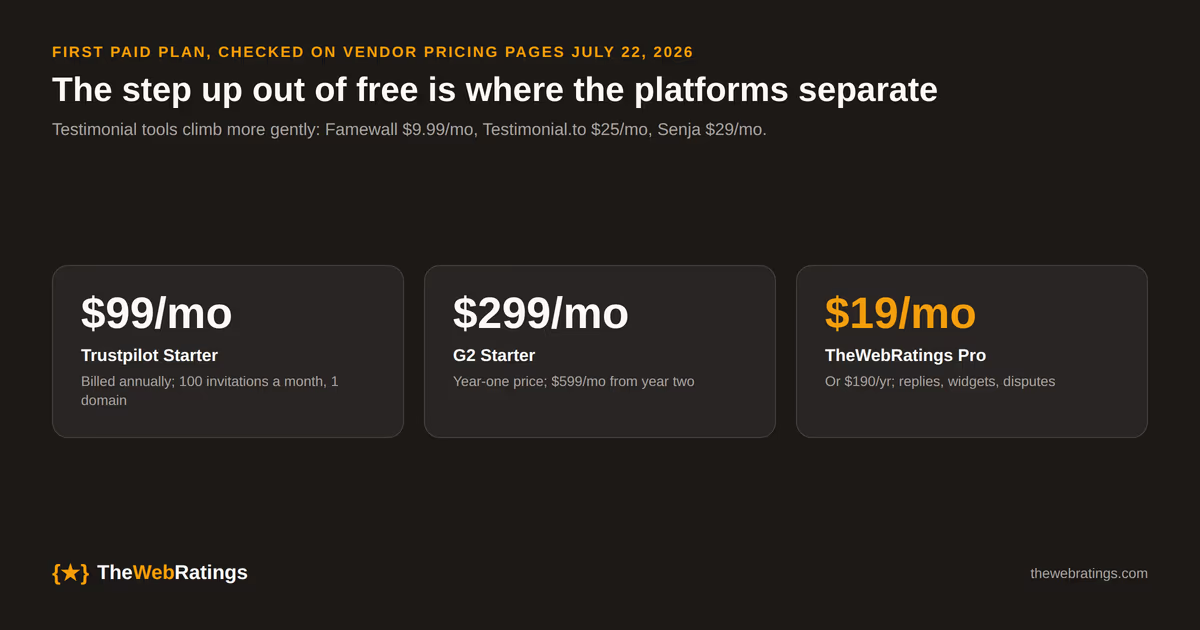
Trustpilot Starter is $99/mo billed annually. G2 Starter is $299/mo in year one and $599/mo from year two. Testimonial tools step up between $9.99/mo and $29/mo, which reflects that they are doing considerably less. Our own Pro plan is $19/mo or $190/yr and is listed on the pricing page with the same detail as everything above.
The number worth writing down is the annual one, because the review platforms bill that way whether you want to or not. A year of Trustpilot Starter is roughly $1,188 committed up front on a 12-month contract. A year of G2 Starter is $2,999 in year one and about $6,000 after. Those are the figures to hold against whatever a free tier is saving you.
Which free tiers can earn star ratings in Google
This is the divergence that the feature tables usually miss. Star ratings in search results come from review structured data, and Google does not credit a site for marking up its own self-serving reviews. So the question for any free tier is whether it produces markup on a page you benefit from, sourced from somewhere Google treats as independent.
Testimonial tools do not clear that bar by design, because you curate what publishes. Directory profiles do clear it, but the stars land on g2.com or capterra.com, next to your competitors. A third-party review platform that publishes an independent public profile clears it and points the markup at a page about you.
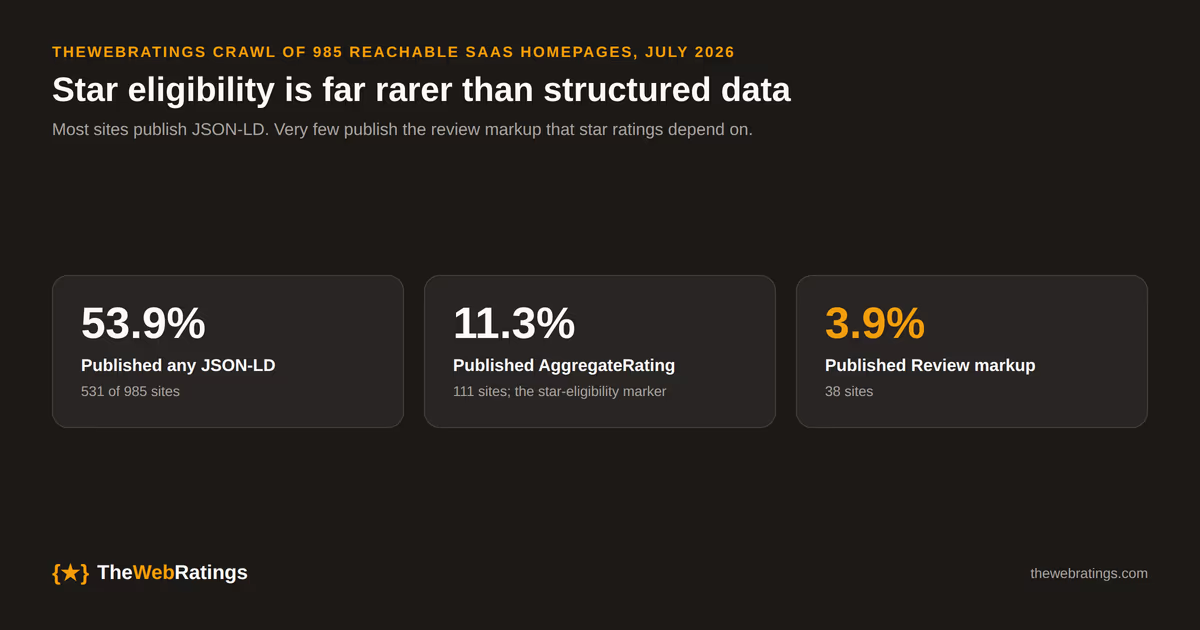
It is a rarer capability than it sounds. In our July 2026 crawl of 985 reachable SaaS homepages, 111 sites (11.3%) published an AggregateRating and only 38 (3.9%) published Review markup, so almost every product in that sample is ineligible for review stars on its own domain.
Our free tier includes the public profile and the schema that comes with it, which is the one place where I think our free plan is genuinely unusual rather than merely competitive. The honest limitation on the same plan: you cannot reply to reviews or embed display widgets on your own site until you pay, and being unable to reply to a critical review is a real constraint, not a cosmetic one.
Choosing in one pass
Sort by what you are actually trying to do.
If you need social proof on a marketing page this week and nothing else, take Famewall's free tier or its $9.99/mo Standard plan. It is the cheapest thing here that does that job properly, and paying $99/mo to a review platform for the same outcome would be a waste.
If you sell to enterprise buyers who shortlist on G2, claim the free profile now and treat the $299/mo question as a sales-budget decision separately. Do not expect the free listing to move anything.
If you are a consumer brand with steady transaction volume, Trustpilot's free tier is a reasonable start, and you should price the $99/mo annual contract before you build a flow around it.
If you are a SaaS product and you want reviews from confirmed users on a public page that can earn stars, you want a platform whose free tier does not cap review volume. We built ours that way, and there are others in the alternatives roundup worth checking against your own requirements.
Frequently asked questions
It depends on what you are counting. On review volume, TheWebRatings is the only free plan in this comparison that does not cap how many reviews you can collect on one website. On invitations, Trustpilot allows 50 a month free. On testimonials, Senja's 15 is the highest of the testimonial tools. Generosity in one dimension usually means a tighter limit in another, so check the cap that matches your actual bottleneck.
Usually yes, for defensive reasons. Anyone can leave a review of your company on Trustpilot whether or not you have an account, so a profile will often exist before you claim it. Claiming the free plan lets you see and respond to what is already there and send up to 50 invitations a month. Whether the paid tiers are worth it is a separate calculation, since Starter is $99 a month billed annually on a 12-month contract as of July 2026.
Some can. Star ratings require review structured data on a page Google considers independent of the business being reviewed, which rules out testimonial tools where you approve what publishes. Directory profiles on G2 or Capterra can show stars, but they show on the directory's domain rather than yours. A third-party platform that publishes a public profile for your product can produce that markup on a page about you, and on TheWebRatings that public page is included in the free plan.
A testimonial tool collects quotes that you review and choose to publish, so the output is marketing copy in the customer's words. A review platform publishes what reviewers submit, including ratings you would rather not display. The practical consequences are that testimonial tools are faster to make look good and carry less weight with a skeptical buyer, while review platforms are slower to fill and more persuasive once they are full.
As checked on vendor pricing pages in July 2026, the first paid step is $9.99 a month for Famewall, $19 a month for TheWebRatings Pro, $25 a month for Testimonial.to, $29 a month for Senja, $99 a month for Trustpilot Starter billed annually, and $299 a month for G2 Starter in year one rising to $599 from year two. Capterra does not publish click prices, so its cost depends on your category's auction. Re-check before you budget, because vendors change these regularly.