Senja vs Testimonial.to vs TheWebRatings: Testimonials or Reviews?
Senja and Testimonial.to land in the same shortlist constantly, and they belong there: they are the same product with different emphases. Both collect quotes from happy customers and help you arrange them attractively on your own site. TheWebRatings shows up in those searches for a different reason, and we build it, so weigh the sections below accordingly.
The useful question is which category solves your problem. A testimonial tool fixes a landing page that has no social proof on it. A review platform fixes a buyer who searched your product name and found nothing independent. Those are separate jobs, they cost different amounts, and picking the wrong one is the most common mistake I see founders make when they finally get around to social proof. The wider map of the category sits in our pillar on Trustpilot alternatives.
What each one actually collects
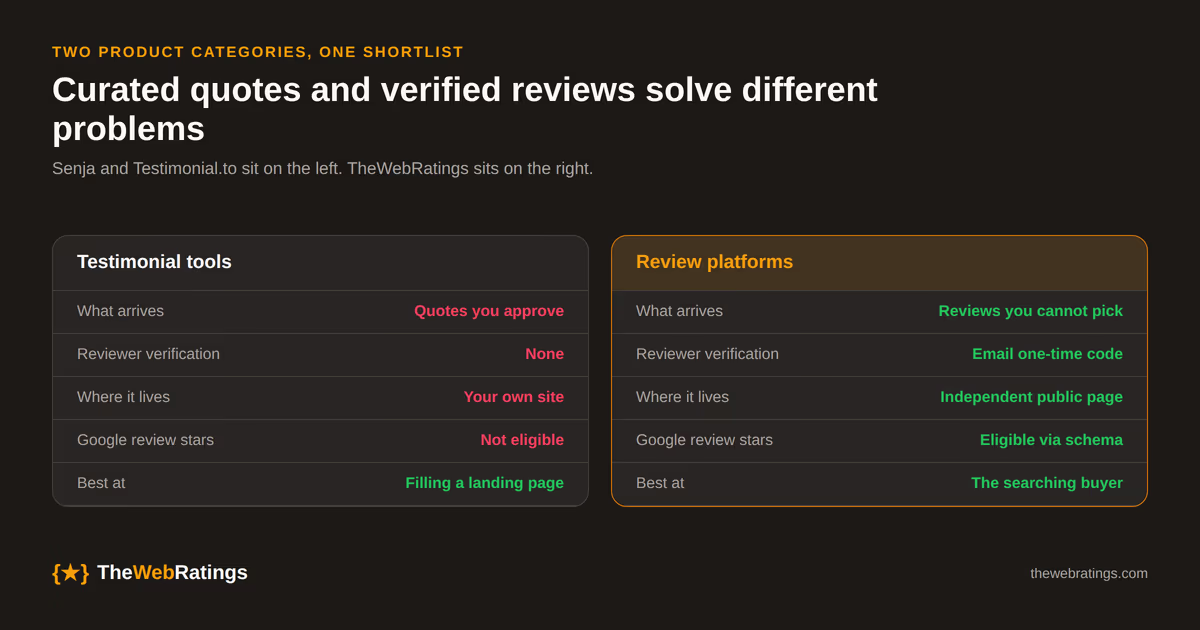
Senja and Testimonial.to both work the same way at the collection step. You create a form or a recording link, send it to customers, and the submissions land in a dashboard. You then choose which ones go live. Nothing stops a customer from submitting, and nothing forces you to publish what they wrote. That is a feature if you are building a marketing page and a problem if you are trying to prove something.
TheWebRatings collects through a widget inside your product. The reviewer verifies with an email one-time code, the review publishes to a public profile on our domain, and you do not get a veto. You can reply to it on Pro, and you can dispute one that breaks the rules, but you cannot quietly leave a three-star review out of the set.
That single difference cascades into everything else on the pricing table below. Curated quotes are cheap to host and cheap to serve because nobody has to arbitrate them. Verified reviews carry verification cost, moderation cost, and a public record that occasionally embarrasses the customer paying for it.
Pricing, side by side
Every figure below came off the vendor's own pricing page on July 22, 2026. Vendors move prices without announcing it, so check the source before you sign anything.
| Senja | Testimonial.to | TheWebRatings | |
|---|---|---|---|
| Free tier | 15 video and text testimonials | 2 video plus 10 text, 1 space | 1 website, unlimited verified reviews |
| Entry paid plan | Starter $29/mo | Starter $25/mo | Pro $19/mo, or $190/yr |
| Next tier up | Pro $59/mo | Ultimate $50/mo per space | Included in Pro |
| Annual discount | About 17% off | $300/yr Starter, $600/yr Ultimate | $190/yr |
| Reviewer verification | None | None | Email one-time code |
| Where it publishes | Your site | Your site | Independent public trust page |
| Google review stars | Not eligible | Not eligible | Eligible via review schema |
Two rows are worth pausing on. Testimonial.to prices per space, so a company running three products pays three times for the Ultimate tier, which is where unlimited video lives. And Senja's Starter caps you at three forms and one project, which is generous for a single product and tight the moment you add a second.
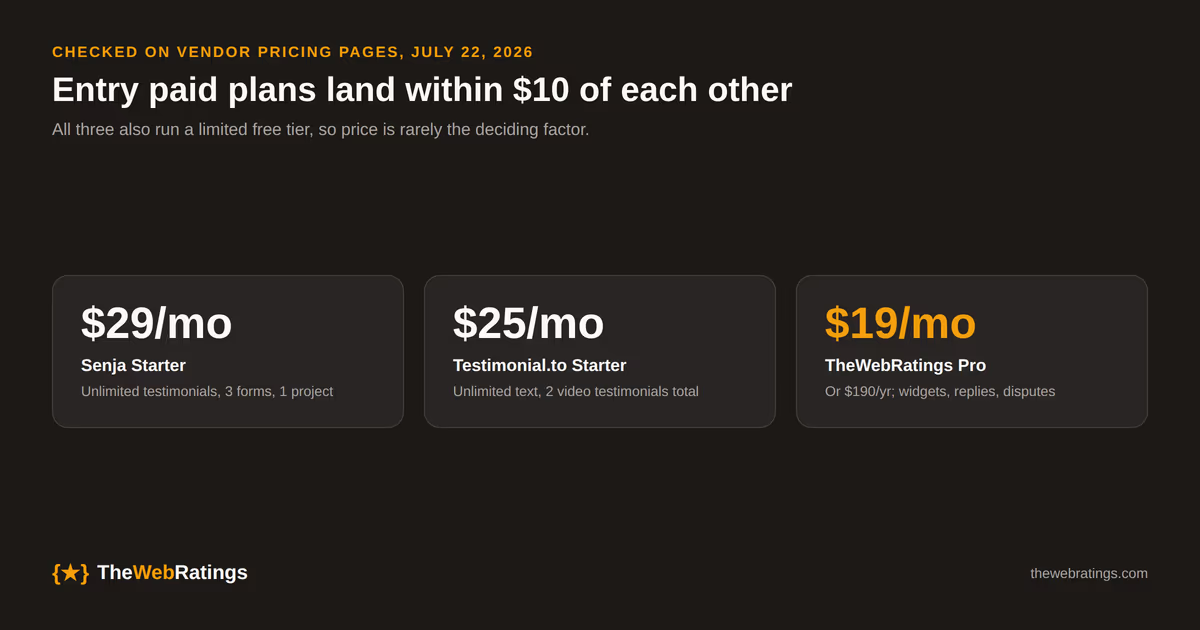
The prices are close enough that cost should not decide this. A $4 or $10 monthly gap is noise next to whether the output does the job you needed.
Senja: the best testimonial workflow of the three
Senja is genuinely good at the thing it does. Collection forms are quick to build, the import tools pull existing praise out of Twitter and LinkedIn, and the wall embeds look right without CSS surgery. If your problem is a homepage with an empty space between the feature grid and the pricing table, Senja fills it faster than anything else here, including us.
Its ceiling is what a curated quote can prove. You picked the quotes, the reader knows you picked the quotes, and they discount accordingly. Senja does not verify that a submitter used your product, does not host a public profile on an independent domain, and does not produce markup Google will show stars for, because self-published testimonial markup on your own site reads as self-serving under Google's structured data guidelines.
Choose Senja if the marketing site is the whole battlefield and speed matters more than independence.
Testimonial.to: video first, at a per-space price
Testimonial.to leans harder into video, and video testimonials do convert. A thirty-second clip of a real customer explaining what changed carries weight that no star rating reaches. The Wall of Love embed is the recognizable artifact of that whole product category for a reason.
The catch is the pricing shape. Starter at $25/mo includes unlimited text but only two video testimonials in total, so the plan that matches how the tool is actually used is Ultimate at $50/mo per space. Verification is the same as Senja's, which is to say there is none, and the embeds do not qualify for review rich results either.
Choose Testimonial.to if video is central to how you sell and you are running one product rather than a portfolio.
Where the difference shows up: search and AI answers
Curated quotes are invisible outside your own site. They do not appear when a buyer searches "yourproduct reviews", they do not give an AI assistant anything to cite, and they cannot produce a star rating under your search result. The mechanism that does all three is review schema published on a page hosting genuine reviews, on a domain the search engine treats as independent of you.
The gap here is unusually wide. In TheWebRatings' July 2026 crawl of 985 reachable SaaS homepages, only 111 sites (11.3%) published AggregateRating markup and just 38 (3.9%) published Review markup, while 531 (53.9%) shipped some JSON-LD. Most software companies have structured data and no review structured data. Full method and per-type counts are in the State of SaaS Review Schema 2026 study.
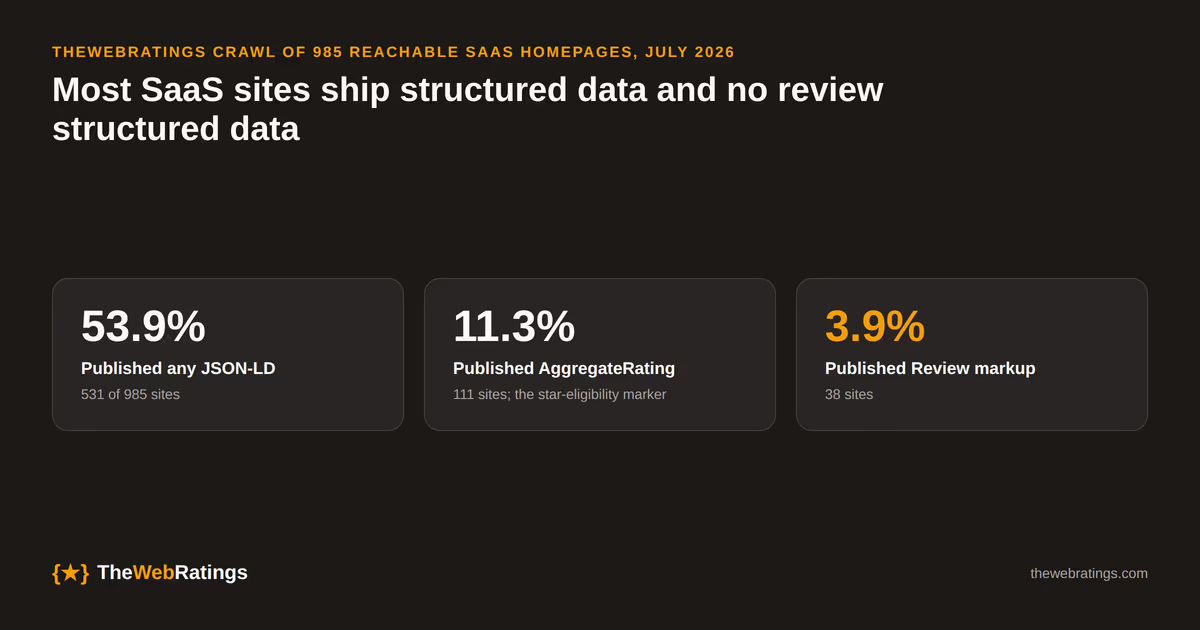
That gap is why the two categories do not substitute for each other. A testimonial wall and a public review profile can both sit on your site, but only one of them exists in search results, and the search result is where a buyer forms an opinion before they ever reach your landing page. If you want the mechanics of getting there, how to get verified reviews for your SaaS covers collection, and the wider field of independent platforms is in 10 best Trustpilot alternatives for SaaS.
How to choose
The honest decision rule is short.
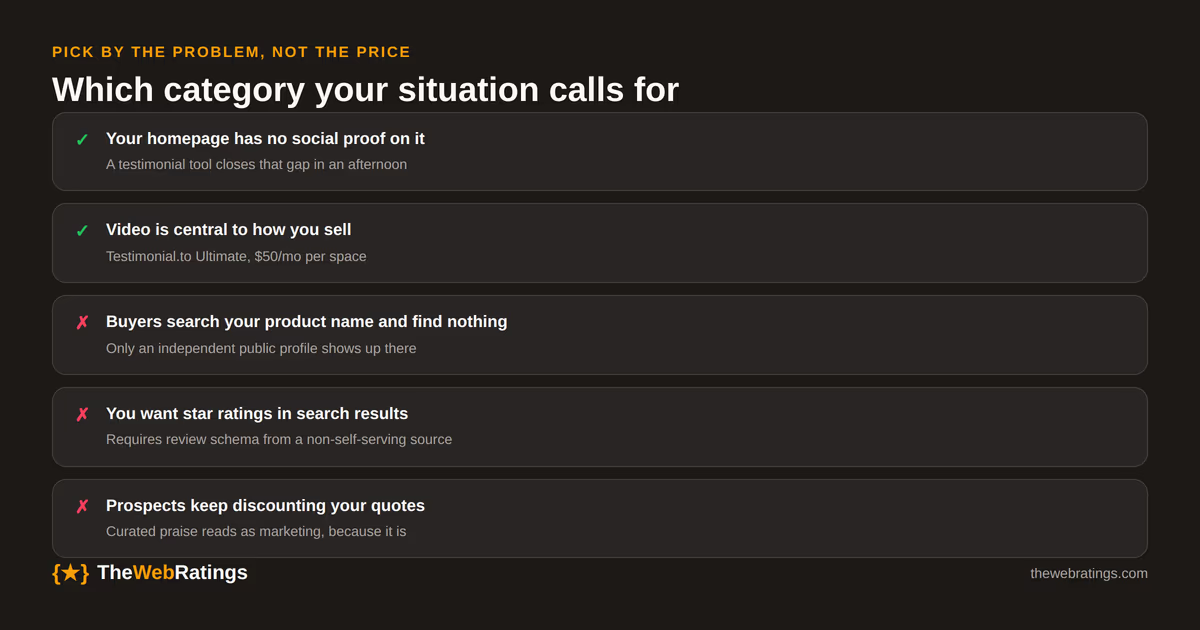
Pick a testimonial tool when the gap is on your own pages and you need it closed this week. Pick a review platform when a buyer already searched your product name and found nothing they trusted, or when your sales calls keep stalling on "do you have references". Run both if the budget allows, because they genuinely do different work and the combined cost is under $50/mo at entry tiers.
For the head-to-head on features and migration specifically, our TWR vs Senja comparison lays out the matrix row by row, including the places Senja wins outright. We build one of the three products on this page, so treat that page as an argument rather than a survey. If Trustpilot rather than a testimonial tool is the comparison you actually need, the Trustpilot alternatives page covers pricing and verification for that one.
Frequently asked questions
A testimonial is a quote you solicited and chose to publish, hosted on your own site. A review is submitted to a third party, published whether or not you like it, and visible to anyone who looks up your product. Buyers apply a heavy discount to testimonials for exactly that reason, and search engines treat self-published testimonial markup as self-serving rather than as review evidence.
Testimonial.to's entry plan is slightly cheaper at $25/mo against Senja's $29/mo Starter, checked in July 2026. The comparison flips at the tier most teams actually need: Testimonial.to charges per space, and unlimited video requires Ultimate at $50/mo per space, while Senja's Pro is $59/mo covering five projects. For a single product Testimonial.to is usually cheaper; for a portfolio Senja usually is.
No. Star ratings in search results require review structured data from a source Google does not consider self-serving, and markup you publish about your own product on your own domain fails that test. Independent review platforms publish AggregateRating and Review schema on profiles they control, which is what makes the stars eligible to appear.
Neither verifies the submitter. Anyone with your collection link can record a video or fill in a form, and you decide what gets published afterwards. That is acceptable for marketing quotes and insufficient as proof, which is why verified platforms tie each review to a confirmed email or a confirmed session inside the product.
Yes, and plenty of teams do. Video testimonials on the homepage handle the emotional case while a public review profile handles the searching buyer and the structured data. At entry tiers the combination runs under $50/mo, which is cheaper than most teams expect and cheaper than one month of an agency retainer.
Neither, yet. With no users you have nothing genuine to collect, and a wall of quotes from friends is easy to spot. Ship, get the first twenty users through a real workflow, then start collecting from inside the product so the reviews arrive from people who actually used it. Free tiers on all three tools let you set up the plumbing before you have anything to put through it.