10 Best Trustpilot Alternatives for SaaS (2026)
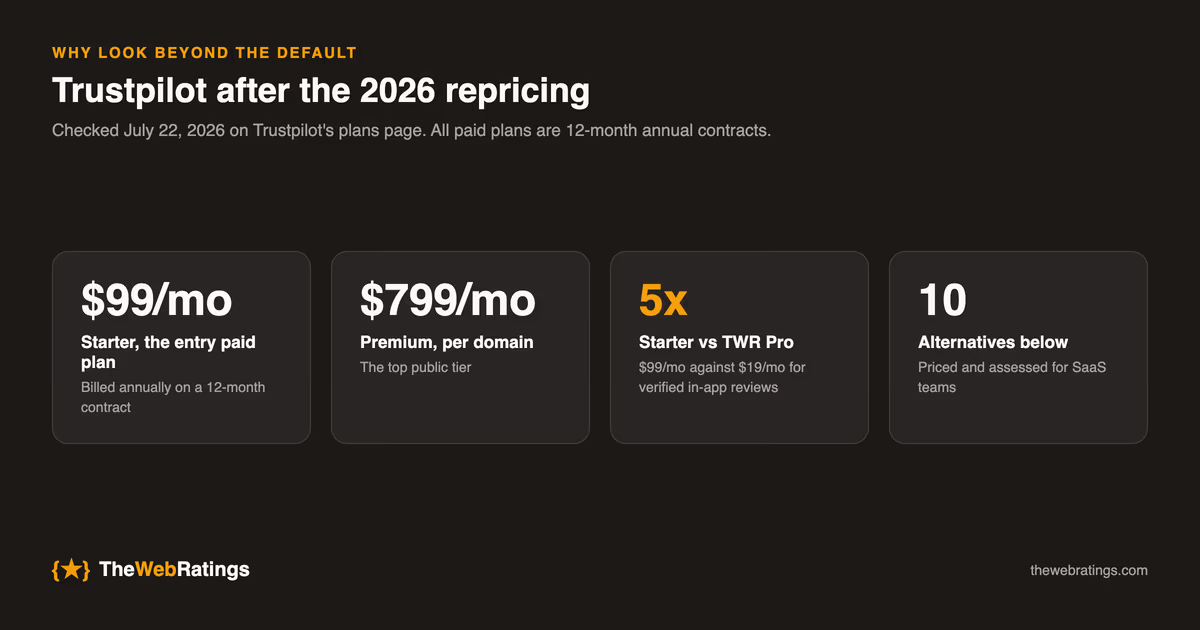
Trustpilot is the default answer when a SaaS founder asks "where should I collect reviews?", and for most SaaS teams it's the wrong one. Paid plans start at $99/mo billed annually on a 12-month contract and climb to $799/mo per domain (Trustpilot repriced in 2026; the old $259-and-up public tiers are gone; checked July 22, 2026 on Trustpilot's plans page). Collection happens through email invitations rather than inside your product, and anyone on the internet can review your company whether or not they've ever used it.
This list covers ten alternatives. We build one of them (TheWebRatings), so we've kept the assessments factual: what each platform costs, how it verifies reviewers, and who it genuinely suits. For the deeper decision framework, see our full guide to choosing a review platform. If you already know Trustpilot is the one you're replacing, the Trustpilot alternatives page has the feature matrix and switch steps for that specific move.
What to look for in a Trustpilot alternative
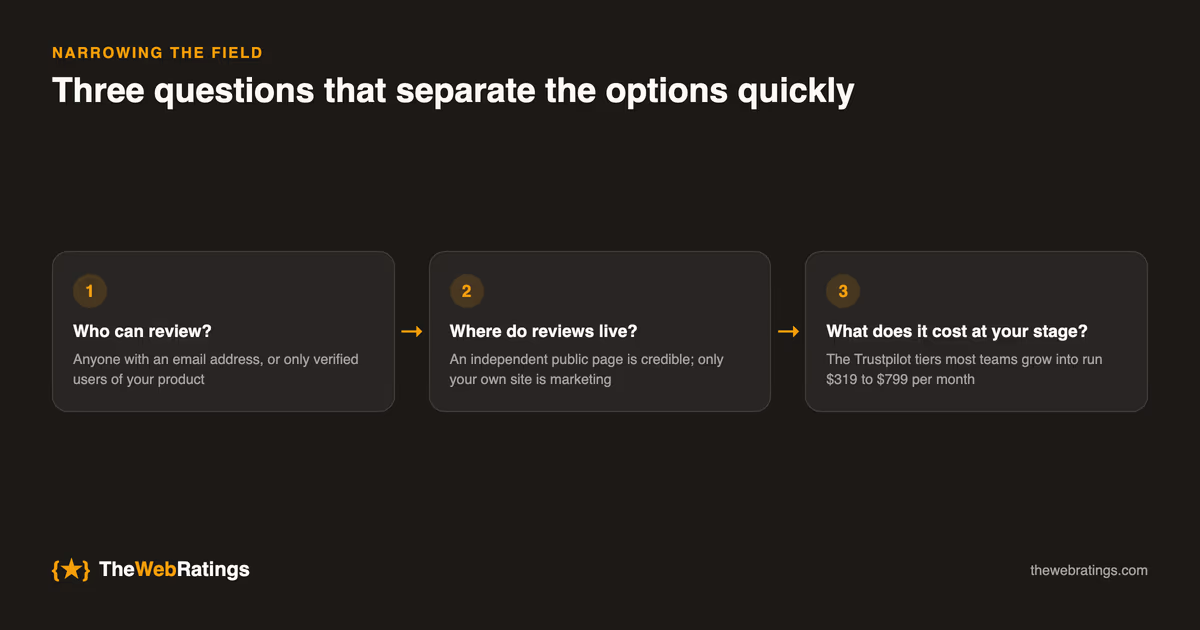
Three questions separate the options quickly:
- Who can review? Anyone with an email address, or only verified users of your product?
- Where do reviews live? On an independent public page (credible), or only on your own site (marketing)?
- What does it cost at your stage? Trustpilot's $99/mo Starter is 5x the price of TWR Pro, comes with a 100-invitations-per-month cap, and the tiers most teams grow into run $319 to $799 per month.
The alternatives
All ten at a glance, with details on each below. Prices checked July 22, 2026 unless noted:
| Platform | Starting price | Who can review | Best for |
|---|---|---|---|
| TheWebRatings | Free; Pro $19/mo | Verified in-app users (email OTP) | SaaS and web apps |
| G2 | Free profile; Starter $299/mo year one | Anyone with LinkedIn or work email | Enterprise B2B shortlists |
| Capterra | Free listing; PPC (click prices unpublished) | Anyone, often via incentivized campaigns | Directory traffic with ad budget |
| Reviews.io | Historically ~$99/mo (could not re-verify) | Verified buyers (order data) | E-commerce stores |
| Senja | Free tier; $29/mo Starter | Anyone with the form link | Testimonial walls |
| Famewall | Free tier; $9.99/mo Standard | Anyone with the form link | Budget testimonial walls |
| Testimonial.to | Free tier; $25/mo Starter | Anyone with the form link | Video testimonials |
| Google Business Profile | Free | Anyone with a Google account | Local and physical businesses |
| TrustRadius | Free profile; vendor programs quoted | Vetted reviewers | Enterprise B2B research |
| Product Hunt | Free | Community members | Launch-stage products |
1. TheWebRatings
Our product, so judge accordingly, but the model is genuinely different. Reviews are collected inside your app from logged-in users and verified with an email OTP, then published on an independent public trust page with review schema, so your product is eligible for star ratings in Google. The free plan covers one website with unlimited verified reviews; Pro is $19/mo or $190/yr and adds replies, display widgets, disputes, branding removal, and up to five websites. Weakest where Trustpilot is strongest: consumer brand recognition.
2. G2
The enterprise B2B marketplace. If your buyers shortlist software on G2 grids, you need a presence there. The free profile is limited (competitor ads can appear on your own listing), and the published Starter plan is $299/mo in year one, rising to $599/mo from year two, with Professional and Enterprise quoted by sales. Reviews are often gift-card incentivized. Full breakdown: G2 vs Capterra vs TheWebRatings.
3. Capterra
Gartner-owned directory monetized through pay-per-click bidding. Listings are free; visibility is not. Click prices are set by auction and not published, so budgets depend on how contested your category is. Good for capturing directory traffic if you have the budget, but rankings favor bidders, not the best-reviewed product.
4. Reviews.io
A capable platform shaped around e-commerce: post-purchase invitations, order-based verification, SKU-level product reviews. Pricing has historically started around $99/mo; we could not re-verify current figures in July 2026 because the pricing page blocks automated checks, so confirm with their team. For SaaS there's no order pipeline to verify against, which weakens its core mechanic.
5. Senja
A polished testimonial tool. The free tier caps at 15 testimonials; Starter is $29/mo and Pro is $59/mo. Important distinction: testimonials are quotes you collect and curate, not independent third-party reviews. There's no verification, no public trust profile, and no Google review stars. Great for wall-of-love marketing pages; not a review platform.
6. Famewall
Similar category to Senja at a lower price: the Standard plan is $9.99/mo, with a free tier capped at 10 testimonials. Collects quotes via form links and imports social posts. Same structural limits: no verification, nothing independent for Google or AI assistants to cite.
7. Testimonial.to
The video testimonial specialist. Starter is $25/mo, but unlimited video requires Ultimate at $50/mo per space. If video social proof is central to your marketing it's the best-known option, but the output is curated marketing content, not verified reviews.
8. Google Business Profile
Free, and Google reviews carry obvious search weight, but it's built around physical locations and local search. Pure-play SaaS products without a storefront get awkward treatment, and you have almost no collection tooling.
9. TrustRadius
B2B review site with a research-heavy, long-form review format. Better verification culture than most (reviewers are vetted), but it's enterprise-oriented, and vendor programs are priced accordingly.
10. Product Hunt
Not a review platform in the strict sense, but its launch reviews and ratings are a real trust signal for early-stage products, and it's free. Limits: a one-time launch spike rather than continuous collection, and no schema benefits for your own domain.
What switchers consistently get wrong
Three mistakes show up in almost every migration story, and they're worth avoiding from day one.
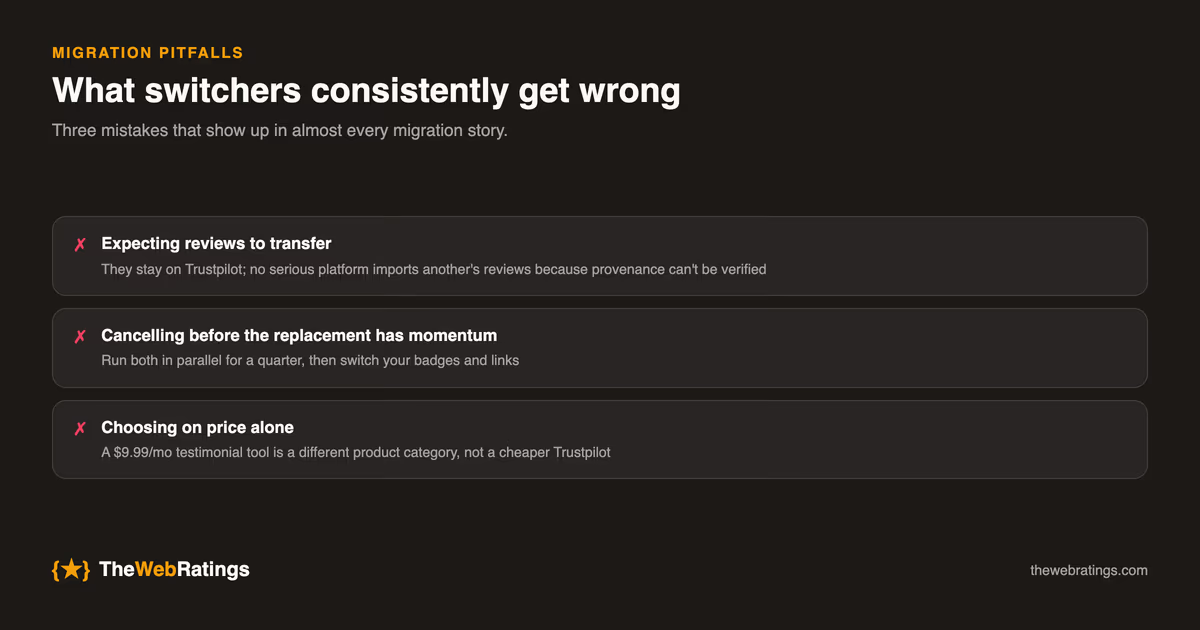
Expecting reviews to transfer. They don't. Reviews collected on Trustpilot stay on Trustpilot; no serious platform imports another's reviews because provenance can't be verified. What actually protects you is that review value decays anyway: buyers weight recent reviews heavily, so a new profile that's actively growing overtakes a stale one faster than you'd think.
Cancelling before the replacement has momentum. The right pattern is parallel running: install the new collection channel, let it accumulate for a quarter while your old subscription winds down, and switch your site's badges and links once the new profile has a healthy count. Cancelling on day one leaves a trust gap in your search results.
Choosing on price alone. A $9.99/mo testimonial tool is not a cheaper Trustpilot. It's a different product category that doesn't produce independent reviews at all. Compare within the right category first, then compare prices.
How to choose
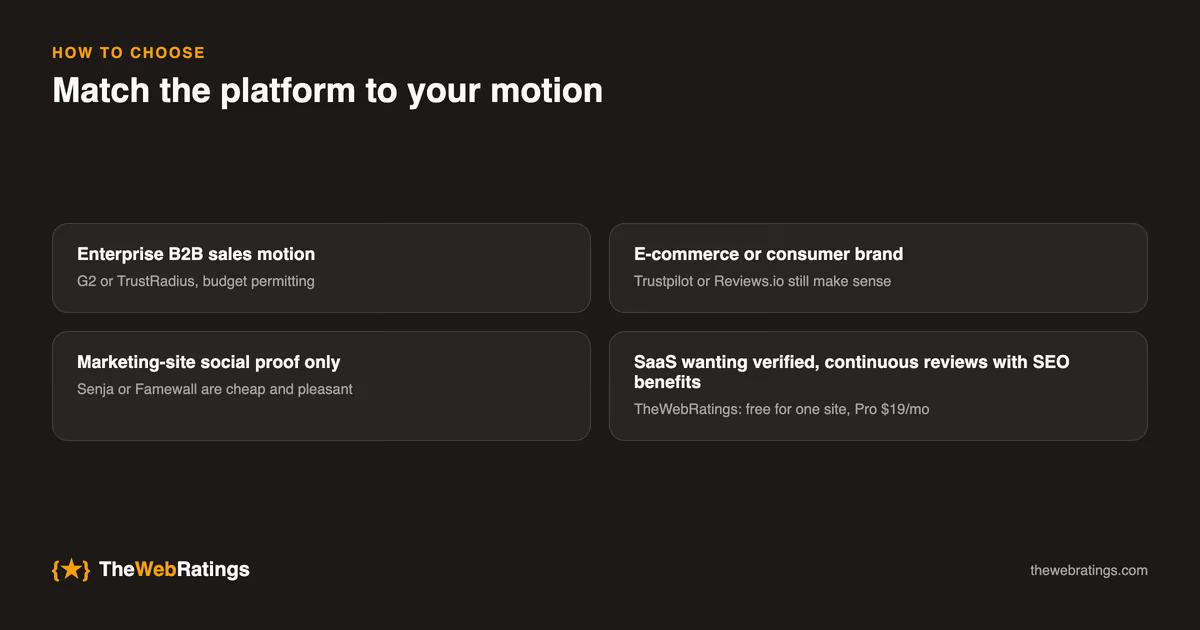
- Enterprise B2B sales motion: G2 or TrustRadius, budget permitting.
- E-commerce or consumer brand: Trustpilot or Reviews.io still make sense.
- Marketing-site social proof only: Senja or Famewall are cheap and pleasant.
- SaaS/web app that wants verified, continuously collected reviews with SEO benefits: this is exactly the gap TheWebRatings was built for. See the full Trustpilot comparison or the pricing page.
The honest bottom line: no platform wins every scenario. But if Trustpilot's annual contract is what sent you here, know that the parts most SaaS teams actually need (verified collection, a public trust page, Google star eligibility) don't require one. If you're weighing costs specifically, read Trustpilot pricing explained next.
Frequently asked questions
It depends on your sales motion. For enterprise B2B where buyers shortlist on directory grids, G2 or TrustRadius are the serious options despite the cost. For SaaS teams that want verified, continuously collected reviews with schema benefits on their own product's name, TheWebRatings was built for exactly that gap, though we build it, so judge accordingly.
No. Reviews collected on Trustpilot stay on trustpilot.com, and no serious platform imports another platform's reviews because the provenance can't be verified. The practical mitigation is parallel running: start collecting on the new platform a quarter before you cancel, so the new profile has momentum when you switch your badges over.
Not anymore. Trustpilot repriced in 2026: the entry paid plan is now Starter at $99/mo billed annually on a 12-month contract, with Plus at $319/mo per domain, Premium at $799/mo per domain, and Enterprise quoted by sales (checked July 22, 2026). The old public tiers around $259, $629, and $1,059 per month no longer appear on its plans page.
No, and the distinction matters. Testimonial tools collect quotes that you curate and display on your own site. There's no verification, no independent public profile, and no eligibility for Google star ratings. They're good marketing-page tooling, but they don't produce independent reviews.
Only if you cancel before the replacement has momentum, leaving a trust gap in your search results. Reviews age quickly in buyers' eyes anyway, and recent reviews carry most of the weight, so an actively growing new profile overtakes a stale one within a few months.
Free profiles cost nothing, so claiming your name on G2, Capterra, and similar directories is sensible defense. Paying for more than one is rarely worth it before you have a sales team; most SaaS teams do better funding one verified collection channel properly and letting the free profiles sit.