TrustRadius vs G2 (2026): Which Fits Your Sales Motion?
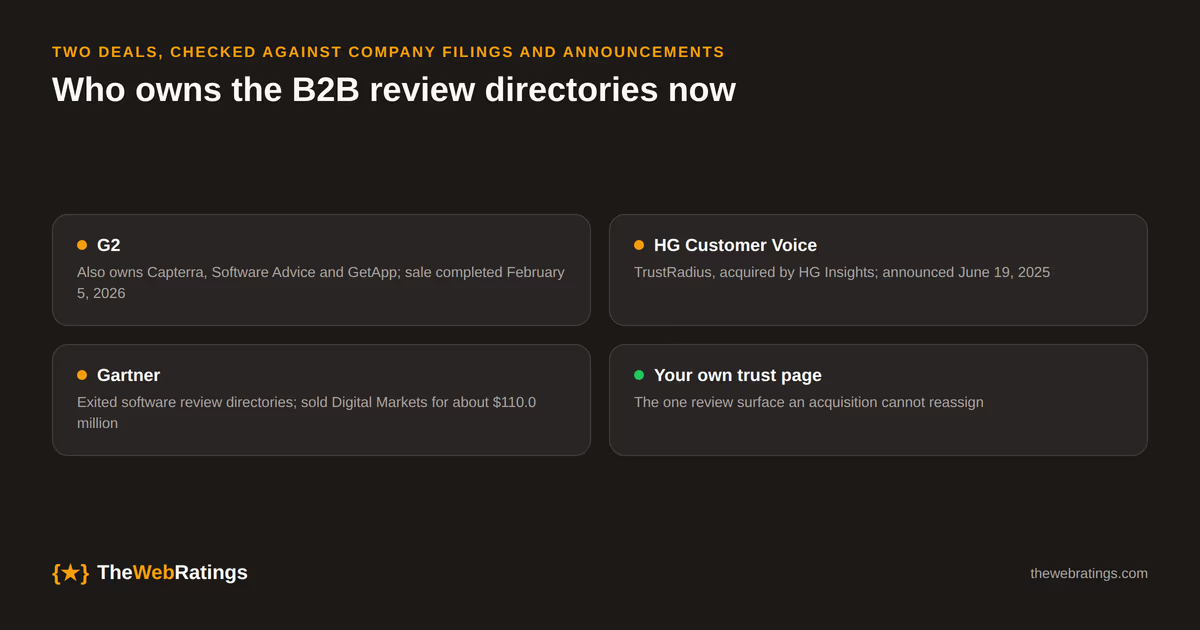
Both of these platforms changed hands recently, and the ownership matters more to a vendor decision than any feature table. G2 announced on January 29, 2026 that it had agreed to buy Capterra, Software Advice and GetApp from Gartner; Gartner's Form 10-K, filed February 12, 2026, records the sale of its Digital Markets business as completed on February 5, 2026 for approximately $110.0 million before purchase price adjustments. TrustRadius was acquired by HG Insights in a deal announced June 19, 2025, and its vendor product is now sold as HG Customer Voice inside HG's revenue intelligence platform.
So "TrustRadius or G2" now means choosing between the largest software directory group and a review property inside a B2B data company. This post compares them from the vendor side: how reviews get collected and vetted, who reads them, what a real presence costs, and where the search value ends up. We build TheWebRatings, which appears in the third column below, so weigh that column accordingly.
| G2 | TrustRadius (HG Customer Voice) | TheWebRatings | |
|---|---|---|---|
| Owner | Independent; also owns Capterra, Software Advice, GetApp | HG Insights | Independent |
| Review style | Structured reviews at volume | Long-form; over 300 words on average | In-app reviews from verified users |
| Reviewer check | LinkedIn or work email; usage self-attested | Work identity plus human moderation | Email OTP inside your product |
| Published vendor price | Starter $299/mo year one, $599/mo from year two | None published; quoted by sales | Free (1 site); Pro $19/mo |
| Schema value goes to | g2.com | trustradius.com | Your own trust page |
| Best fit | Category-grid shortlists | Long committee evaluations | SaaS building its own reviewed asset |
G2 figures were checked July 22, 2026 against G2's plans page. TrustRadius vendor pricing was re-checked September 10, 2026 and is covered further down.
What the two acquisitions changed
G2's stated rationale for the Gartner purchase was scale. Its announcement puts the combined properties at more than 6 million verified reviews, over 200 million annual software buyers, 10,000-plus vendors and 2,000-plus categories. For buyers, that is one index instead of four. For vendors, it removes a hedge that used to exist quietly: listing on both G2 and Capterra meant two independent category pages with two different ranking mechanics, one sold through marketing packages and one through a click auction. Those now sit under one commercial roof, so a single account team can price your visibility across all four properties.
TrustRadius moved in the other direction. Under HG Insights it was folded into a data platform, rebranded HG Customer Voice, and its vendor pitch reordered around buyer intent: which companies are reading your reviews, which competitors they are also reading, and which of them to route to sales. The reviews are still the input. They are no longer the whole product.
The practical lesson for anyone planning a multi-year review strategy is that the independence of a venue is a moving target. Four of the five directories a B2B vendor would have named in 2024 now belong to two companies. Our guide to Trustpilot alternatives maps the wider set of options, including the ones that stayed independent.
How reviews get collected and vetted
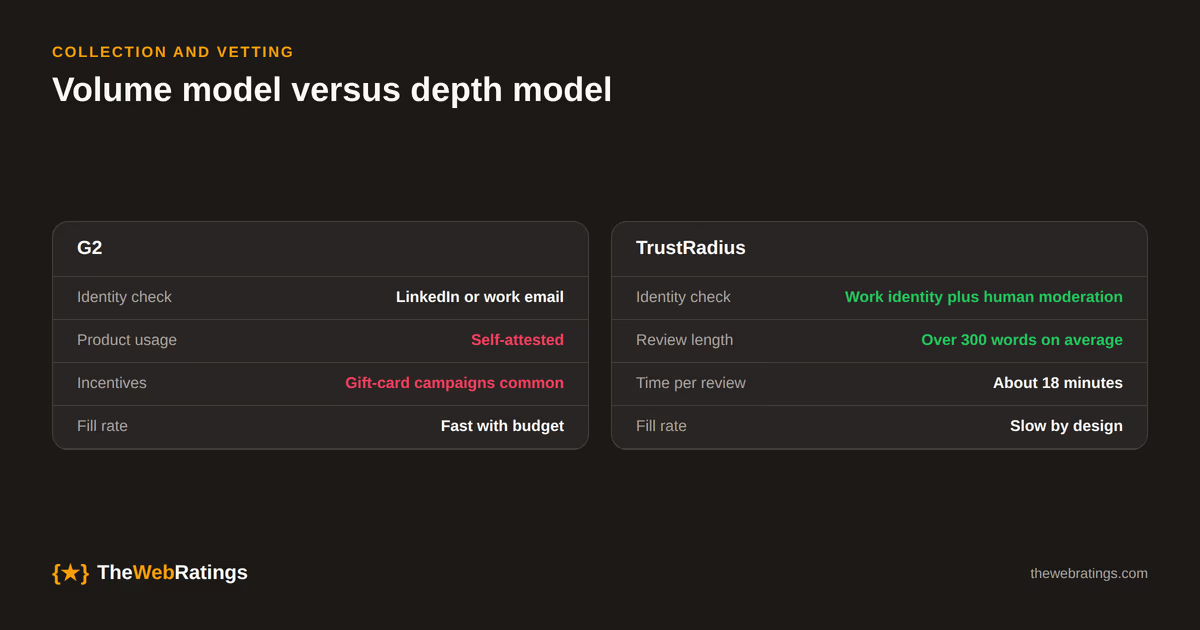
G2 runs a volume model. Reviews arrive from G2's own traffic and from vendor-run campaigns, which are commonly incentivized with gift cards. Identity is checked through LinkedIn or a work email address, and actual product usage is self-attested. The upside is speed: a funded campaign can add dozens of reviews in a quarter. The downside is that review counts track marketing spend at least as closely as they track user sentiment, which experienced buyers know and discount for.
TrustRadius runs a depth model. Its own vendor guide reports an average review length above 300 words, with many reviewers spending 18 minutes writing one, and describes ratings drawn from in-depth reviews as weighted more heavily than single-click star ratings. Submissions go through human moderation with a check that the reviewer has recent, direct experience with the product. The trade-off is symmetrical: harder to fill, more persuasive per entry, and much slower to move a category ranking with budget alone.
Neither model is wrong. They answer different buyer questions. A shortlist built from a category grid rewards volume and recency. A committee that has to justify a six-figure renewal reads three long reviews from companies its own size and ignores the count entirely.
Who actually reads each one
G2 claims access to more than 200 million annual software buyers across the four properties it now owns. TrustRadius reports more than one million site visitors a month, with 54% of them coming from organizations of 1,000 or more employees. Both numbers are vendor-reported and unaudited, so treat them as scale indicators rather than measurements.
Read together they describe the real difference. G2 sells reach across the whole software market, including the long tail of small-business categories that Capterra and GetApp were always strongest in. TrustRadius sells concentration: a smaller audience with a much higher proportion of enterprise readers. If your average contract value is a few thousand dollars a year, G2's breadth is the asset. If you are selling a six-figure platform into a buying committee, a million visitors weighted 54% enterprise is the more useful million.
What a presence costs
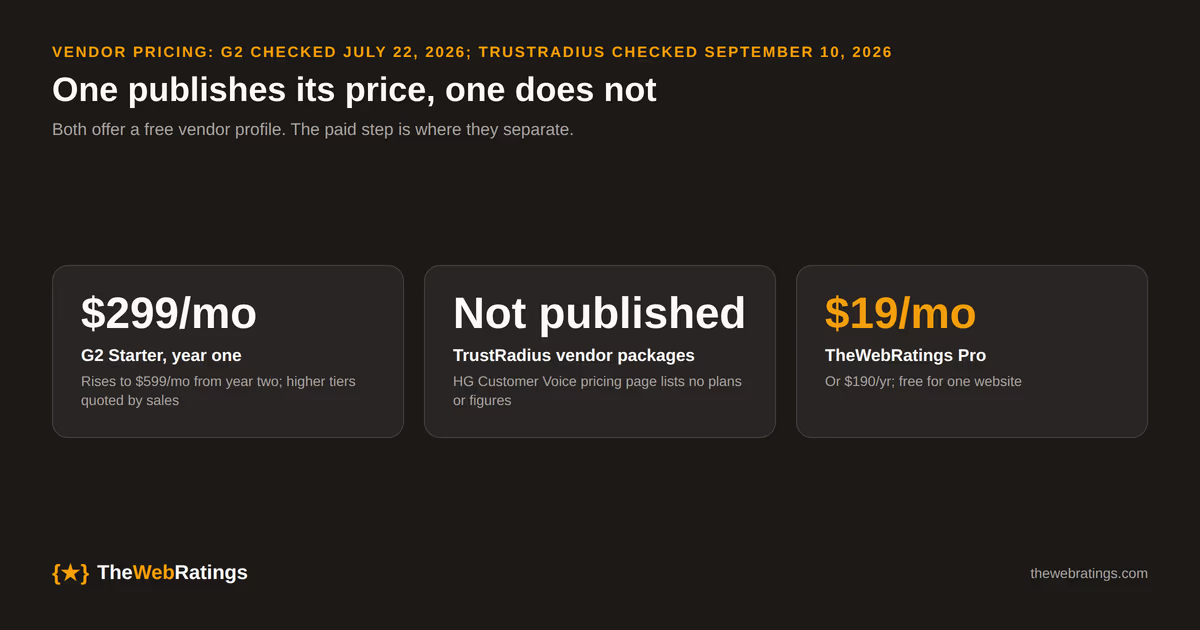
G2 publishes its entry pricing. Starter is $299/mo (or $2,999/yr) in year one and rises to $599/mo (or $6,000/yr) from year two, with Professional and Enterprise quoted by sales, as checked on July 22, 2026. The free profile exists, and on it your competitors' ads can appear on your own product page, which is the mechanism that makes the paid tier feel necessary.
TrustRadius publishes nothing. A free vendor profile is available and worth claiming. Beyond that, the old TrustRadius vendor pricing page now redirects to HG Insights, where the Customer Voice pricing page carries no plan names and no figures and routes you to a sales conversation, as checked September 10, 2026. Third-party marketplaces quote annual numbers for TrustRadius packages, and we are not going to repeat figures we cannot confirm at the source. Ask for the quote in writing, and ask specifically what happens to the price at renewal, because G2's published year-two step from $299/mo to $599/mo is a reminder that entry pricing in this category is often introductory.
There is a second cost that neither vendor invoices you for. TrustRadius reviews take roughly 18 minutes of a customer's time, which means every review is a favour you are spending relationship capital on. Budget the asks as carefully as the dollars. Our G2 vs Capterra comparison works through the same arithmetic for the directory side, and the full alternative-by-alternative rundown lives in 10 best Trustpilot alternatives for SaaS. If G2 specifically is the incumbent you are weighing, our G2 alternative page lays out the feature-by-feature version.
Where the search value lands
Reviews on either platform generate structured data for the platform's domain. When a buyer searches your product name plus "reviews", the page that ranks with stars in it is g2.com or trustradius.com, sitting next to competitors, and the aggregate rating schema credits that domain rather than yours.
This is worth quantifying because most SaaS sites have no alternative in place. In our July 2026 crawl of 985 reachable SaaS homepages, 111 sites (11.3%) published an AggregateRating and only 38 (3.9%) published Review markup, so roughly nine in ten products in that sample are ineligible for review stars on their own domain. The full dataset is at the state of SaaS review schema.
The AI-search version of the same problem is already visible in the product roadmaps. HG Customer Voice now ships a monitoring dashboard for which AI engines crawl its product pages and how those engines describe vendors. The vendor is instrumenting citations for content on its domain. Every citation that names trustradius.com as the source is a citation your own site did not earn.
Matching the platform to the sales motion
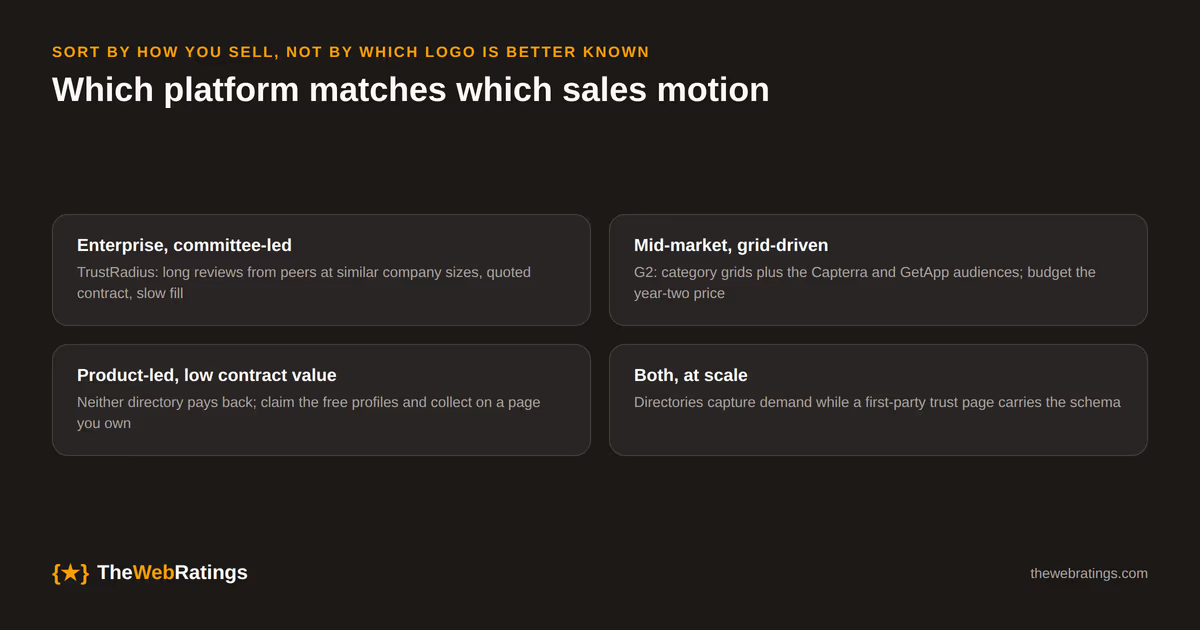
Sort by how you actually sell, not by which logo is better known.
Enterprise, committee-led, long evaluation cycles. TrustRadius fits the reading behaviour. Buyers who spend six weeks on a decision read long reviews from peers at similar company sizes, and depth beats count in that setting. Expect a sales-quoted contract and a slower fill rate.
Mid-market with competitive category grids. G2 fits, and now covers the Capterra and GetApp audiences too. Model the year-two price, not the year-one price, and only fund it if your reps already hear "we looked at your G2 profile" on calls.
Product-led, self-serve, low contract value. Neither directory pays back at directory prices. Claim both free profiles so the names are yours, then put the effort into collecting verified reviews on a page you own.
Both, at scale. Large vendors run directory programs for demand capture and a first-party review page for search and AI visibility. The two are complementary as long as you are honest about which one you are paying for.
That last option is where we fit. TheWebRatings collects OTP-verified reviews inside your product and publishes them on a public trust page with review schema pointed at your product, free for one website and $19/mo on Pro. It does not put you on an enterprise shortlist, and it will not replace a G2 profile for a buyer who starts on G2. What it does is make the reviews you have already earned work on a domain nobody can sell out from under you.
Frequently asked questions
The consumer-facing review site still runs under the TrustRadius name and domain, but the vendor product is now sold as HG Customer Voice after HG Insights announced its acquisition of TrustRadius on June 19, 2025. The old vendor pricing and solutions pages redirect to HG Insights. If you are searching for current vendor terms, search for HG Customer Voice rather than TrustRadius for Vendors.
Both offer a free vendor profile. G2 publishes its entry paid tier at $299 a month in year one, rising to $599 a month from year two, with higher tiers quoted by sales, as checked in July 2026. TrustRadius under HG Insights publishes no plan prices at all and routes vendors to a sales conversation, as checked in September 2026. Get any quote in writing and confirm the renewal price before signing.
It changes the negotiation more than the total. Capterra, Software Advice and GetApp joined G2 when the sale of Gartner's Digital Markets business completed on February 5, 2026, so one account team can now price visibility across four properties that used to be sold separately. That can mean bundle leverage if you were already paying two of them, and less leverage if you were playing them against each other.
No. The review structured data on those pages belongs to g2.com and trustradius.com, so any star ratings appear on the directory listing rather than on your site. To be eligible for review stars tied to your own product, you need review markup on an independent page about that product. In our July 2026 crawl of 985 SaaS homepages, only 11.3% published an aggregate rating at all, so most products are not eligible today.
G2 is much larger by volume, especially after absorbing Capterra, GetApp and Software Advice, which its announcement puts at more than 6 million verified reviews combined. TrustRadius is smaller and deliberately slower, with reviews averaging over 300 words and passing through human moderation. Count favours G2, depth per review favours TrustRadius, and which one matters depends on whether your buyers skim a grid or read three reviews closely.
Yes, and most vendors past a certain size do. The directory captures buyers who start their search there, while a first-party trust page carries review schema on a domain you control and keeps working if a platform changes owners, pricing or policy. The main thing to avoid is paying directory prices for the outcome a first-party page would have given you for a fraction of the cost.