Why Fake Reviews Are Killing Review Platforms (And What Verified Reviews Fix)
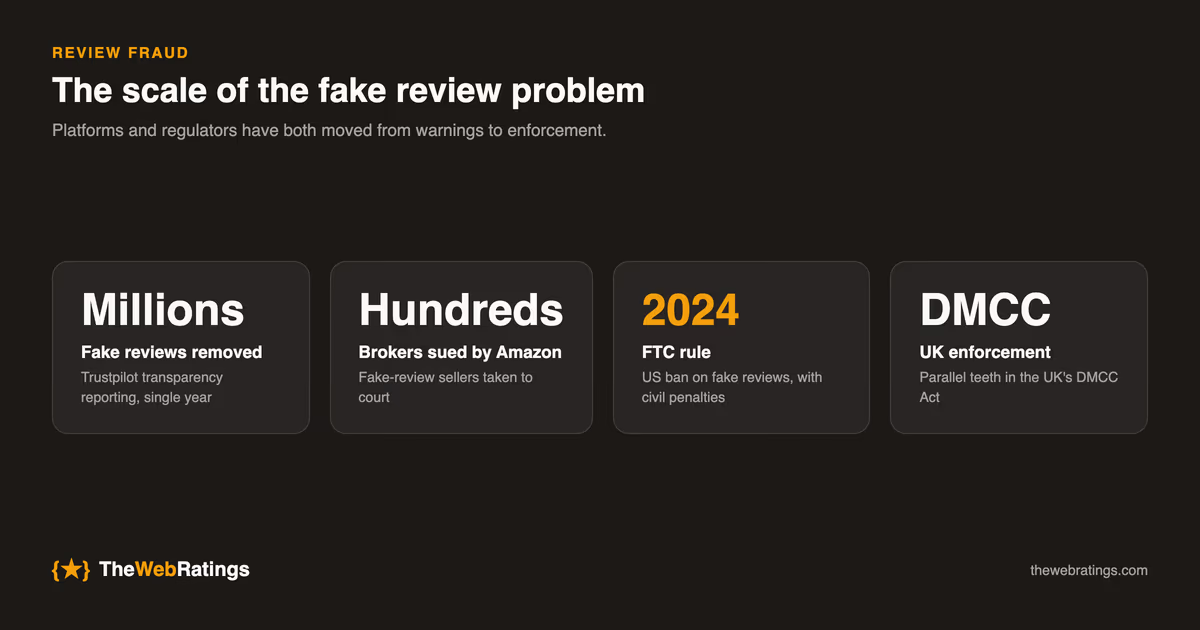
Trustpilot's own transparency reporting has acknowledged removing millions of fake reviews in a single year. Amazon has sued fake-review brokers by the hundreds. Regulators on both sides of the Atlantic (the FTC in the US with its 2024 rule banning fake reviews, the UK's DMCC Act, EU consumer bodies) have moved from warnings to enforcement. None of this happened because the problem was small.
The uncomfortable truth: the dominant review platforms have a fraud problem that's structural, not incidental. And every honest business pays for it.
How the open model broke
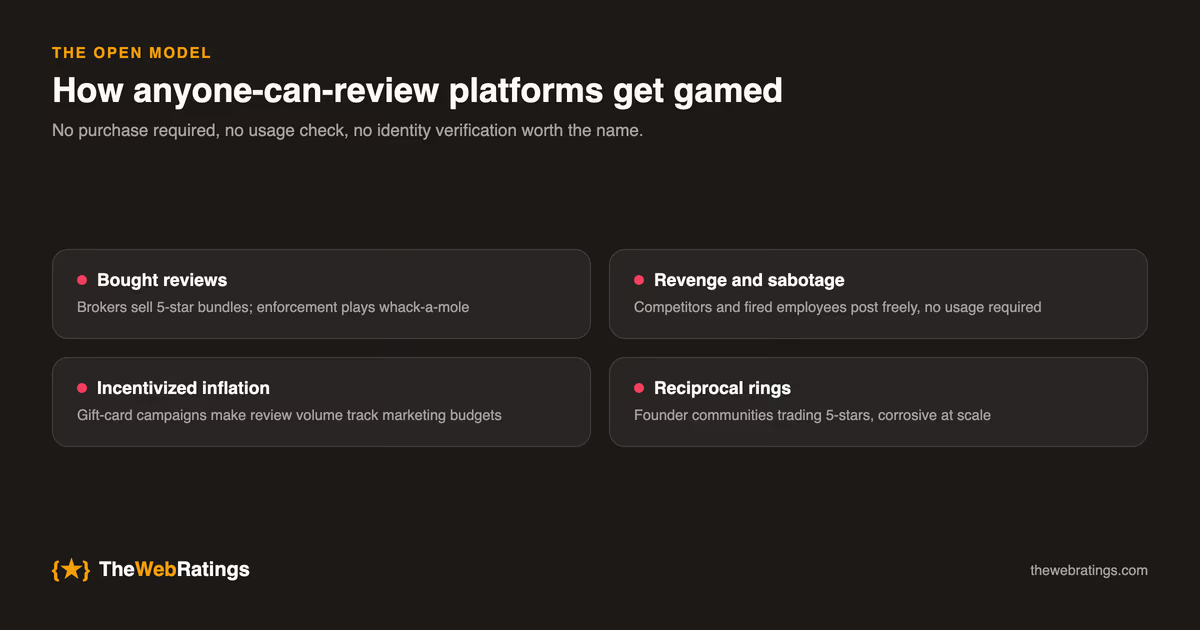
The first generation of review platforms optimized for volume. Anyone with an email address could review any business: no purchase required, no usage check, no identity verification worth the name. That design choice made growth easy and gaming easier:
- Bought reviews. A cottage industry of brokers sells 5-star bundles across platforms; enforcement plays whack-a-mole.
- Revenge and sabotage. Competitors, fired employees, and people who never used the product can post freely on an open platform.
- Incentivized inflation. On B2B directories, gift-card campaigns mean review volume tracks marketing budgets. Nobody calls a $25-voucher review "fake," but it isn't neutral either.
- Reciprocal rings. Founder communities trading 5-stars. It feels harmless and is corrosive at scale.
Platforms responded with detection systems and takedowns, which is an arms race they fund by charging honest businesses more. The absurd equilibrium: you pay hundreds per month for a profile whose credibility the platform itself must constantly repair.
The cost to honest businesses
Compressed trust. When buyers discount all reviews, a genuine 4.8 and a purchased 4.8 look identical. Your years of actual customer satisfaction get priced like fraud, because the medium is polluted.
Asymmetric damage. Fake positives are diluted across your whole profile; a burst of fake negatives (a competitor's weekend project) lands concentrated and immediate, and disputing on open platforms is slow, opaque, and often futile.
Rating inflation as table stakes. In polluted categories, honest 4.3s sit beneath manufactured 4.9s. The pressure to "keep up" is exactly how decent companies end up in FTC settlements.
What verification actually fixes
Better fraud detection on open pipes won't fix this; closing the pipe will. A review is trustworthy when two facts are established before publication:
- The reviewer is a real, reachable person. An email OTP at submission kills bots and burner accounts outright.
- The reviewer actually uses the product. Collect the review inside the app, from a logged-in user, and usage is proven by construction: no attestation, no order-matching heuristics.
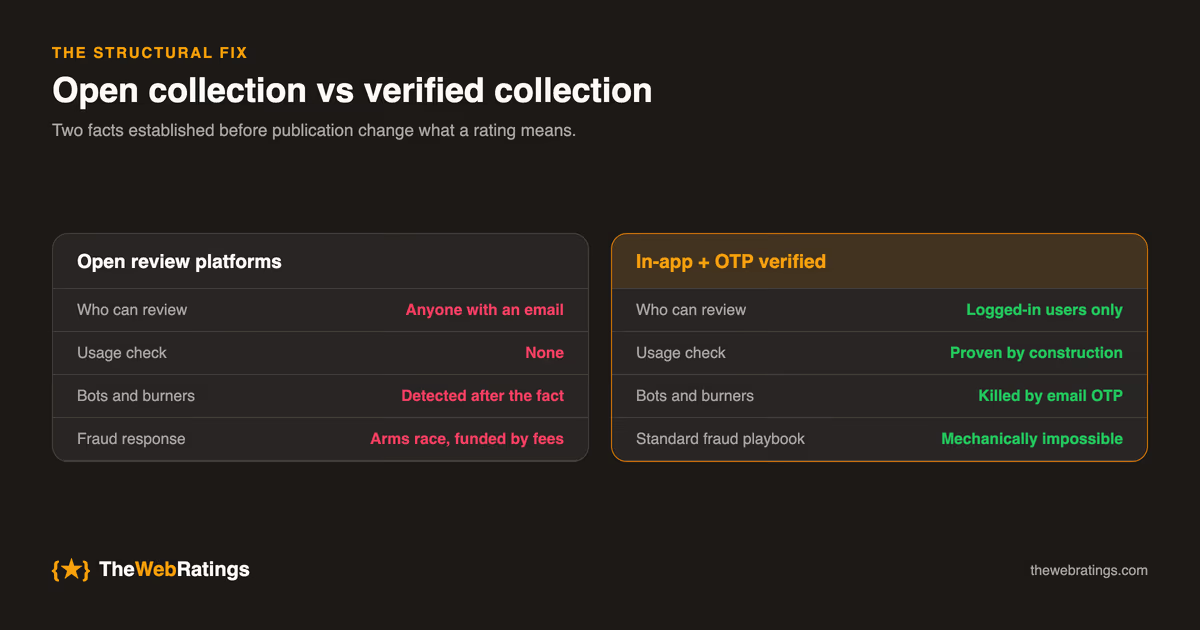
This combination of in-app collection plus OTP verification makes the standard fraud playbook mechanically impossible. A review broker can't submit from inside a product their bots don't use; a competitor can't verify an OTP on an account that doesn't exist. It's the model TheWebRatings was built on, and it's why every review on a TWR trust page carries the same guarantee. (Implementation details: how to get verified reviews for your SaaS.)
Verification has a second-order effect worth naming: it changes what a high rating means. When every review is verified, a 4.6 is information. When anyone can review, a 4.6 is a claim.
How to spot fakes (on any profile, including competitors')
Fraud leaves fingerprints, and learning to read them is useful both for auditing your own profile and for calibrating how much to trust a competitor's numbers:
- Burst patterns. Organic reviews arrive in a steady drip; bought ones arrive in clumps: a dozen five-stars in the same week, often after a long silence or right after a wave of negatives.
- Reviewer histories. Accounts with one review ever, created the same month they reviewed, are the classic broker signature. Real reviewers usually have some footprint.
- Template language. Purchased reviews repeat phrasing ("great tool, highly recommend, five stars") because they're written from the same brief. Real reviews name specific features, complaints, and use cases.
- Rating-only pileups. A surge of star ratings with no text is cheaper to buy than written reviews, and it shows.
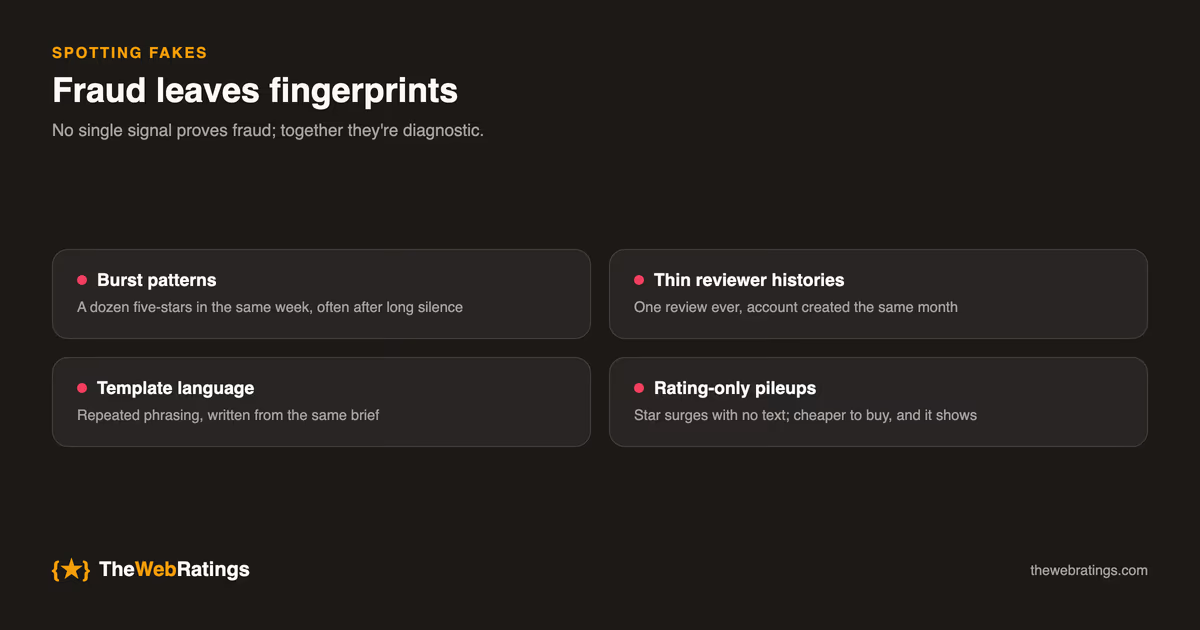
None of these prove fraud individually; together they're diagnostic. And notice what they have in common: every signal is a symptom of collection that was never tied to verified identity or real usage in the first place.
What this means for search and AI
Google's review-snippet system exists to surface credible ratings, and its guidelines increasingly disqualify self-serving and manipulable markup. Meanwhile, AI assistants answering "is this product good?" weight sources they can trust structurally. Both trends favor platforms that can demonstrate provenance, and disfavor open pools of anonymous sentiment. A smaller number of verified reviews on an independent page will age better than a larger number of unverifiable ones.
What you can do this quarter
- Stop paying for polluted channels if you're not seeing conversion lift. Audit what that directory subscription actually returns. (Costs broken down in Trustpilot pricing explained.)
- Move collection into your product, where identity and usage are verifiable.
- Respond publicly to negatives, on any platform. A visible, calm reply is the one trust signal fraud can't counterfeit. Templates in how to respond to negative reviews.
- Never buy, trade, or incentivize reviews. Beyond ethics, the regulatory era has started; the FTC rule carries real penalties.
The platforms aren't dying because reviews stopped mattering; reviews matter more than ever. They're dying because trust was the product, and the open model sold it off. Verified collection is how you opt out of that decline. For the full strategy, see the pillar guide: managing your reputation. And if you want to see what a fully verified profile looks like, browse apps on TheWebRatings.
Frequently asked questions
Big enough that Trustpilot's own transparency reporting acknowledges removing millions of fake reviews in a single year, Amazon has sued fake-review brokers by the hundreds, and the FTC wrote a dedicated rule against it in 2024. The visible removals are the detected fraction; the structural problem is that open platforms can't verify usage at all.
Look for burst patterns (clumps of five-stars after long silence), reviewer accounts with exactly one review created the same month, template language repeated across reviews, and pile-ups of star-only ratings with no text. No single signal proves fraud, but together they're diagnostic.
Not legally, if disclosed, but they aren't neutral either. A gift-card review is written under a mild obligation to the vendor, which is why incentivized volume tracks marketing budgets rather than user sentiment. Undisclosed incentives, meanwhile, are squarely inside the FTC rule's territory.
On open platforms: reply calmly noting you can't match the review to any account, file the platform's dispute process, and document everything. The structural fix is collecting on a platform where reviews can only come from verified, logged-in users of your product; the fake-negative playbook mechanically can't run there.
In the US, yes as of the FTC's 2024 rule banning fake reviews, with civil penalties per violation; the UK's DMCC Act and EU consumer law have parallel teeth. Beyond the legal risk, purchased reviews are increasingly detectable by both platforms and buyers.