Review Disputes: How Flagging Works on Each Major Platform
Every major review platform ships a flag button, and every major review platform applies roughly the same test to it: the review has to break a written content rule. Being wrong is not a content rule. Being unfair is not a content rule. Once you internalize that, most disputes resolve before you file them, because you can tell in thirty seconds whether you have a case or a grievance.
This post covers the four platforms a software company actually deals with, the grounds that get traction on each, whether the review stays published while moderation runs, and the US rule that turns an aggressive dispute campaign into a legal exposure. The wider system for building a profile that survives a bad review is in our pillar on managing your reputation. This is the narrow mechanical piece.
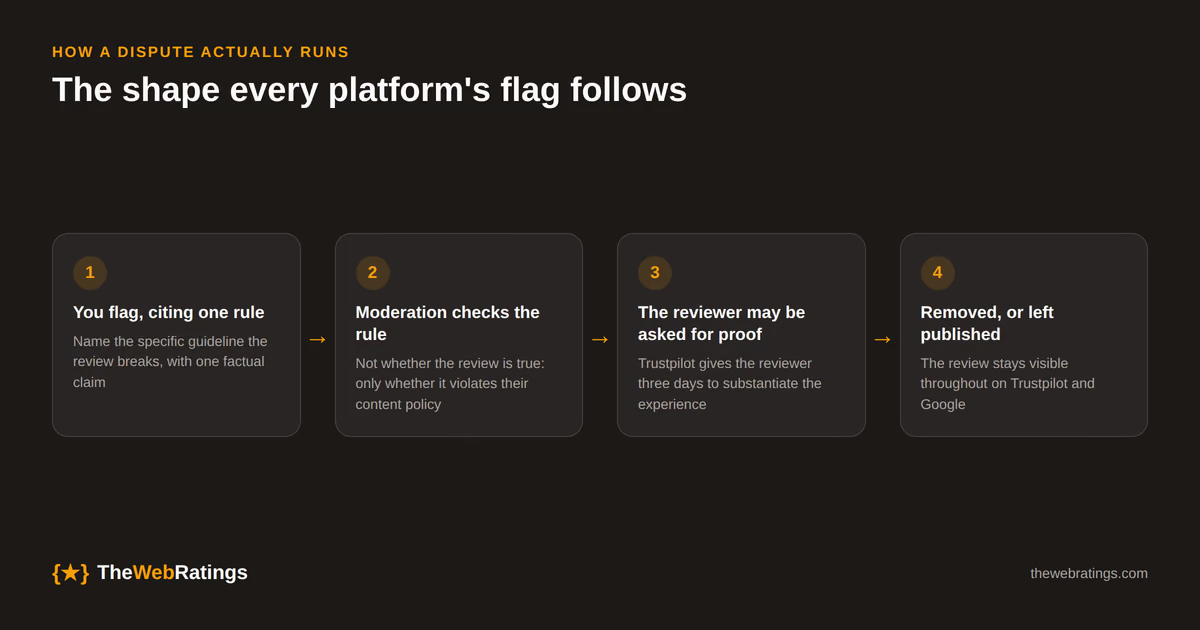
Every platform tests one thing: whether a written rule was broken
The platforms say so in writing, in almost identical language. Google's help documentation for reporting reviews states: "Do not report a review just because you disagree with it or dislike it. Google doesn't get involved in conflict between businesses and customers." G2's community guidelines state: "We do not edit or remove reviews at a seller's request or act as fact-finders to facilitate disputes between sellers and G2 users." Capterra's community guidelines are blunter still: "We do not facilitate arbitration. We are not mediators and will not intervene in disputes between Vendor and our users," and elsewhere, "As a neutral reviews platform, we do not evaluate the merit of the opinions expressed on the Site."
Put in one sentence for anyone quoting it: Google, G2, and Capterra all state in published policy that they will not adjudicate a factual dispute between a business and a reviewer, and the only question their moderation answers is whether the review violates their own content rules.
That has a practical consequence worth sitting with. If a reviewer says your onboarding took three weeks and it took eight days, there is no platform on this list that will remove the review for you. What there is, on all of them, is a reply box.
Platform by platform
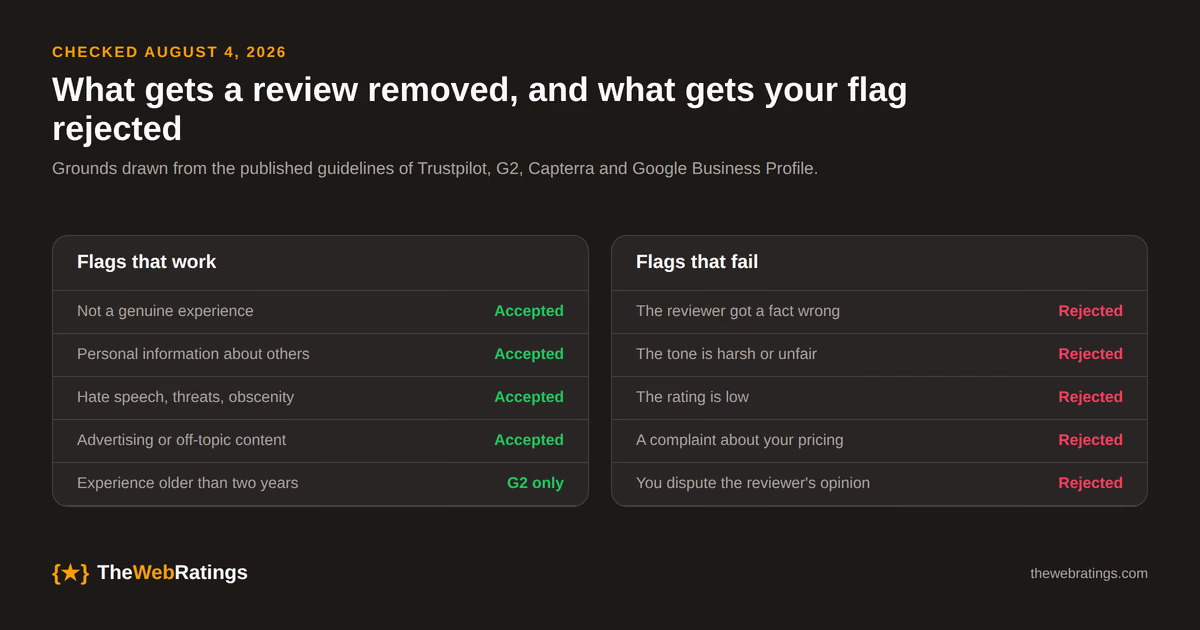
The table covers the four platforms most SaaS teams have profiles on, plus our own for disclosure. Every column below comes from each platform's current published policy, checked on August 4, 2026.
| Platform | How you file | Grounds with traction | Stays visible during review | Stated turnaround |
|---|---|---|---|---|
| Trustpilot | Flag from your business account | Harmful or illegal content, personal information, advertising, not based on a genuine experience | Yes, except harmful or illegal content, which is hidden while investigated | "As soon as possible"; typically several business days |
| G2 | "Report a Concern" on the published review | Inauthentic experience, confidential information, offensive language, experience older than two years | Not stated in the guidelines | Not published |
| Capterra, Software Advice, GetApp | Vendor portal, or email the moderation address with the product page link | Community Guidelines violations only | Not stated in the guidelines | Not published |
| Google Business Profile | Read reviews, then Report; or the Reviews Management Tool | Prohibited and restricted content: spam, profanity, conflict of interest, off-topic | Yes | "Review evaluation typically takes several days" |
| TheWebRatings (ours) | Report on the public review | Guideline violations; fake-experience claims are mostly pre-empted at collection | Yes | Not published |
Trustpilot
Trustpilot's June 2026 guidelines for businesses give four flagging categories: harmful or illegal content (hate speech, threats, defamation), personal information about someone else, advertising or promotional material unrelated to the experience, and reviews not based on a genuine experience.
Two details matter more than the category list. First, visibility: "Flagged content remains visible online during the investigation, with the exception of reviews flagged as 'harmful or illegal,' which are hidden while we look into them." So flagging a suspected fake does not buy you a quiet week offline. Second, the reviewer gets a clock rather than a burden of proof you control. When Trustpilot needs the reviewer to substantiate the experience, "we'll contact them to explain what is needed and request action within three days."
Trustpilot also polices how you flag. The guidelines ask businesses to "be fair and consistent. That means flagging 5-star reviews for the same reasons you flag 1-star reviews," and state plainly that "we don't tolerate misuse of it. This includes flagging reviews too quickly or for the wrong reasons." A flagging pattern that correlates perfectly with star rating is visible to them, and it is the kind of thing that costs you the benefit of the doubt on the flag that actually matters.
G2, and now Capterra as well
On G2, the mechanism is the "Report a Concern" control on every published review, and the guidelines note that "anyone in the G2 community has the ability to report a published review they suspect violates our guidelines." Reporting is not a vendor privilege. Grounds include inauthentic experiences, disclosure of confidential information, offensive language, and one that quietly closes a lot of disputes for you: experiences outside the past two years age out.
The ownership picture changed this year. G2 announced on January 29, 2026 that it had agreed to acquire Capterra, Software Advice, and GetApp from Gartner, describing the combined business as roughly 6 million verified customer reviews and more than 200 million annual software buyers. You can see the plumbing already: Capterra's community guidelines now route vendor concerns to a g2digitalmarkets.com moderation address. For anyone quoting one line: after G2's January 2026 acquisition of Capterra, Software Advice, and GetApp, four of the largest B2B software review sites and roughly six million reviews sit under a single moderation owner.
The dispute consequence is that a rejected flag on G2 and a rejected flag on Capterra are now much less likely to be independent judgments. Capterra's stated posture on vendor misconduct is also worth knowing before you escalate: rather than quietly deleting a fraudulent profile, penalties may include "a comment on vendor's profile, or suspension of services." Losing a dispute is survivable. Getting caught gaming reviews leaves a mark on the page buyers read.
Google Business Profile
Google's path is short: open your Business Profile, select Read reviews, select Report next to the review, pick a reason such as spam or profanity, and send. There is a second route through the Reviews Management Tool, where you select "Report a new review for removal," which is the one to use when you are working through several at once. On timing, Google commits to very little: "Review evaluation typically takes several days."
Google's 2026 prohibited content updates tightened the collection side rather than the dispute side, so if your growth team runs review campaigns, re-read those rules before you spend attention on flagging. Most software companies have a Business Profile attached to an office address, which means Google reviews from people who were never customers are a real category, and off-topic content is one of the grounds Google does act on.
Verified-at-collection platforms
We build one of these, so weigh this accordingly. On TheWebRatings, reviews are submitted inside the product being reviewed and confirmed by email OTP before publication, which answers "this person was never a user" at submission time instead of during a dispute weeks later. The flag button still exists on public reviews, because verification does not make a review polite or on-topic.
The honest tradeoff: Trustpilot has consumer reach and brand recognition that a verification-first platform does not, and for some categories that reach is the entire point of being there. Our side-by-side with Trustpilot lays out both directions, including where they win.
What to put in the flag
Moderators read a queue. The flags that succeed read like a bug report, and the ones that fail read like a complaint about the reviewer.
Cite one rule, by name, from that platform's guidelines. Pick the strongest single claim rather than listing five overlapping ones, because a moderator who rejects your weakest claim tends to reject the whole submission. State the factual basis in one sentence: no account matching that email or company, no support ticket, no login events in the relevant window. Attach the evidence as a screenshot of your own records. Then stop.
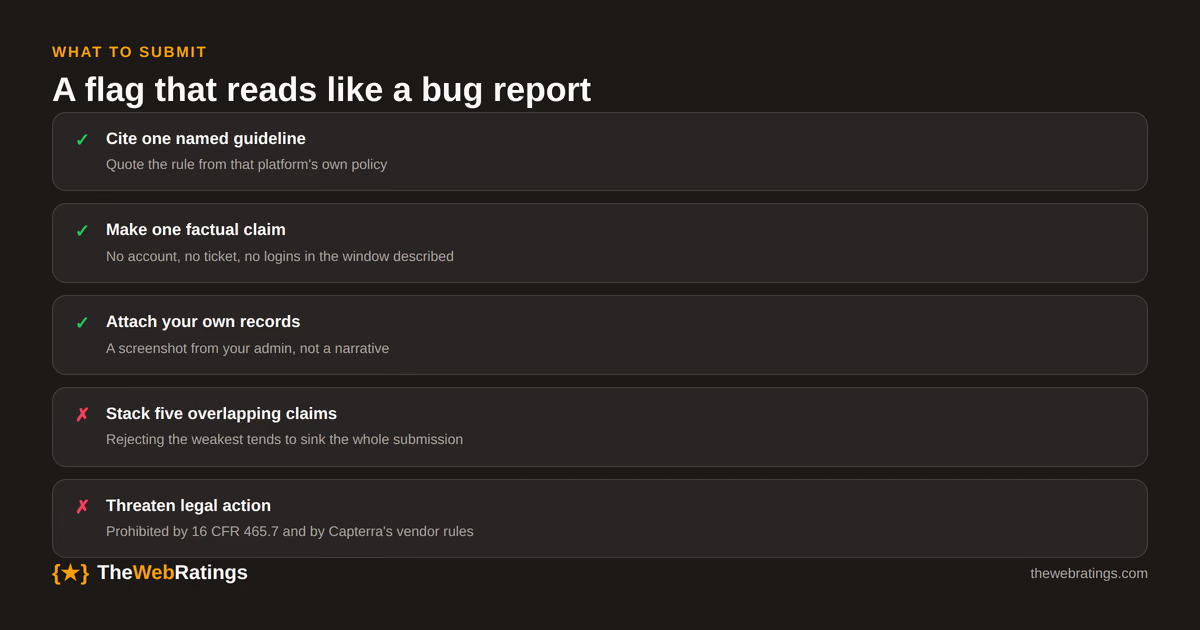
What to leave out: adjectives about the reviewer, your theory about which competitor sent them, your history of other disputes, and anything resembling a legal threat. The last one is a category error with real consequences.
Aggressive disputing is a federal violation in the US
The FTC's Rule on the Use of Consumer Reviews and Testimonials (16 CFR Part 465), effective October 21, 2024, has a section aimed squarely at businesses that treat disputes as a pressure campaign. Section 465.7(a) prohibits using unfounded legal threats, physical threats, intimidation, or false accusations to prevent a review from being written or to cause its removal. Section 465.7(b) makes it unlawful to misrepresent that the reviews you display represent most or all of the reviews submitted, when reviews have been suppressed based on rating or negative sentiment.
The rule does carve out legitimate non-display. Reviews containing trade secrets or confidential commercial information, defamatory, harassing, abusive, obscene, vulgar or sexually explicit content, another person's personal information, discriminatory content, clearly false or misleading material, reviews the seller reasonably believes are fake, and content wholly unrelated to the products or services offered can all be withheld without violating the rule. The through-line is that you may decline to publish content that breaks rules, and you may not lean on people to make honest criticism disappear.
The platforms enforce a version of this themselves. Capterra's guidelines state that a vendor "must not harass, pressure, or intimidate reviewers regarding their review content or rating" and forbid threatening legal action in response to legitimate feedback. Trustpilot's misuse language covers the same ground from the flagging side. So a lawyer letter sent to a reviewer can cost you the review, the profile, and a federal exposure, in that order.
When the flag fails, which is most of the time
Plan for rejection as the default outcome, because for anything short of a clear rule violation it is. Three things work better than a second appeal.
Reply in public, quickly and specifically. A calm reply naming the actual problem and what changed persuades the next buyer more than a removal they never knew to look for. Our templates for that are in how to respond to negative reviews.
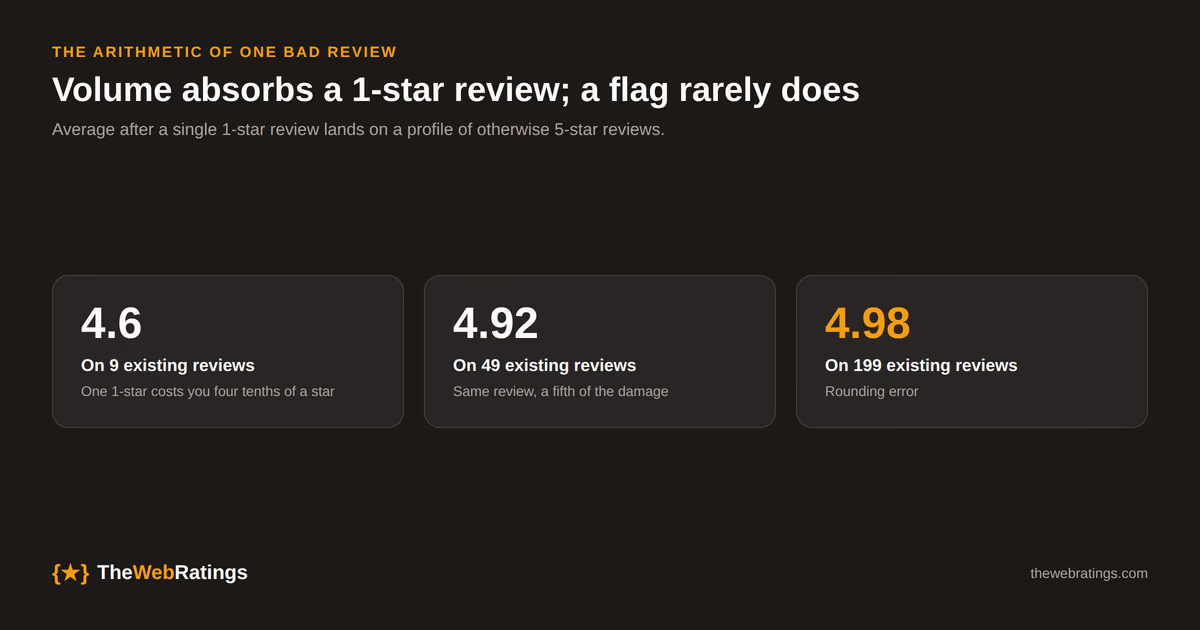
Dilute with volume, which is arithmetic rather than strategy. On a profile with nine 5-star reviews, one 1-star review drops the average to 4.6. The same 1-star review lands on a profile with 199 and moves it to 4.98. Most reputation emergencies are collection problems that showed up late.
Finally, be honest with yourself about which problem you have. If reviews you believe are fabricated keep appearing, the failure is upstream in how the platform establishes who a reviewer is, and no volume of flags fixes a weak verification model. Why fake reviews are killing review platforms covers what verification does and does not rule out, which is the same question your flag is asking a moderator to answer after the fact.
Frequently asked questions
No. Trustpilot, G2, Capterra, and Google all state in published policy that they remove reviews for violating their content guidelines, not for being inaccurate or harsh. Google's guidance says explicitly not to report a review because you disagree with it, and G2 says it will not act as a fact-finder in disputes between sellers and users. Your realistic options for an unfair but rule-compliant review are a public reply and more reviews.
Usually not. Trustpilot's business guidelines say flagged content stays visible during the investigation, with the single exception of content flagged as harmful or illegal, which is hidden while they look into it. Google reviews also stay up during evaluation. G2 and Capterra do not state a visibility rule in their public guidelines, so assume the review remains published.
Trustpilot says flags are looked into as soon as possible and that complex cases take longer, which in practice means several business days. Google says review evaluation typically takes several days. G2 and Capterra publish no timeframe. Plan on a week or more, and do not wait on the outcome before replying publicly.
In the United States, the FTC's Rule on the Use of Consumer Reviews and Testimonials prohibits using unfounded legal threats, physical threats, intimidation, or false accusations to prevent or remove a consumer review. Capterra separately forbids vendors from threatening legal action in response to legitimate feedback and can penalize the vendor profile for it. Genuine defamation is a matter for a lawyer, and the flag queue is not where that case gets made.
It changes how independent the outcomes are. G2 announced in January 2026 that it had agreed to acquire Capterra, Software Advice, and GetApp from Gartner, and Capterra now routes vendor review concerns to a G2 Digital Markets address. The written guidelines still differ in wording, but treating a rejected flag on one as a fresh chance on the other is no longer a safe assumption.
Records from your own systems that show the claimed relationship does not exist: no account for that email or company, no support ticket, no login activity in the period described. One clear claim with one screenshot beats a long list of suspicions. Moderators are checking a rule against evidence, not weighing whose account of events sounds more reasonable.