How to Respond to Negative Reviews (With Templates)
One reframe makes negative reviews manageable: write the reply for the hundred prospects who will read the exchange later, not for the reviewer. The reviewer may never return; the prospects are deciding, right now, whether you're the kind of company that handles problems like an adult. A calm, specific reply to a 2-star review is often more persuasive than another 5-star review.
The framework: acknowledge, own, act, exit
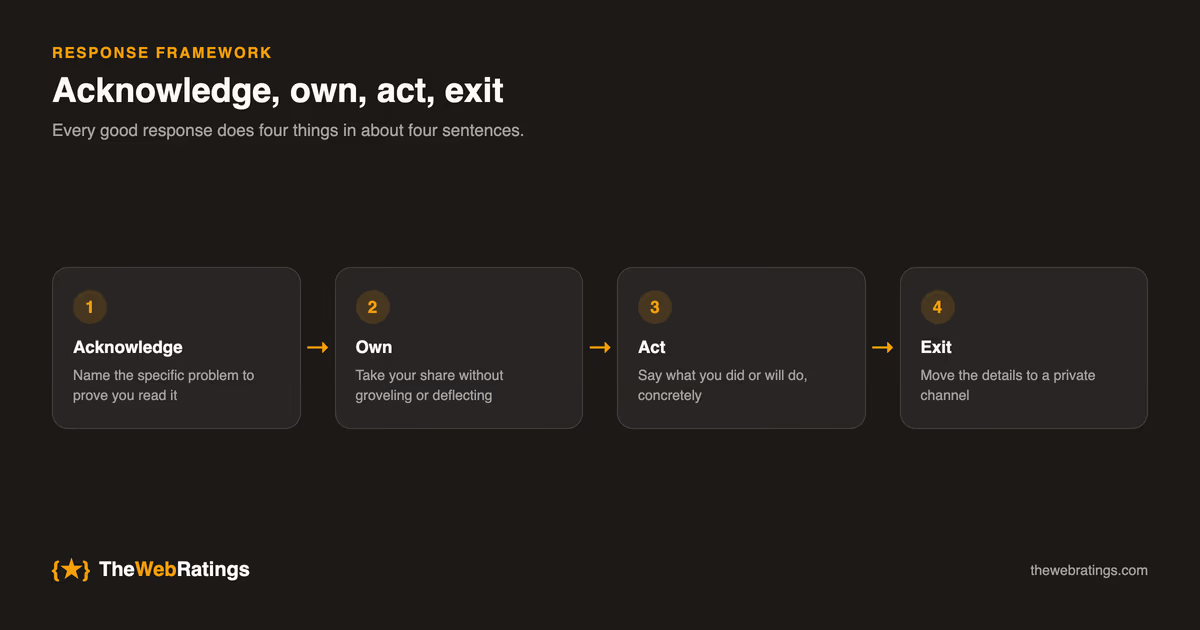
Every good response does four things in about four sentences:
- Acknowledge the specific problem, in enough detail to prove you read it instead of pasting it.
- Own your share without groveling or deflecting.
- Act: say what you did or will do, concretely.
- Exit to a private channel for the details.
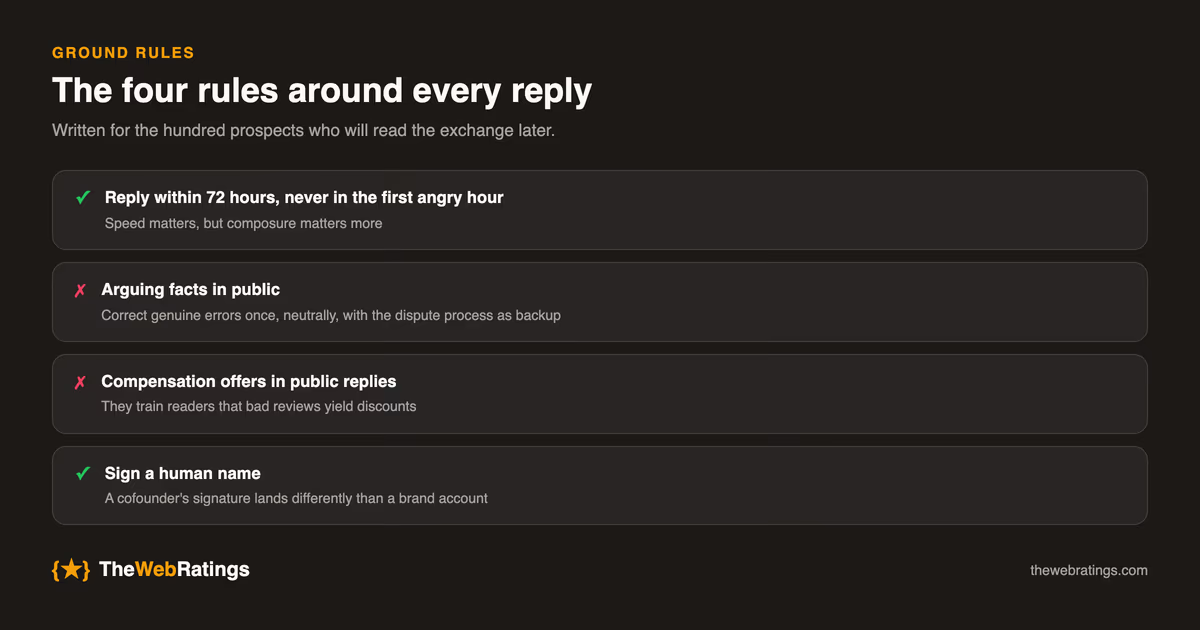
And four rules around it:
- Speed matters, but composure matters more. Reply within 72 hours; never within the first angry hour.
- Never argue facts in public. Correct genuine errors once, neutrally, with the dispute process as backup.
- No compensation offers in public replies. They train readers that bad reviews yield discounts.
- Sign a human name. "— Sam, cofounder" lands differently than a brand account.
Five templates
1. The legitimate complaint (you messed up)
Hi {name} — you're right, the export failure on the 14th was on us; a bad deploy broke CSV generation for about six hours. It's fixed, and we've added regression tests around that path. I've emailed you directly to make sure your data came through. Thanks for flagging it plainly. — {your name}
Why it works: names the real incident, states the fix, moves details private. Zero defensiveness.
2. The misunderstanding (product works, expectation didn't)
Hi {name} — thanks for the honest write-up. The scheduling limit you hit is real, though it works differently than the review describes: {one-sentence correction}. That said, if our onboarding left you expecting otherwise, that's a docs failure on our side and we're rewriting that page this week. Happy to walk you through the workaround — email's in my signature. — {your name}
One correction, stated once, then back to ownership. Prospects can judge the rest.
3. The pricing complaint
Hi {name} — fair critique. {Product} is priced for {who it's for}, and if you're {who it's not for}, it genuinely may not be worth it — I'd rather say that than argue. The features you mention are on the Pro tier because {honest one-line reason}. If your usage changes, we'd love to have you back. — {your name}
Agreeing that your product isn't for everyone is disarming and reads as confidence.
4. The angry rant (heat, little substance)
Hi {name} — I'm sorry the experience was frustrating enough to write this. I'd like to understand what happened, because I can't match this to an account or ticket from the details here. If you email {address}, I'll dig in personally. If anything factual changes, we'll note it here. — {your name}
Stay short. Matching a ranter's word count reads as being rattled.
5. The suspected fake
Hi — we take every review seriously, but we can't find any record matching this account or the events described. We've asked {platform} to verify it through their dispute process and will update here with the outcome. — {your name}
Then actually file the dispute. On open platforms this is slow and uncertain, and it's one reason verified-review platforms matter. On TheWebRatings, every reviewer has passed email OTP verification inside the app, so this template mostly retires. (Context: why fake reviews are killing review platforms.)
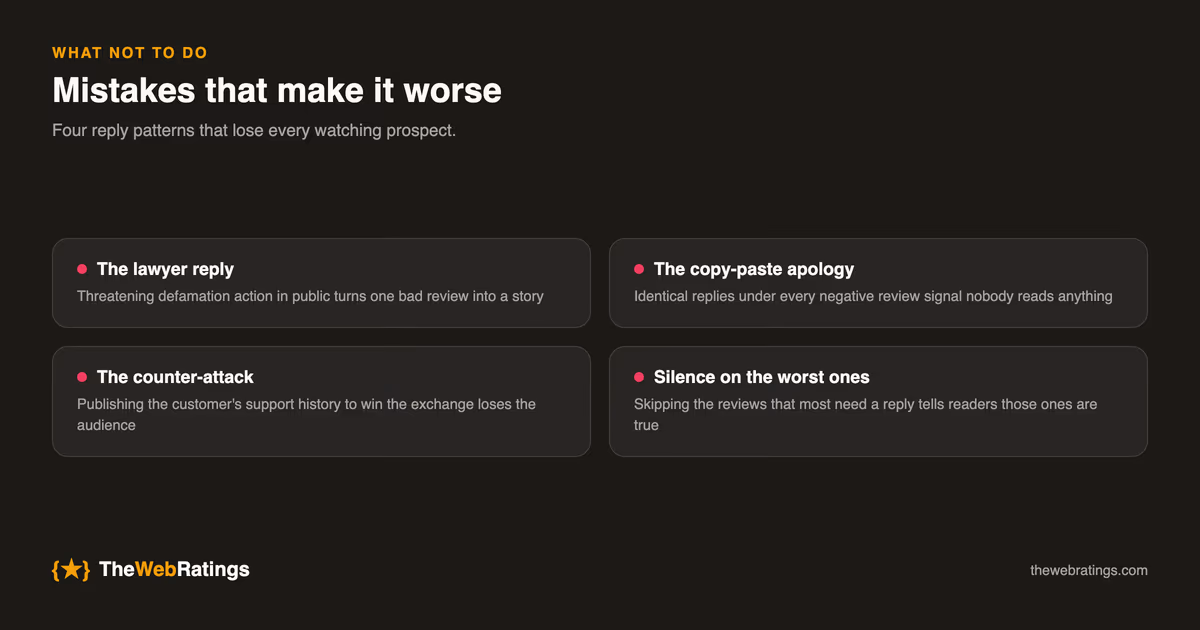
Mistakes that make it worse
- The lawyer reply. Threatening defamation action in a public thread is the single fastest way to turn one bad review into a story.
- The copy-paste apology. Identical replies under every negative review signal that nobody reads anything.
- The counter-attack. Publishing the customer's support history to win the exchange loses every watching prospect (and possibly violates privacy law).
- Silence on the worst ones. Skipping exactly the reviews that most need a reply tells readers those ones are true.
Turning replies into a public asset
Once responding is routine, a subtle shift happens: your reply history becomes marketing material in its own right. Prospects who sort a profile by lowest rating (and many do, deliberately, as a stress test) encounter a curated tour of your worst moments with your best behavior attached. That combination is unfakeable, which is exactly why it persuades.
You can lean into this. Link your review profile from your pricing page rather than hiding it. When a resolved complaint leads to a shipped fix, say so in a short follow-up reply ("update: this shipped in v2.3"). It converts an old negative into evidence that feedback works. And when sales prospects raise a concern you've handled publicly before, send them the review exchange instead of a reassurance paragraph; third-party context beats first-party promises.
The discipline compounds quietly: after a year of consistent replies, the profile reads less like a scoreboard and more like a record of how you operate. For a certain kind of careful buyer, that record is the single most persuasive document you have.
Making replies part of the system
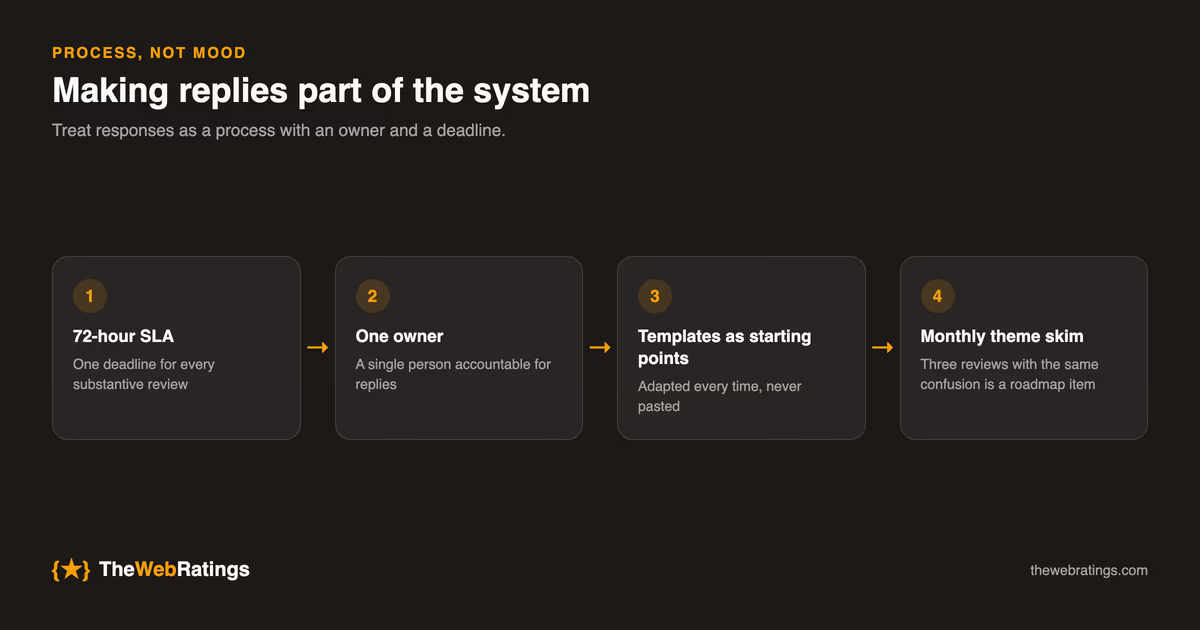
Treat responses as a process, not a mood: a 72-hour SLA, one owner, templates as starting points, and a monthly skim of themes (three reviews mentioning the same confusion is a roadmap item, not a PR problem). Note that on most platforms, replying is a paid feature. On TheWebRatings it's part of Pro at $19/mo, alongside dispute tools for the rare factually-false review.
Negative reviews are also a collection problem in disguise: profiles dominated by angry outliers usually just aren't collecting from ordinary satisfied users. Fixing the intake (see how to get verified reviews for your SaaS) dilutes the negatives with reality. For the full reputation playbook, read the pillar guide: managing your reputation.
Frequently asked questions
Within 72 hours, but never within the first angry hour. The reply is public and permanent, so composure beats speed. Draft it, sit on it briefly, and strip anything defensive before posting.
Respond to all of the substantive ones, and especially the worst ones. Skipping exactly the reviews that most need a reply tells prospects those ones are true. Short rants with no substance still deserve a brief, calm acknowledgment and an invitation to email.
Don't. Public compensation offers train readers that bad reviews yield discounts, which invites more bad reviews. Acknowledge publicly, then move the resolution, including any goodwill gesture, to a private channel.
Correct the fact once, neutrally, in your public reply, then use the platform's dispute process rather than fighting in the thread. On TheWebRatings, dispute tools are built into Pro, and because every reviewer passed OTP verification inside your app, the anonymous-fake scenario largely can't happen in the first place.
You can, once, politely, after the fix has actually shipped. Many reviewers update voluntarily when they see a follow-up reply noting the fix. Never make the request feel like a condition of the support they received.