How to Migrate Off Trustpilot Without Losing Your Reputation
Leaving a review platform is a reputation operation with a billing step attached, and most teams run it as a billing operation with a reputation accident attached. Cancel in the wrong month and three things go at once: the stars in your Google snippet, the widget on your pricing page, and the trickle of new reviews that kept the profile looking alive. Sequence it properly and nobody outside your company notices anything changed.
What follows is the order we walk SaaS teams through when they move off Trustpilot. We build one of the alternatives, so weigh the recommendations accordingly. The mechanics apply whichever direction you go, including deciding to stay.
What actually transfers: almost nothing
Start with the uncomfortable part, because it determines the whole plan. Reviews you collected on Trustpilot stay on Trustpilot. They live on a public profile at their domain, they count toward their aggregate score, and no competing platform will ingest them into its own verified rating. Some Trustpilot plans will hand you your review data through an export or API, which is worth having for your own records, and that data still will not become a rating anywhere else.
Google's own review snippet guidance points the same way: reviews collected on a third-party site are not eligible to be marked up as first-party reviews on your domain. So even if you export a CSV of 400 reviews, you cannot paste them into your own structured data and keep the stars. The rating has to be rebuilt from reviews you collect yourself.
That single constraint is why "migrate" is the wrong mental model and "overlap" is the right one. You are not moving an asset. You are growing a second one until it carries the weight, then letting the first one lapse.
One more thing people get wrong: your Trustpilot profile does not vanish when you stop paying. Company pages on Trustpilot are public and exist whether or not you hold a subscription. Customers can keep reviewing you there after you leave, which is an argument for a graceful exit rather than an abrupt one.
The four assets you are actually moving
Sort the job by asset, not by vendor. Each of the four behaves differently and fails differently.
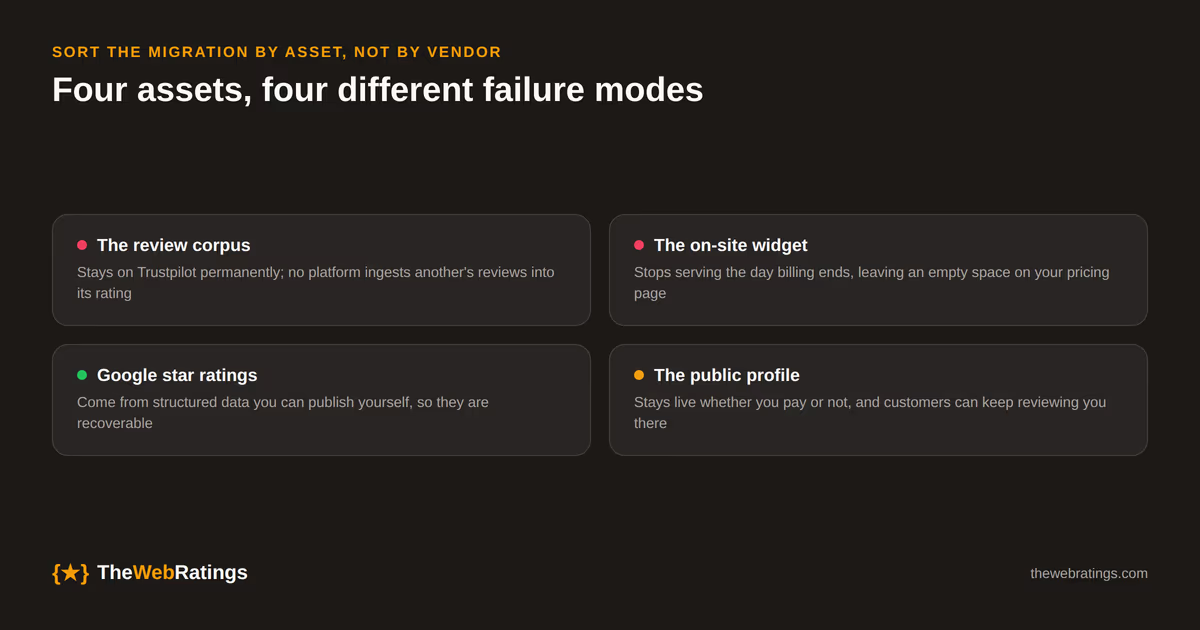
The review corpus. Non-portable, as above. Treat the existing profile as a historical record you keep linking to during the overlap, not as inventory to shift.
The on-site widget. The TrustBox embeds on your homepage and pricing page stop serving when the subscription ends. This is the most visible failure and the easiest to avoid: swap the embed before you cancel, not after. A blank rectangle where social proof used to sit converts worse than no widget at all.
The star ratings in search results. Those come from structured data on your pages, and on Trustpilot they arrive as part of paid tiers (checked July 22, 2026). When the subscription lapses, the feed powering that markup goes with it, and the stars drop out on Google's next crawl. Recovering them is a schema job you control, covered below.
The public profile. Stays live. Keep replying to reviews for as long as your plan allows, and leave the profile in a state you would be comfortable having a prospect find in eighteen months.
Order of operations
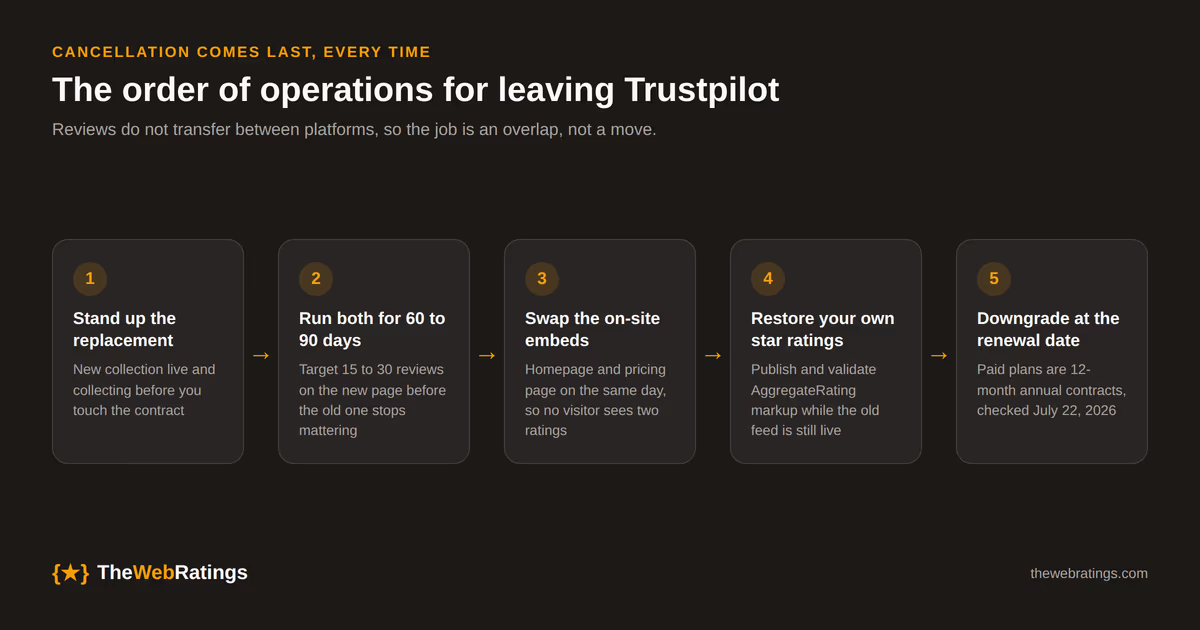
Five steps, in this sequence. The only rule that really matters is that cancellation comes last.
1. Stand up the replacement before you touch the contract. Get the new collection mechanism live and collecting. For SaaS, in-app collection fills faster than email invitations because you are asking inside the product at a moment of real usage instead of cold-emailing a list. On TheWebRatings that is one widget script and an OTP-verified review flow; on any platform, the point is to have reviews arriving before the old ones stop mattering.
2. Run both in parallel for 60 to 90 days. This is the part teams try to skip and the part that makes the exit invisible. Two profiles collecting at once costs you one extra subscription month or three, which is cheap against a visible reputation gap. Your target for the end of the overlap is enough volume on the new page that a prospect reading it comes away convinced, which for most B2B SaaS lands somewhere around 15 to 30 reviews. We worked through how that number varies by price point in how many reviews your SaaS actually needs.
3. Swap the on-site embeds. Replace TrustBox with the new widget once the new page has volume. Do the homepage and pricing page on the same day so a visitor never sees two different ratings for the same product.
4. Restore your own star ratings. Publish AggregateRating and Review markup from reviews you now collect first-party, and validate it before the Trustpilot feed disappears. The overlap window exists partly so you can get this crawled and confirmed while the old markup is still live.
5. Downgrade or cancel at the renewal date. Trustpilot's paid plans are 12-month annual contracts (checked July 22, 2026), so there is usually a specific date at which leaving is free and every other date at which it is not. Find it before you plan anything else, then work backwards. If the renewal is nine months out, your overlap is not 90 days, it is nine months, and the honest answer is to start collecting elsewhere now and stop paying when the term ends.
Where Google stars really come from
Star ratings in search results are a structured-data feature, not a Trustpilot feature. Any page can be eligible if it carries valid review markup backed by real reviews, which means the stars are recoverable regardless of which platform you use, or whether you use one.
The competitive picture here is better than most founders assume. In our July 2026 crawl of 1,056 SaaS and web-app domains, 985 homepages were reachable and only 111 of them carried AggregateRating markup, with just 38 carrying a Review object. That is 11.3% and 3.9% respectively, on a sample where more than half the sites had some JSON-LD. Most of your competitors have structured data and no ratings in it.
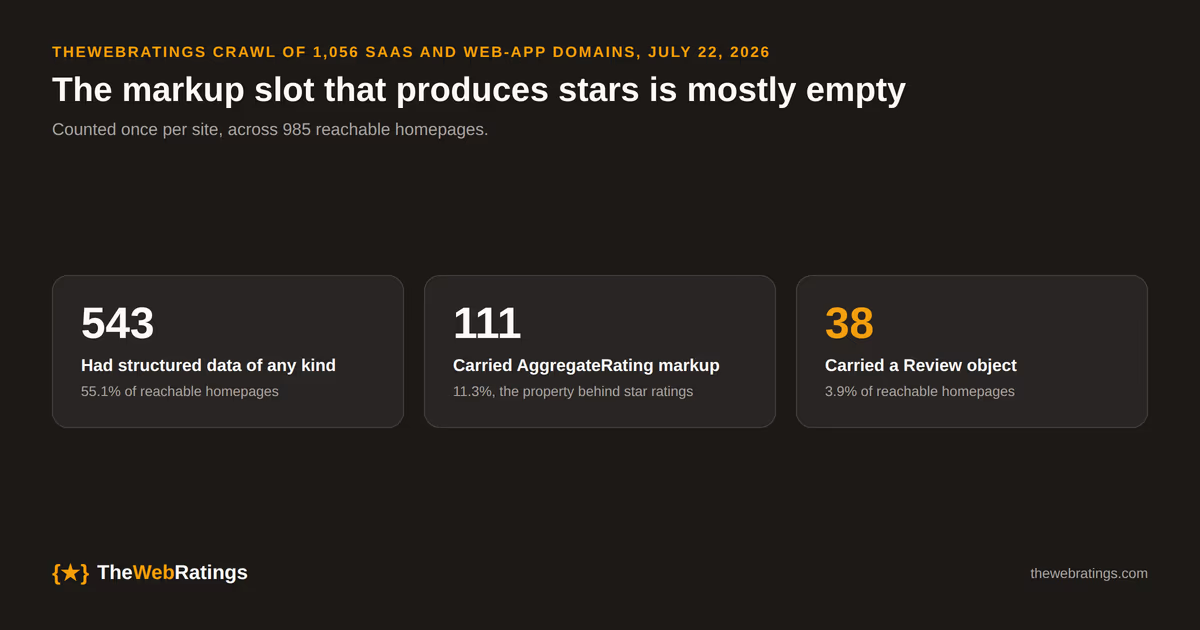
Full dataset and methodology are on our SaaS review schema study. The practical takeaway for a migration: the markup slot that produces stars is mostly empty, so the recovery step is far less competitive than the original ranking work was. If you want the implementation detail, review schema markup for Google star ratings walks through the properties Google actually requires and the ones that get ignored.
Two things to watch during the handover. Do not run both sets of markup on the same page at the same time, because two conflicting aggregate ratings on one URL is a reliable way to get neither. And expect a lag: Google re-crawls on its own schedule, so validate early in the overlap rather than the week you cancel.
The cost you stop paying
Trustpilot's published plans, checked July 22, 2026, alongside what we charge. Our own pricing is in the last row, disclosed as ours.
| Plan | Monthly cost (billed annually) | Invitations/mo | Widgets |
|---|---|---|---|
| Trustpilot Free | $0 | 50 | 1 |
| Trustpilot Starter | $99/mo | 100 | 2 |
| Trustpilot Plus | $319/mo per domain | 300 | 10 |
| Trustpilot Premium | $799/mo per domain | 1,000 | 21 |
| TheWebRatings Pro (ours) | $19/mo, or $190/yr | In-app, no invitation cap | Included |
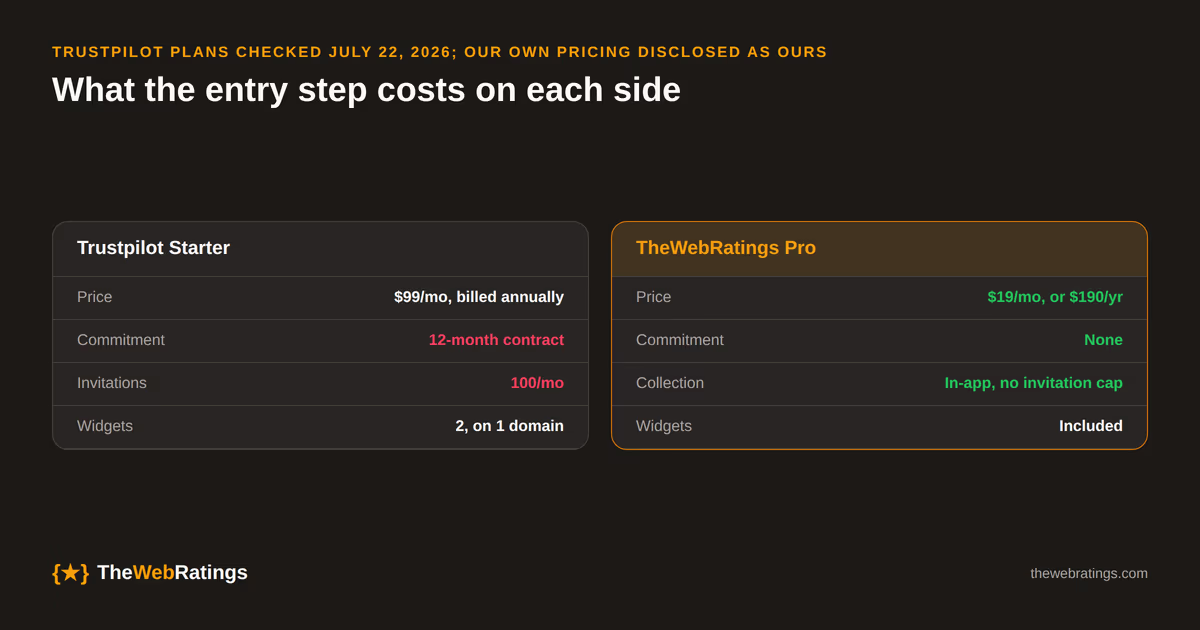
The tier-by-tier breakdown of what each Trustpilot plan includes, and where the invitation caps bite, is in Trustpilot pricing explained. If you want the direct feature-by-feature version of this decision, TheWebRatings vs Trustpilot lays it out side by side, and the wider set of options is mapped in our guide to Trustpilot alternatives.
Budget one line nobody plans for: the overlap months. Paying $99 and $19 simultaneously for a quarter costs about $354, which is the price of not having a gap.
When staying is the right call
Trustpilot earns its keep in three situations, and it is worth checking yourself against them before starting any of the above.
You sell to consumers at volume. Trustpilot's brand recognition with the general public is real, and a shopper who has seen the logo on ten checkout pages treats it as a signal. No SaaS-focused platform, ours included, buys you that recognition.
Your profile is a genuine asset. Several hundred reviews and a 4.6 average is not something to walk away from over a subscription line item, particularly if your paid search ads use seller ratings. Rebuilding that takes quarters.
Procurement asks for it by name. Some buyers have a checklist with a platform on it. Arguing with a checklist is not a good use of a quarter.
If none of those describe you, and you are a SaaS product paying Starter prices for 100 email invitations a month against low single-digit response rates, the migration is worth the calendar time. Start with the renewal date, work backwards, and cancel last.
Frequently asked questions
You can usually export your own review data from Trustpilot for your records, depending on your plan, but no competing review platform will accept those reviews into its own verified rating. Google's review snippet guidance also rules out marking up third-party reviews as first-party reviews on your own domain. Plan on rebuilding the rating from newly collected reviews rather than transferring the old ones.
You will lose the ones that depended on Trustpilot's markup, and you can replace them with your own. Star ratings are produced by valid AggregateRating and Review structured data backed by real reviews, not by any particular vendor. Publish that markup from your new review source during the overlap period and validate it before the old subscription lapses, so the next Google crawl finds working data.
No. Company profiles on Trustpilot are public pages that exist whether or not you hold a subscription, and customers can keep leaving reviews on them. That is why an abrupt exit is worse than a planned one. Leave the profile in a state you would be comfortable with a prospect finding later, and keep replying to open reviews for as long as your plan allows.
Sixty to ninety days is enough for most SaaS products, and your real constraint is usually the annual contract date rather than the reputation math. Aim to end the overlap with enough reviews on the new page that a prospect reading it is convinced, which for most B2B products means somewhere in the range of 15 to 30. If your renewal is further out than that, keep collecting in both places and cancel at the term.
Downgrading keeps the profile claimed and gives you 50 invitations a month and one widget at no cost, checked July 22, 2026, which some teams prefer to a full exit. The paid features you lose are the ones that matter most during a migration, including the higher invitation caps and the markup feed behind star ratings. If you are leaving because the plan costs more than it returns, downgrading is a reasonable middle step.
The on-site widget, immediately, because the embed stops serving when billing ends and leaves an empty space on whichever pages carried it. Star ratings go next, whenever Google re-crawls the affected pages. New review collection stops the same day, so the profile begins ageing while it is still the first result a prospect sees for your brand name.