The FTC Fake Review Rule: What SaaS Founders Need to Know
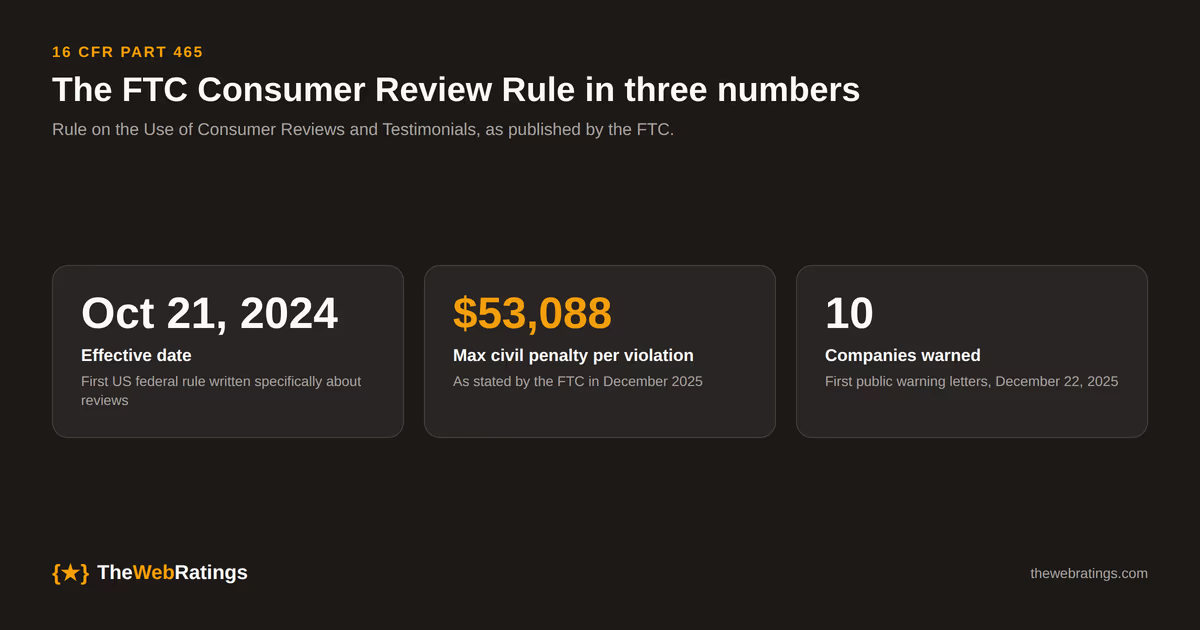
The FTC's Rule on the Use of Consumer Reviews and Testimonials (16 CFR Part 465) took effect on October 21, 2024, and it is the first US federal rule written specifically about reviews. Most founders I talk to assume it only matters to Amazon sellers running review farms, yet the launch-day message asking your team to "drop us a review on G2," the gift card that only goes to five-star reviewers, and the widget that only shows ratings above four all fall inside its sections.
This post walks through what the rule actually says, section by section, maps each part to the things SaaS teams really do, and ends with an audit you can run in an afternoon. It sits inside our wider guide to managing your reputation. I am not a lawyer and this is not legal advice; it is a practitioner's reading of the published rule text, checked on September 24, 2026, and you should run anything borderline past counsel.
Why this rule has teeth
Before 2024, the FTC could pursue deceptive reviews under Section 5 of the FTC Act, but getting money back usually meant a long fight in court. A trade regulation rule changes that. Violating it knowingly exposes a business to civil penalties, and the FTC's December 2025 announcement put the ceiling at up to $53,088 per violation. With reviews, "per violation" can mean per review.
Enforcement has started. On December 22, 2025, the FTC sent warning letters to 10 companies about possible violations of the Consumer Review Rule, its first public enforcement action under it. The companies were not named, and the letters were warnings based on consumer complaints, not findings of a violation. Christopher Mufarrige, Director of the FTC's Bureau of Consumer Protection, said at the time that fake or false reviews "are detrimental to consumers' ability to make accurate and informed choices." The letters covered the full range of the rule, from fake reviews and sentiment-conditioned incentives through insider reviews, company-controlled review sites, suppression, and fake social media indicators.
What each section prohibits
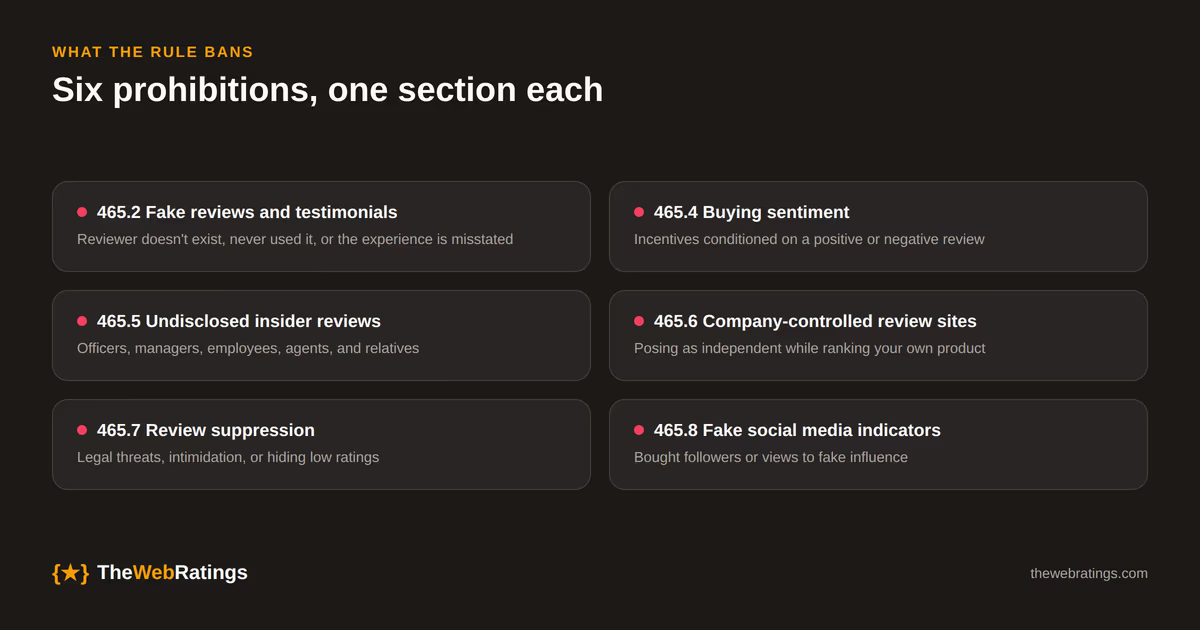
The rule is short. Section 465.1 is definitions, 465.3 is reserved, 465.9 is severability, and the substance lives in six sections. The FTC's proposed version also had a review-hijacking provision (reusing reviews from one product on another) that did not survive into the final text.
| Section | What it bans | Where SaaS teams trip on it |
|---|---|---|
| 465.2 Fake reviews and testimonials | Reviews or testimonials that misrepresent that the reviewer exists, used the product, or had the stated experience; buying or spreading them when you knew or should have known | AI-written testimonials on the landing page, "composite" quotes, beta users quoted on features they never touched |
| 465.4 Buying sentiment | Compensation or incentives conditioned, expressly or by implication, on a review expressing a particular sentiment | A gift card only for five-star reviews, or "leave a positive review, get a month free" |
| 465.5 Insider reviews | Undisclosed reviews by officers, managers, employees, or agents; soliciting them from staff or immediate relatives without making sure the relationship is disclosed | The launch-day Slack message asking the whole team to review you on G2 or Capterra |
| 465.6 Company-controlled review sites | Claiming a site or entity you control gives independent reviews of a category that includes your product | A "best tools in our category" site you own that ranks you first |
| 465.7 Review suppression | Unfounded legal threats, intimidation, or public false accusations to stop or remove a review; implying displayed reviews are all or most of them when negative ones were suppressed | Threatening a reviewer with a defamation suit; a widget that silently hides one- and two-star ratings |
| 465.8 Fake social media indicators | Buying or selling fake followers, views, and similar indicators to misrepresent influence for a commercial purpose | Purchased followers on a launch account |
A few definitions do a lot of work. The rule defines a consumer review as an evaluation "submitted by the consumer or purported consumer" and published to a site dedicated in whole or in part to reviews, so G2, Capterra, Trustpilot, Product Hunt, and your own on-site review widget all count. "Officers" include owners, executives, and managing members, so a founder reviewing their own product on a third-party site is squarely inside 465.5(a) unless the relationship is disclosed. An "immediate relative" is a spouse, parent, child, or sibling.
Incentives: what section 465.4 actually covers
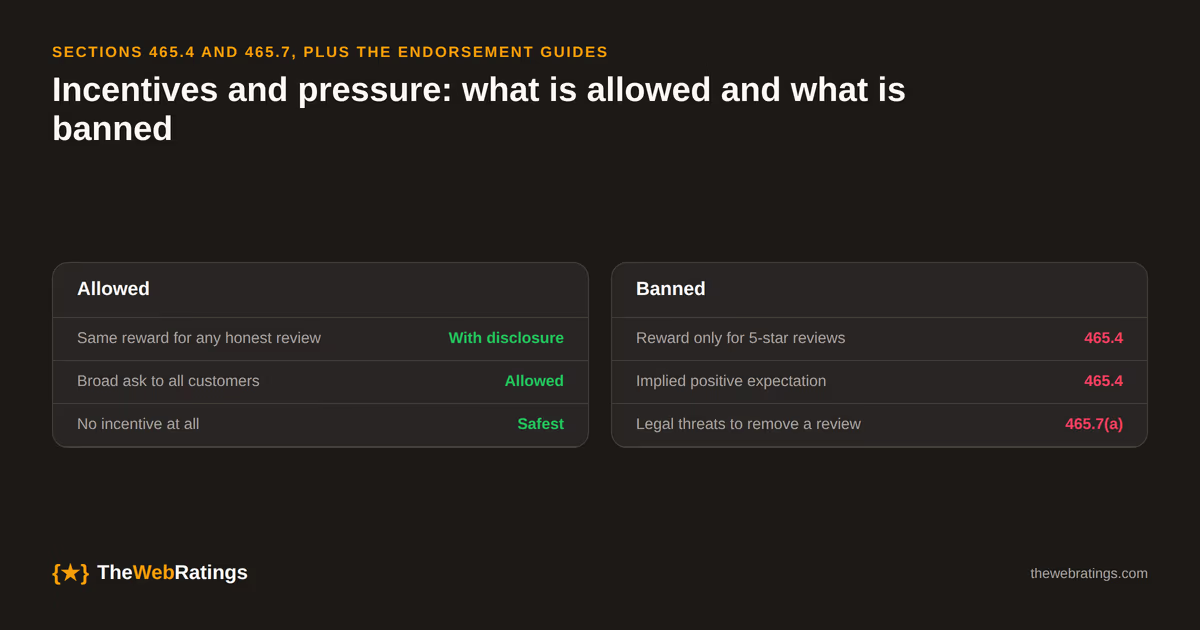
This is the section founders misread most often, in both directions. Section 465.4 targets incentives "conditioned expressly or by implication on" the review "expressing a particular sentiment, whether positive or negative." Offering every reviewer the same $10 credit regardless of what they write is outside 465.4. Offering it only when the review is positive, or wording the ask so the positive expectation is obvious, is inside it.
Two things still constrain neutral incentives. The FTC's separate Endorsement Guides (16 CFR Part 255) expect material connections, including incentives, to be disclosed. And each review platform has its own incentive policy that can get a profile penalized regardless of what federal law allows, so read the rules of the platform you are asking people to post on.
My own view is that even a legal, disclosed incentive is a bad trade for a small SaaS. Incentivized volume tracks your budget instead of your users' opinion, and buyers have learned to discount it. We made this argument at length in why fake reviews are killing review platforms, and the rule mostly writes down where buyers already drew the credibility line.
Launch day and your team
The rule's insider section has a useful carve-out. Sections 465.2 and 465.5 both exempt generalized solicitations, meaning a broad request to your customers to leave an honest review. Emailing your whole user base "if you've used the product, we'd value an honest review" is fine. That is also how most SaaS teams should be collecting reviews anyway.
What gets teams into trouble is the targeted internal ask. Under 465.5(c), an officer or manager who asks employees, agents, or immediate relatives to write reviews takes on responsibility for making sure those reviews disclose the relationship. If your cofounder's brother posts a glowing, undisclosed G2 review because you asked him to, that is the fact pattern the section was written for. The simplest safe policy: employees and family do not review the product on third-party sites, full stop, and your internal launch message says so.
Review gating and suppression
"Review gating" means asking users for a rating first, sending happy users to a public review site, and routing unhappy users to a private feedback form. Section 465.7(b) makes it risky wherever you present the result as representative: it prohibits misrepresenting that the reviews you display are "most or all the reviews submitted" when reviews have been suppressed based on their rating or negative sentiment.
The rule lists legitimate reasons to withhold a review, and they are what you would expect: trade secrets or confidential information, defamatory, harassing, abusive, or obscene content, personal information, discriminatory content, clearly false or misleading content, reviews you reasonably believe are fake, and reviews wholly unrelated to your products or services. A review that is harsh, low-rated, or factually disputed is not on that list. If a reviewer gets something wrong, the answer is a public reply, not deletion, and our post on how flagging works on each platform covers what third-party platforms will and won't remove.
Section 465.7(a) covers the other half: unfounded legal threats, physical threats, intimidation, or public false accusations aimed at preventing a review or getting it removed. A cease-and-desist letter to an unhappy customer over an honest one-star review is the textbook example.
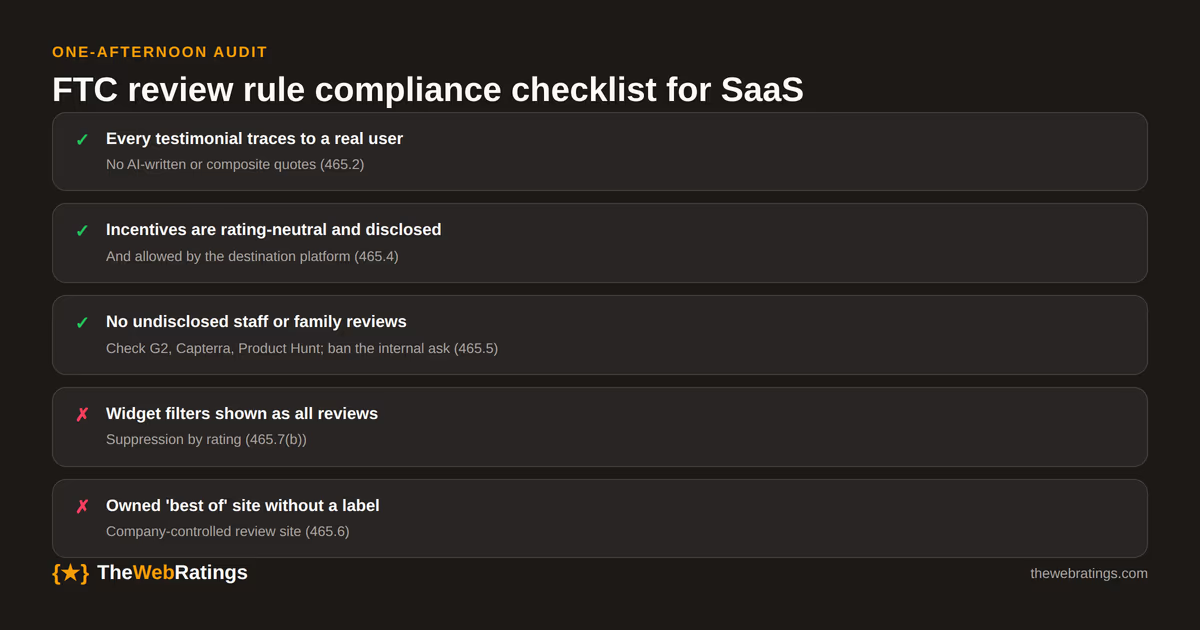
A one-afternoon compliance audit
Here is the audit I would run, in the order I would run it.
- Testimonials page. Every quote traces to a real, named person who used the product and said roughly those words. Delete anything AI-generated, "representative," or paraphrased beyond recognition (465.2).
- Review incentives. Pull every review-request email and in-app prompt. Any reward must go to every reviewer regardless of rating, be disclosed, and be allowed by the destination platform (465.4 and the Endorsement Guides).
- Third-party profiles. Search your G2, Capterra, Product Hunt, and Trustpilot profiles for reviews by employees, contractors, investors, or family. Ask for them to be disclosed or removed (465.5).
- Internal comms. Put a one-line policy in your launch checklist: team and family do not review the product (465.5(c)).
- Display logic. Check whether your on-site widget or trust page filters by star rating. If it shows a subset, do not describe it as all your reviews (465.7(b)).
- Moderation policy. Write down the reasons you remove reviews, and keep them to the categories the rule lists (465.7).
- Owned content. If you run a comparison or "best of" site, label your ownership plainly (465.6).
Where TheWebRatings fits
Disclosure: we build a review platform, so weigh this accordingly. TheWebRatings collects reviews through a widget inside your app and verifies every reviewer with an email one-time code, which is our answer to the 465.2 question of whether the reviewer exists and used the product. It does not remove the rest of your obligations. You still cannot condition incentives on sentiment, and you still should not have your team review you. The free plan covers one website with unlimited verified reviews and a public trust page, and Pro is $19/mo (details on the pricing page).
Frequently asked questions
Yes. The rule applies to businesses generally and defines a consumer review as any evaluation submitted by a customer or purported customer to a site that displays reviews, which includes G2, Capterra, Trustpilot, Product Hunt, and your own website. There is no exemption for B2B software or for small companies.
Under 16 CFR 465.4, the ban applies to incentives conditioned on the review expressing a particular sentiment, positive or negative. A reward given to every reviewer regardless of rating is outside that section, but the FTC Endorsement Guides still expect the incentive to be disclosed, and many review platforms restrict incentives in their own policies.
Only with clear disclosure of the relationship, and a manager or officer who asks staff or immediate relatives to review takes on responsibility for that disclosure under section 465.5. The simplest safe policy is that employees and family do not review the product on third-party sites at all, while broad requests to real customers for honest reviews remain fine.
The FTC can seek civil penalties for knowing violations, and its December 2025 announcement of warning letters to 10 companies put the maximum at up to $53,088 per violation. Because each fake or improperly solicited review can count as a separate violation, exposure scales with the number of reviews involved.
Section 465.7(b) prohibits misrepresenting that the reviews you display represent most or all of the reviews submitted when negative or low-rated reviews have been suppressed. Filtering what you show by star rating while presenting it as your overall reviews falls inside that section, and withholding a review is only covered for listed reasons such as defamatory content, personal information, or reviews you reasonably believe are fake.
The Rule on the Use of Consumer Reviews and Testimonials, codified at 16 CFR Part 465, took effect on October 21, 2024. The FTC sent its first public round of warning letters under the rule on December 22, 2025.